Choosing the Right Vector Database for RAG and AI Applications
Our take
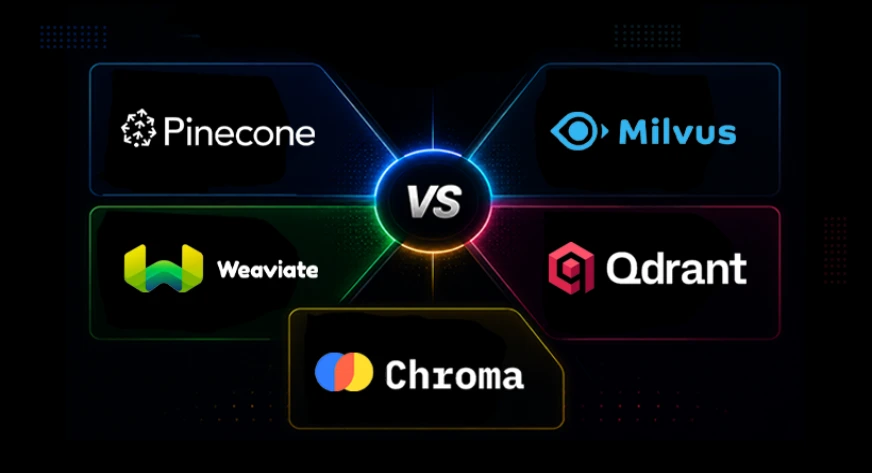
Choosing the Right Vector Database for RAG and AI Applications is more than a technical checklist; it is a strategic decision that shapes the future of data‑centric workflows. As the article notes, modern AI systems no longer rely on keyword matching; they require a deep understanding of meaning, which in turn demands efficient storage and retrieval of high‑dimensional embeddings. This shift from text to vector space has turned vector databases into the backbone of semantic search, retrieval‑augmented generation (RAG), and large language model (LLM) pipelines. For practitioners who already juggle multiple tools, picking the right database can mean the difference between a sluggish prototype and a production‑ready system that scales without breaking the bank.
If you’re looking for practical ways to elevate your AI projects, you might also want to explore how conversational agents can be built on top of these foundations. Build an Emergency Helpline Voice Agent with LangChain shows how a voice interface can be wired to an LLM and a vector store, turning raw data into actionable insights in seconds. For those still mastering the basics of Python I/O, How to Write to Files in Python: A Beginner’s Guide reminds us that even the simplest file operations can become bottlenecks when dealing with large embeddings. Finally, a deeper dive into time‑series analytics with 7 Steps to Mastering Time Series Analysis with Python underscores how vector representations can capture temporal patterns, opening new avenues for predictive modeling.
The article’s comparative lens is valuable because it forces us to confront the trade‑offs that often get glossed over. Performance, for example, is not merely about query latency. It encompasses the ability to ingest millions of vectors, update them in real time, and maintain consistency across distributed nodes. Scalability intersects with this by dictating how well a system can grow horizontally without a proportional increase in operational overhead. Cost, meanwhile, is a multi‑dimensional metric that includes storage fees, compute charges for similarity searches, and the hidden expenses of managing infrastructure. And developer experience—though sometimes dismissed as a softer metric—directly influences adoption rates. A database with a clean API, robust SDKs, and comprehensive documentation can reduce onboarding time from weeks to days, allowing teams to focus on business logic rather than plumbing.
Why does this matter to our readers? Because the pace at which AI solutions move from prototype to production is accelerating. Organizations that can seamlessly deploy RAG pipelines will gain a competitive edge by delivering contextually rich answers, personalized recommendations, and intelligent insights at scale. Conversely, those that rely on legacy keyword engines risk falling behind as users demand more nuanced interactions. By investing in the right vector database now, you future‑proof your infrastructure and position your team to iterate rapidly on new use cases—whether that’s enhancing customer support, automating compliance reviews, or powering next‑generation analytics dashboards.
The broader significance lies in the democratization of semantic search. As vector databases become more accessible and cost‑effective, even small teams can experiment with embeddings that were once the preserve of large enterprises with dedicated GPU clusters. This parity shifts the innovation frontier from hardware to algorithmic creativity: how can we design prompts, fine‑tune models, or curate knowledge bases that truly unlock the potential of vector semantics? The article invites us to think not just about which database to choose, but how that choice will shape the architecture of tomorrow’s AI services.
Looking ahead, the integration of vector databases with cloud‑native observability, automated scaling, and AI‑driven indexing will likely become standard. We may soon see systems that automatically adjust index granularity based on query patterns or that recommend hybrid storage strategies to balance cost and performance. For now, the key takeaway is clear: selecting the right vector database is a foundational step that empowers you to build smarter, faster, and more reliable AI applications. The question for the next generation of data scientists and engineers is: how will you leverage this infrastructure to turn raw data into actionable intelligence that scales with your organization’s ambitions?
Modern AI applications rely on understanding meaning rather than matching keywords. As large language models, semantic search, and RAG systems have become mainstream, vector databases have emerged as critical infrastructure for storing and retrieving high-dimensional embeddings at scale. Choosing the right vector database can have a major impact on performance, scalability, cost, and developer experience. […]
The post Choosing the Right Vector Database for RAG and AI Applications appeared first on Analytics Vidhya.
Read on the original site
Open the publisher's page for the full experience