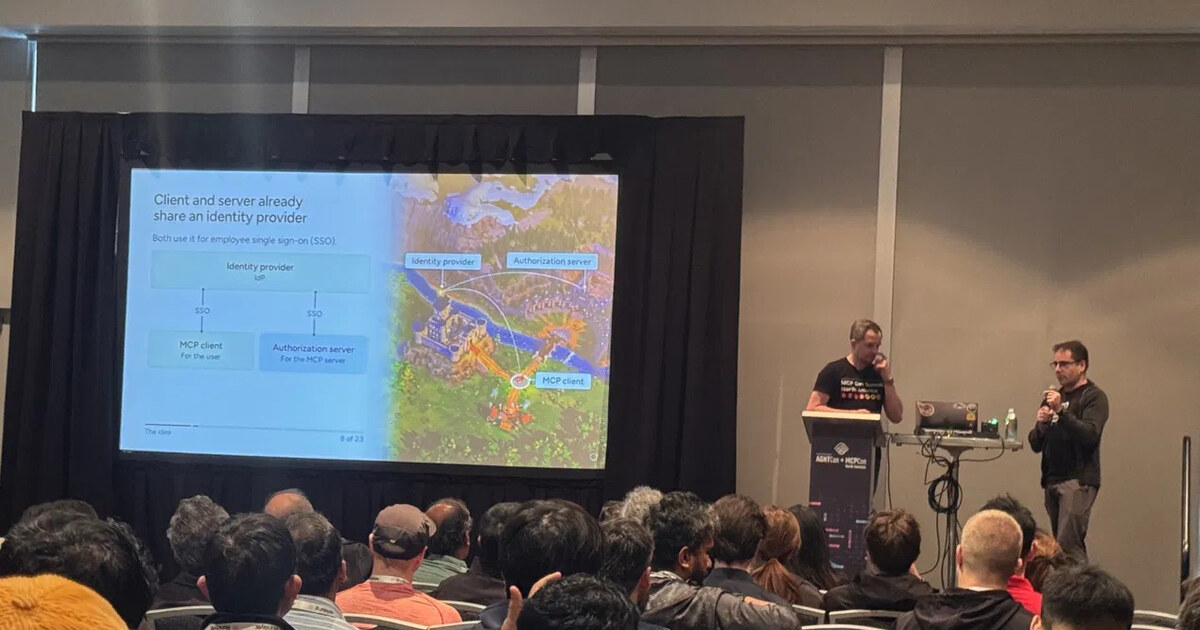
The Agentic AI Foundation's expansion from six to ten projects in its first year is a signal worth paying attention to, not because of the raw count but because of what the four new additions, OpenSandbox, Open Responses, Agent Skills, and OpenEnv, reveal about where the industry is heading. The keynotes from Anthropic, OpenAI, Google, and UC Berkeley at AGNTCon + MCPCon North America 2026 centered on MCP in production, security, and agents with their own identities, and these projects are the practical embodiment of those themes. This is not a slow evolution; it is a deliberate push toward an infrastructure that treats agentic AI as a production-grade reality rather than a research experiment.
The emphasis on security and identity is where this story connects most directly to the challenges our readers face daily. When Anthropic's S-1 shows that more than half of its $100,000-plus customers now use both the Claude Platform and a first-party AI product, it underlines a growing expectation that enterprise AI tools must integrate securely into existing workflows. The addition of OpenSandbox and OpenEnv to the foundation's project list directly addresses that need by providing controlled environments for testing and deployment. Similarly, the focus on agents with their own identities, a topic that surfaced repeatedly in the keynotes, mirrors the kind of tenant isolation architecture we recently examined in Four-Layer Tenant Isolation Keeps EKS Workloads Secure by Design. The principle is the same: if you want agents to operate safely alongside human users and other systems, you need clear boundaries and verifiable identities.
What makes this announcement more than a routine project launch is the foundation's decision to prioritize Open Responses and Agent Skills alongside the security-focused tools. Open Responses addresses how agents communicate results back to users and other systems, which is the kind of interoperability question that has historically tripped up enterprise adoption of new technologies. Agent Skills, meanwhile, tackles the modularity problem: instead of building monolithic agents that try to do everything, the foundation is pushing toward composable capabilities. This aligns with the practical, human-centered approach we advocate for, users should not have to understand the complexity underneath. They should just see an agent that can do what they need, when they need it.
The practical takeaway for anyone building with or evaluating agentic AI is straightforward: the infrastructure for secure, identity-aware, composable agents is being built in the open, and the major players are aligning around it. Anthropic's recent IPO filing, which revealed rapid growth and an unconventional safety-first structure, suggests that this alignment is not just technical but strategic. The foundation's ten projects now form a coherent stack that addresses sandboxing, response formats, skill modularity, and environment isolation. The open question is how quickly enterprise teams can adopt these standards without waiting for vendor-specific implementations. Watch how quickly Open Responses and Agent Skills get adopted into production pipelines over the next six months, that will tell you whether this foundation is setting the standard or just cataloging good ideas.