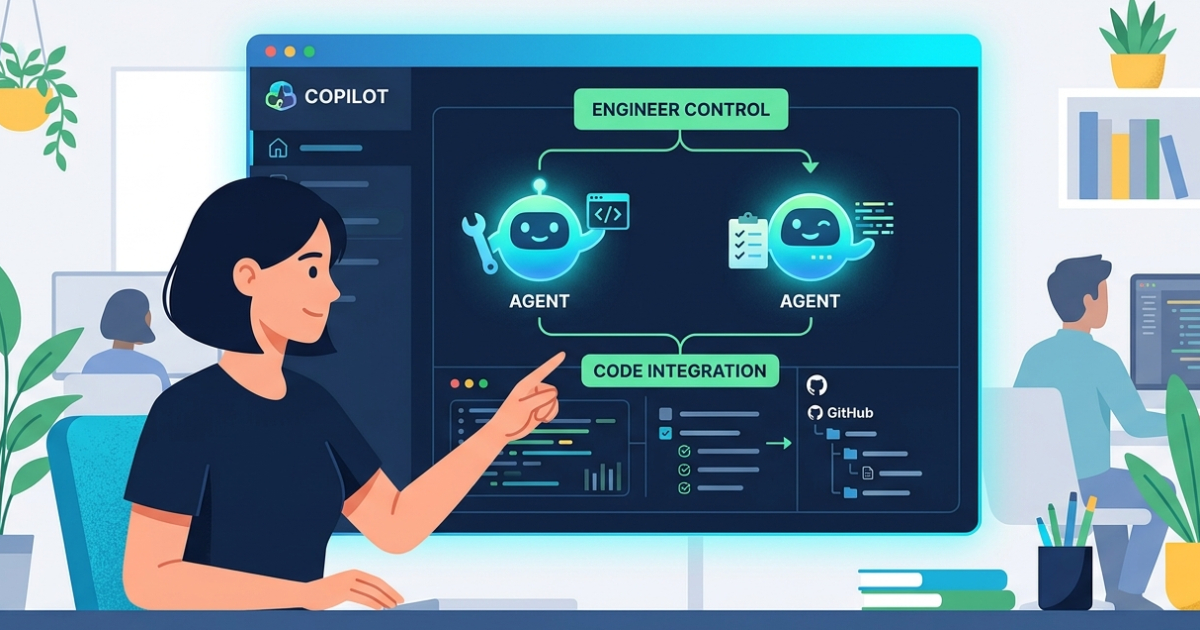
The arrival of GitHub Copilot Desktop App signals a crucial evolution in how developers interact with the burgeoning world of AI-powered coding agents. While the initial excitement surrounding agents like those emerging from OpenAI and others promised unprecedented acceleration in development cycles, the reality, as GitHub rightly points out, has been a more complex picture. The promise of faster delivery has often been tempered by disjointed workflows and increased cognitive load on engineers, primarily due to the need for constant context switching and extensive code review. This sentiment aligns with observations from Aditya Kumarakrishnan’s presentation, Presentation: From Hype to Strong Foundations: What the Rise, Fall and Resurgence of Agents Can Teach Us About Outlasting the Cycle, which highlights the importance of moving beyond the initial hype and building robust, sustainable foundations for AI integration. Copilot Desktop’s focus on maintaining engineer control represents a necessary shift towards a more balanced and productive coexistence between human developers and AI assistants.
GitHub's approach acknowledges that the future isn't about completely replacing developers with AI, but rather about empowering them to leverage AI’s capabilities more effectively. The desktop app acts as a centralized hub, providing visibility and control over the agents working in the background. This contrasts sharply with scenarios where agents operate in isolation, generating code snippets that require significant manual integration and debugging. The ability to monitor, pause, and redirect agent activity— essentially, to act as a conductor of an AI orchestra—is a significant step towards mitigating the potential for workflow disruption. It’s encouraging to see this emphasis on practical usability, particularly given the ongoing discussions around the evaluation of AI models, as demonstrated by the recent debate surrounding Weibo’s VibeThinker-3B, Why Weibo’s tiny VibeThinker-3B has the AI world arguing over benchmarks again. Ensuring that these tools are not just powerful, but also controllable and integrated into existing workflows is paramount. Even the availability of accessible training resources, like OpenAI’s free AI courses, OpenAI Just Launched 3 Free AI Courses with Certificates, underscores the need for broader developer understanding and skill development in this rapidly evolving landscape.
The broader significance of Copilot Desktop extends beyond simply streamlining agent-assisted coding. It establishes a precedent for how AI tools should be designed—as collaborative partners rather than autonomous replacements. This model prioritizes developer agency and cognitive load management, addressing a critical pain point in the early adoption of AI in software development. By providing a clear interface for managing AI activity, GitHub is effectively demystifying the process and making it more accessible to a wider range of developers, regardless of their level of AI expertise. This focus on usability and control is vital for fostering trust and encouraging wider adoption of AI-powered tools within development teams. It allows organizations to experiment with and integrate AI agents more confidently, knowing they maintain ultimate oversight and can course-correct as needed.
Ultimately, GitHub Copilot Desktop represents a thoughtful and pragmatic response to the challenges of agent-native development. It’s a move away from the purely aspirational promises of AI automation and towards a more grounded vision of human-AI collaboration. The success of this approach will depend not only on the technical capabilities of the app but also on its ability to seamlessly integrate into existing development workflows and empower developers to work more efficiently and creatively. A key question moving forward is how effectively GitHub can evolve this control center to manage increasingly complex agent workflows—will it scale to accommodate a growing number of agents and more sophisticated interaction patterns, or will it become another bottleneck in the development process?