How NTT DATA AIVista closes the last mile of agentic AI for enterprise agents
Our take
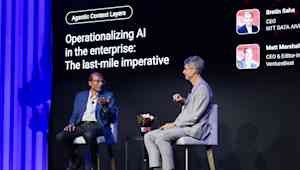
The recent discussion at VB Transform 2026, featuring NTT DATA AIVista CEO Bratin Saha, underscores a critical reality for enterprises navigating the current AI landscape: the substantial gap between investing in powerful frontier models and realizing tangible business value. Many organizations are pouring significant resources into these models, but the challenge lies in operationalizing them effectively. As highlighted in a recent article, Structured AI data pipelines score 10.9 points below free-form code — DataFlow-Harness closes the gap, even foundational elements like data pipeline structure can significantly impact performance, illustrating the complexities beyond simply deploying a model. This conversation directly addresses that complexity, framing the "last mile" of AI implementation as the key differentiator between successful adoption and wasted investment. The focus on reliability, context, guardrails, and security, as Saha emphasized, is not merely technical detail but the very foundation upon which enterprise trust and ROI are built.
Saha’s perspective powerfully reframes the conversation around AI, shifting it away from the allure of the latest models and towards the crucial work of system integration. It’s not about the model itself, but about building a comprehensive system *around* that model – a system interwoven with an enterprise's unique data, workflows, and, crucially, undocumented institutional knowledge. This echoes a sentiment explored in another piece, How is your enterprise tracking AI agent telemetry? Groundcover thinks it should never leave your cloud, which highlights the need for robust observability and control mechanisms as AI systems become more complex. The emphasis on capturing enterprise context and building specialized guardrails—rather than relying on extensive fine-tuning—is a pragmatic approach that recognizes the limitations of generic models and the value of domain-specific expertise. The three-pronged approach—technology, domain expertise, and change management—is a refreshing acknowledgement that AI implementation is as much a human-centered process as it is a technological one.
The insight that technology isn’t the bottleneck is particularly significant. It’s a direct challenge to the prevailing narrative that prioritizes model selection above all else. Instead, Saha argues that the real value lies in the specialized workflows that AI enables and the careful integration of human expertise. This echoes the pragmatic approach outlined in HashiCorp Ships Public Beta of Vault Kubernetes Key Management, which underscores the importance of robust infrastructure and security practices to support even the most advanced AI applications. NTT DATA’s experience as a large third-party administrator positions them uniquely to capture and encode this domain-specific knowledge, creating a durable advantage that’s difficult to replicate. The strategy of initially embedding AI within existing workflows before reimagining those workflows entirely is a sensible, phased approach that minimizes disruption and maximizes adoption.
Ultimately, the discussion around NTT DATA AIVista’s approach to agentic AI suggests a move towards a more modular and adaptable AI ecosystem. The ability to swap out frontier models for open-weight alternatives, depending on the criticality of the task, is a testament to the importance of building a system that prioritizes flexibility and cost-effectiveness. As enterprises continue to grapple with the complexities of AI implementation, the focus will inevitably shift from the capabilities of individual models to the robustness and adaptability of the systems that surround them. A crucial question moving forward is: how can organizations effectively capture and codify their own "tribal knowledge" to build truly bespoke and valuable AI agents, and will platforms emerge that can streamline this increasingly vital process?
Presented by NTT DATA AIVista
At VB Transform 2026, NTT DATA AIVista CEO Bratin Saha joined VentureBeat CEO and editor-in-chief Matt Marshall to discuss the last-mile challenge of operationalizing frontier models in regulated production, where reliability, context, guardrails, and security determine whether AI delivers enterprise value. The conversation centered around the question facing every enterprise now pouring money into AI: how to convert that spending into real, tangible value.
"It's not just a model, you're building a system around the model," Saha said. The last mile is the work of wrapping a frontier model in an enterprise's own data, workflows, and guardrails.
In the end, regulated production turns on more than just technology, Saha said. Today, most enterprise AI projects fail during implementation because of poor integration, domain specialization gaps, lack of governance, and unclear ownership of outcomes. Last-mile specialization turns a capable foundation model into an enterprise agent shaped by domain-specific workflows, risk appetite, client classifications, regulatory interpretations, and institutional knowledge.
Why frontier models stall in enterprise workflows
Frontier models fall well short of production-grade accuracy on many real-world insurance workflows, Saha said, but last-mile specialization can lift them to the reliability enterprises need. Out of the box, those models struggle with the complexity of regulated workflows such as multinational insurance claims.
"These forms are pretty complex, often have handwriting, lots of checkboxes, and so on," he said, and that complexity is why frontier models like Fable 5, Opus 4.8, and GPT-5.5 fall short out of the box.
Saha said the biggest gains come from specializing the entire AI system, not just the foundation model.
That system gets specialized with the customer's data, workflow and, in many cases, the tribal knowledge that never made it into an operating procedure document.
"The biggest bang for the buck comes from the specialization and then these specialized guardrails," he said.
The work has three components:
capturing the enterprise’s context and making it consumable by AI
running an ensemble of models so cost does not go through the roof
and adding specialized guardrails that check the model and force a redo when it gets something wrong.
What the last mile of agentic AI actually requires
None of this involves fine-tuning. VentureBeat’s latest enterprise survey found it ranked last among companies’ model-selection priorities.
Instead, the last mile centers on domain knowledge and undocumented workflows that companies would never expose publicly without losing their competitive edge.
"The last mile is about taking data that's proprietary to you and using that to build a system around the model that can steer the model in the right way that can put the appropriate guardrails around it," Saha said.
In the end, enterprise AI is about moving a workflow from point A to point B rather than deploying a technology, and NTT's advantage comes from pairing AI experts with subject domain experts.
"The only reason is because we go and talk to those human workers and we say, 'How do you actually do the work,'" he said. That expertise is then encoded into an agent.
Success in insurance, manufacturing, and other regulated industries relies on three things at once, he added.
"You need technology, you need the domain expertise, and you need the change management expertise," he explained, adding that across his team's clients, technology is not the bottleneck.
How enterprises turn AI investment into tangible value
For enterprises weighing large AI budgets, Saha's said the payoff comes not from the model but from the work built around it.
"When you're deploying AI in the enterprise, you're not deploying a technology," he said. "You are taking a workflow that exists and taking it from point A to point B." The value is created by the workflow that gets moved, not the model that helps move it.
That reorders where money should go.
"Technology is not the bottleneck," Saha said, pointing instead to the domain expertise and change management wrapped around the model, and to the discipline of commiting to all three together. Spending aimed only at the model leaves most of the return on the table.
Enterprises don’t have to choose between embedding AI into existing workflows and redesigning those workflows from scratch. NTT sees the two as successive stages of the same journey.
"We are starting with embedding in the workflow because it's easier change management," he said, noting that customers running mission-critical operations will not let a vendor rip out a working process midstream. "Once that happens, then we go into, how can we now reimagine this? And that really is where the biggest bang is."
Where enterprise AI stays bespoke and where it becomes scalable
Keeping intelligence in the surrounding system rather than the model also preserves swappability and lets enterprises take advantage of open-weight and open-source models as they mature. Saha’s team runs an ensemble that mixes frontier and open-source models, and he expects the industry to lean on open weights wherever the cost of a mistake is low while reserving frontier reasoning for the cases that demand it.
"In many situations, especially in regulated industries where mistakes are very expensive, that last extra couple of percent matters," he said.
The platform follows the same pattern: Guardrail generation and neurosymbolic models scale across customers, while capturing each organization’s tribal knowledge remains bespoke. Saha pointed to NTT DATA’s position as one of the world’s largest insurance third-party administrators as an advantage in acquiring that expertise.
"The ability to take that knowledge and trust that has been built over 20 years is very hard to replicate instantly, and I do think that is a durable aspect of what we have," he said.
Sponsored articles are content produced by a company that is either paying for the post or has a business relationship with VentureBeat, and they’re always clearly marked. For more information, contact sales@venturebeat.com.
Read on the original site
Open the publisher's page for the full experience