enterprise data management
enterprise data management at Beyond Market Intelligence is a file of 315 stories. The newest of them: “How to Build a UX Investment Case That Gets Funded”, “GPT-6 Astra arrives, marking a new chapter in how we work with data”, and “Microsoft AI's new speech model delivers speed and accuracy at ten cents per hour”. A strong UX idea rarely sells itself. The rumors were true, all of them, and then some. Acme AI is the next-generation, AI-powered spreadsheet platform built to replace Excel and redefine how analysts, data scientists, and enterprise teams work… The list below is every enterprise data management story on Beyond Market Intelligence, newest first.

How to Build a UX Investment Case That Gets Funded
A strong UX idea rarely sells itself. In this piece, Alex Williams walks through a worked example showing how to define business value, calculate costs, and test causality before presenting to leadership. It is a practical approach for building a case that holds up. For more on designing with intent, our piece on the death of the button offers a useful counterpoint.

GPT-6 Astra arrives, marking a new chapter in how we work with data
The rumors were true, all of them, and then some. OpenAI has released GPT-6 Astra, a frontier model the company believes marks the onset of the AGI era. For enterprises, the immediate shift is concrete: Astra operates computers the way people do, navigating browsers, spreadsheets, and applications to execute multistep workflows. This moves us beyond prompting AI to supervising it, delegating complex work while humans direct at a higher level. Explore what delegation means when agents handle the work between your objectives and the outcome.

Microsoft AI's new speech model delivers speed and accuracy at ten cents per hour
Microsoft just cut the price of speech recognition to a dime. MAI-Transcribe-2 transcribes 60 languages with speaker diarization, timestamps, and code switching built into that rate, roughly 72% cheaper than its predecessor. That is not a feature drop; it is a message to every enterprise paying for transcription today. When the model is faster than the frontier labs and cheaper than the specialists, the question stops being whether to switch. It becomes how quickly your workflows can move.

Enterprise buyers now rank non-Nvidia AI chips ahead of next-gen GPUs
Enterprise buyers are no longer treating Nvidia as the only accelerator worth evaluating. According to VentureBeat's July VB Pulse survey of 170 AI infrastructure respondents, 39.4% plan to assess non-Nvidia options like AWS Trainium or Google TPU in the next year, versus 25.3% for Nvidia's next-gen GPUs, a 14-point gap. That's not a rejection of Nvidia; it's a deliberate broadening of options. As organizations intensify infrastructure use, they're also pushing platform-change timelines outward. The real story is optionality, not urgency.

When session cookies bypass 2FA and SSO, your data needs a smarter guard.
Session-cookie theft is not a login-page attack, and it will not be stopped by another layer of MFA. Anthropic's disclosure shows infostealers replaying stolen Claude sessions into paid accounts, bypassing two-factor entirely because the checkpoint already passed. What makes this notable is the exposure: those replayed sessions could reach connected services, including corporate Gmail, through OAuth grants no admin console can revoke. The accounts were self-serve and card-billed, outside enterprise identity control. That is the gap worth closing, not just the cookie jar.

Think longer, not bigger: AI models often know more than they show.
When a model hallucinates, the usual assumption is that the knowledge is missing. But new research from Google and Technion suggests otherwise: frontier models like GPT-5 encode 95-98% of tested facts yet fail to directly recall up to 34% of them. Thinking longer recovers 40-65% of those lost facts. That's a tip-of-the-tongue problem, not an empty vault. The fix isn't always larger models or heavier retrieval. It's often just giving the model the right nudge, or the time to think.

A single filter closes the retrieval gap in Azure OpenAI email automation.
Closing an Azure OpenAI assistant's retrieval gap didn't require a new identity platform. Cioffi added one query-time filter and narrowed the assistant's reach. The fix worked because he tested with a low-privilege account, not just clean evaluation scores. That two-account test exposed what his logs already hinted at: the agent answered with the indexer's permissions, not the requester's. It's a thirty-minute check that belongs before any deployment.

Autumn's first AI release brings Claude Fable 5.1 with smarter, cheaper caching.
Anthropic is redefining what an enterprise model should be. Claude Fable 5.1 arrives with a 75% cut to cached-read costs, making sustained, multi-hour agents dramatically more economical to run. It's not just another benchmark jump, it's a deliberate shift toward work that doesn't finish in one prompt. Combined with Enterprise Frontier Safeguards, which keep monitoring data in your own cloud, this release tackles capability, cost, and control as a single, unified problem. Explore what persistent, governable AI can actually do.

Keep data local while AI agents work across cloud and device
Your files stay put. That's the quiet power of Perplexity's hybrid compute launch for its agentic platform, Computer. Rather than forcing a choice between cloud intelligence and local privacy, this system lets a single agent split the difference, routing sensitive subtasks to open-weight models on your Mac while heavier reasoning stays in the cloud. It's a smarter gate, not a higher wall. For professionals juggling privileged files, that's a meaningful step toward practical, trustworthy automation.

OpenClaw 2.0 brings collaborative AI agents to your everyday messaging apps
OpenClaw 2.0 marks a deliberate shift from personal agent harness to shared enterprise infrastructure. The update introduces multiplayer sessions, a rebuilt browser interface, and granular security controls, moving the platform closer to a deployable organizational layer rather than a developer-only tool. While isolation defaults still require deliberate configuration, the expanded permissions, sandboxing, and auditing capabilities give enterprises a credible path forward.

Gateways can't fix what identity layers don't yet secure.
Start with the agents you can actually name. If you cannot identify which agent is acting, who delegated the work, and what credentials are in play, no gateway will save you. Enforcement feels like progress, but it is the fifth control, not the first. Build the dependency chain in order: inventory, identity, scoped credentials, telemetry, then enforcement. Skip ahead and you will burn your first hour of incident response just figuring out what should have been obvious.

Empower autonomous agents with a clear identity before they act
AI agents are entering the enterprise workforce, and they need their own identity before they ever reach a gateway. Authentication alone won't cut it anymore. Once an agent starts reasoning, invoking tools, and coordinating across systems, the real question shifts from "Who are you?" to "What are you actually doing?" Runtime trust is the new security mindset, continuously validating behavior during execution. It's a practical evolution, and for deeper groundwork, our guide to distributed training algorithms offers useful context on the underlying systems.

Enterprise data extraction meets its cost-performance sweet spot
Most document parsers force enterprises to choose between accuracy and affordability. Cohere's Parse 5 doesn't dodge that trade-off; it prices it honestly. At $1.50 per 1,000 pages, it trails frontier models like GPT-5.5 on raw scores but slashes costs by over 98 percent in high-volume workflows. That's a practical bet on structure preservation, not benchmark glory. For teams feeding millions of documents into AI pipelines, the real question isn't who wins parse tests, but what survives downstream.

A defense-in-depth architecture for autonomous AI agents
Autonomous agents that can reason and act on their own introduce a category of risk that application-level controls were never built to contain. Treating that risk as a single problem produces incomplete architectures, says Oscar Wahlberg, senior director of product management at Nutanix. The guardrails catching a malicious prompt won't stop a hallucinating agent from deleting databases or leaking sensitive data. A defense-in-depth architecture spanning infrastructure, network, and control plane layers is what actually scales into production.

A smarter AI agent needs more than a bigger context window.
Meta researchers have shown that smaller AI models can punch far above their weight class. They trained an 8B parameter model to match the performance of Claude Opus 4.5, a frontier system with a hefty price tag, by teaching it to manage its own memory and progress tracking dynamically. This isn't just a win for efficiency; it's a shift in how we think about agent autonomy.

Governing AI Agents: Embedding Control Within Your Data Layer
Autonomy without enforceable boundaries isn't intelligence, it's a liability. EDB's argument lands with rare precision: governance fails when it lives in abstract policy, waiting for a review that can't keep pace with agents acting in milliseconds. The fix isn't tighter agent instructions; it's moving control into the data layer, where access is denied or granted at the moment of request. For enterprises, that's not a constraint, it's the difference between trusting AI and betting the business on it.

Your CRM now lives inside Claude, transforming how you manage relationships.
Salesforce just told the world its own screens are optional. The company spent 27 years perfecting the CRM interface, then spent Tuesday arguing sellers should live inside Claude instead. That takes nerve, and it's also the smartest thing they've done in years. The value was never the buttons; it's the data and workflow logic buried underneath. By handing that to Anthropic's model, they're betting on usage over seats. For anyone tired of clicking through a deal pipeline, that's not a threat. It's relief.
Where Data Meets Design to Make Decisions That Stick
Most dashboards look beautiful and still fail the only test that matters: do they change what someone does next? Meriem Benhabiles argues that data visualisation only works when structured UX thinking shapes it, from the questions asked before opening a tool to the choices that help an insight land. That is a refreshingly practical stance. It pairs well with our coverage of how AI voice transparency and clean data practices shape user trust, so exploring those pieces deepens the picture.

Connecting AI agents without redesigning your CX architecture creates new challenges.
Enterprises are racing to deploy AI agents across every channel, but most are discovering a hard truth: bolting conversational AI onto legacy systems doesn't create a connected experience. It creates new silos. Gaurav Anand of Tata Communications argues the real bottleneck isn't intelligence, but orchestration. The next competitive edge belongs to organizations that can coordinate AI, people, and data through a shared context layer. That's where the work of building truly frictionless customer journeys begins.

Your Slack bot just got permission to read the whole room
Claude Tag now reads the full Slack conversation, not just isolated messages. That small technical change carries a big idea: AI works best when it's part of the team, not a tool you visit. Anthropic calls this "multiplayer AI," and Scott White argues it's the shift from personal assistant to company chief of staff. It's a bet that context, not intelligence, is the real bottleneck. We're watching that thesis get tested in real time.
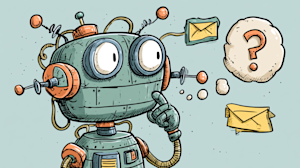
From isolated context to shared knowledge: the next step for enterprise AI
Enterprise AI agents are only as reliable as the messiest documents behind them. Most teams treat knowledge as application-specific context, building separate pipelines for each assistant. That works for isolated copilots, but it fractures as agents multiply. Inconsistencies spread, changes propagate unevenly, and teams rebuild the same retrieval infrastructure repeatedly. These are knowledge management problems, not context engineering ones. The fix is architectural: manage knowledge once, as shared infrastructure, and publish reusable representations for every agent.
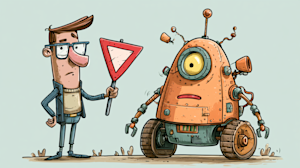
Empowering AI agents means knowing when to limit their autonomy.
The race to deploy the most autonomous agent is over. Enterprises winning with AI agents are now limiting how much those agents can do alone, because full autonomy breaks down in production. The companies that benefit won't be the ones with the most flexibility, but the ones creating agents with specific responsibilities and clear rules. Capability is outrunning control, and the 2026-to-2027 race is a trust race. For more on building these systems, explore our piece on orchestrating AI agents.

Nvidia's simple math cuts costly recomputation across AI models
Swapping models mid-session has always meant paying the full prefill tax again, until now. Nvidia's researchers found that a simple linear mapping can transfer a KV cache between compatible models, bypassing the expensive recomputation that bogs down multi-LLM agentic workflows. The math is refreshingly direct, not a heavyweight neural network. On tested pairs, this approach runs up to 25 times faster while keeping nearly all accuracy. It's a practical fix for a costly bottleneck, and it points toward leaner long-horizon AI systems.

Slack Code brings AI coding agents into team conversations
Slack is betting that the future of AI coding isn't a lone developer in a terminal, but a team watching the work happen in the open. With Slack Code, agents like Claude and Devin move into dedicated channels where anyone can steer, review, or contribute, turning software creation into a multiplayer sport. It's a smart, human-centered shift. For a deeper look at how teams are rethinking their workflows, our piece on Docker's sandboxed agent environments pairs well with this story.