Netflix Introduces ‘Model Lifecycle Graph’ to Scale Enterprise Machine Learning
Our take
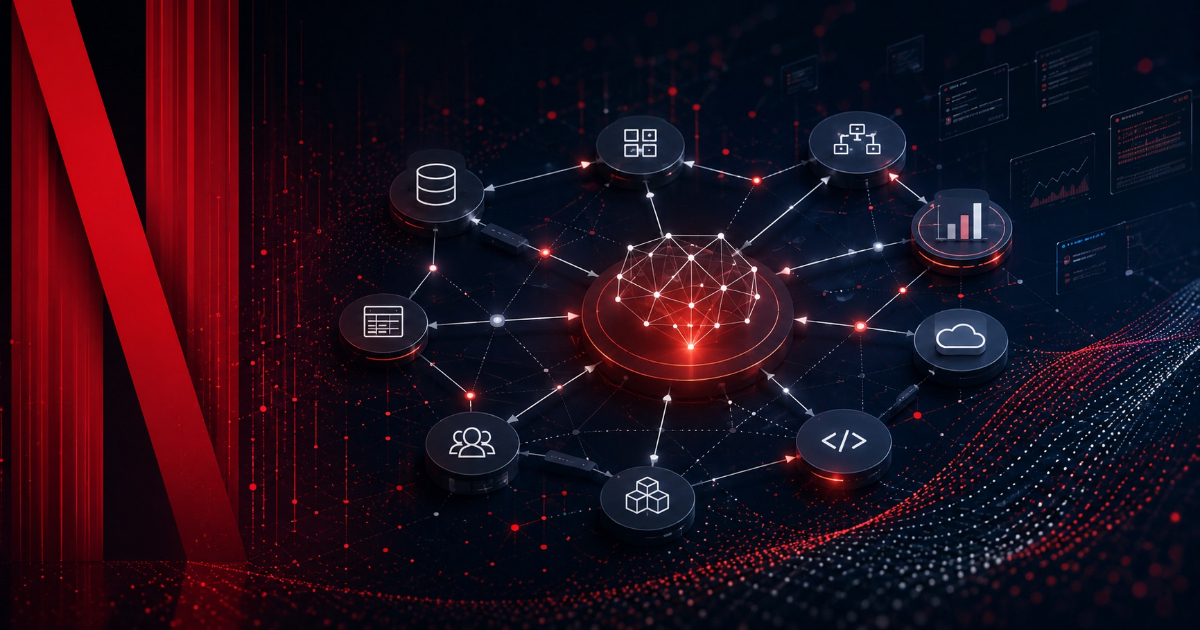
Netflix’s new Model Lifecycle Graph marks a decisive step toward turning the sprawling, often opaque world of enterprise machine learning into a navigable, self‑service ecosystem. By mapping the relationships among datasets, features, models, and workflows in a single, queryable graph, the platform tackles the three pain points that most data‑driven organizations wrestle with: discoverability, governance, and reuse. The approach feels familiar to anyone who has tried to untangle a web of spreadsheet dependencies, yet it pushes that familiarity into a modern, AI‑native context. Readers who followed our deep dive into Netflix’s “Inside Netflix’s Graph Abstraction: Handling 650TB of Graph Data in Milliseconds Globally” will recognise the underlying commitment to scale, while the companion piece “How Netflix Uses Graphs to Power Recommendations” (path) shows how the same principles can translate into tangible user experiences. Together, these stories illustrate a broader shift: legacy data pipelines are being replaced by graph‑centric architectures that surface connections the moment a new feature is added, a model is retrained, or a dataset is refreshed.
The real power of the Model Lifecycle Graph lies not just in its technical elegance but in the way it reshapes daily workflows for engineers and data scientists. Traditionally, scaling ML operations meant building custom dashboards, maintaining separate metadata stores, and relying on ad‑hoc documentation that quickly became outdated. Netflix’s graph unifies these silos, allowing a data scientist to query, for example, “Which models depend on this feature?” and instantly see downstream impacts, version histories, and responsible owners. This level of transparency empowers teams to explore changes without fearing hidden breakages, dramatically reducing the time spent on manual audits and compliance checks. Moreover, the graph’s self‑service interface encourages reuse: a well‑engineered feature can be discovered and adopted across projects, turning what was once a duplicated effort into a shared asset. For organizations still wrestling with spreadsheet‑heavy governance, the Model Lifecycle Graph offers a concrete blueprint for moving toward an accessible, future‑focused data fabric.
From an operational standpoint, Netflix’s decision to embed governance directly into the graph architecture signals a progressive stance on risk management. By attaching policies, access controls, and audit trails to each node, the system makes compliance an integral part of the development cycle rather than an afterthought. This approach aligns with the growing expectation that AI‑driven products must be both innovative and responsibly managed. It also reduces the cognitive load on engineers, who no longer need to remember disparate policy locations; the graph surfaces relevant rules at the point of action. The result is a smoother path from experimentation to production, where the friction of moving models out of the lab is replaced with a clear, repeatable process that scales with the organization’s ambitions.
Looking ahead, the Model Lifecycle Graph raises an intriguing question for the broader data community: will graph‑based metadata management become the new default for AI‑native platforms, or will it remain a niche solution for the most data‑intensive firms? As more companies adopt AI‑enhanced spreadsheets and low‑code analytics, the need for a unified view of data lineage will only intensify. If Netflix’s experience proves that a graph can deliver both performance and governance at scale, we may soon see a wave of tools that bring this capability to the everyday spreadsheet user, transforming how we explore, discover, and ultimately trust the data that powers our decisions.
Netflix has developed a graph-based architecture for managing machine learning systems, called the Model Lifecycle Graph. This system maps interconnections between datasets, models, features, and workflows, addressing challenges in scaling ML operations. It enhances discoverability, governance, and component reuse while supporting a self-service approach for engineers and data scientists.
By Matt FosterRead on the original site
Open the publisher's page for the full experience