Presentation: Accelerating Netflix Data: A Cross-Team Journey from Offline to Online
Our take
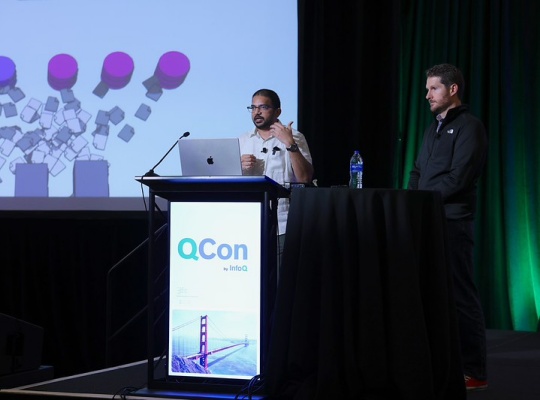
Netflix’s recent architectural shift to CloudStream, as detailed by Raj Ummadisetty and Ken Kurzweil, represents a significant evolution in how large organizations manage and deploy vast datasets, and should resonate deeply with software architects grappling with similar challenges. The move from stateless to stateful key-value abstractions to safely handle terabytes of bulk data is a crucial step, demonstrating a pragmatic approach to scaling data infrastructure. This mirrors trends we’ve seen in other areas of distributed systems – the increasing recognition that truly scalable solutions often necessitate embracing state management complexities. It’s particularly interesting in light of recent developments around AI agent persistence, as explored in Loop Engineering for AI Agents: How /loop is Changing AI Workflows, where the ability for agents to maintain state and context is proving invaluable. Furthermore, the challenges of scaling compute resources to handle this data echo the techniques employed by companies like ProGlove, as discussed in AWS Details How One Customer Scaled to One Million Lambda Functions, highlighting the importance of efficient resource utilization and architectural optimization.
The introduction of "Pathfinder" prototypes as a method for testing and refining data access patterns is a particularly insightful detail. This iterative, experimental approach to architecture design acknowledges the inherent uncertainty in large-scale system development. Rather than committing to a monolithic solution upfront, Netflix is embracing a more agile methodology, allowing them to validate assumptions and optimize performance incrementally. The reported 99% faster rollout time is a testament to the effectiveness of this strategy—a dramatic improvement that underscores the potential of well-designed data infrastructure to unlock significant operational efficiencies. This focus on rapid iteration and experimentation also aligns with the ongoing exploration of real-time systems, as evidenced by developments in mobile audio streaming, such as those described in Article: Beat-Aligned Mobile Audio Streaming with Virtual Chunks and Native Playback, where responsiveness and low latency are paramount.
The core takeaway from Netflix’s CloudStream journey isn’t simply about adopting a specific technology or framework—it’s about a mindset shift. It’s a recognition that data architecture must be dynamic and adaptable, capable of evolving alongside rapidly changing business needs and technological advancements. Embracing statefulness, prioritizing data access pattern optimization, and leveraging iterative prototyping are all key components of this new paradigm. The sheer scale of Netflix’s operations – dealing with terabytes of data and serving millions of users – amplifies the impact of these architectural choices, making their experiences a valuable case study for other organizations. It’s a stark reminder that legacy approaches to data management are simply no longer sustainable in a world demanding speed, agility, and real-time insights.
Ultimately, Netflix’s CloudStream represents a crucial step toward a future where data infrastructure is not a bottleneck but a powerful enabler of innovation. The move to a repeatable capture, conversion, and deployment framework suggests a broader trend: a shift from reactive data management to proactive, architecturally driven data engineering. As AI continues to reshape industries and data volumes continue to explode, the question becomes: how can organizations anticipate and adapt to the evolving demands of their data landscape, and what innovative approaches will emerge to meet these challenges?
Raj Ummadisetty and Ken Kurzweil share Netflix's architectural pivot to CloudStream, a repeatable capture, conversion, and deployment framework. They discuss shifting key-value abstractions from stateless to stateful to move terabytes of bulk data safely. Software architects will learn to exploit data access patterns, use "Pathfinder" prototypes, and maintain a 99% faster rollout.
By Rajasekhar Ummadisetty, Ken KurzweilRead on the original site
Open the publisher's page for the full experience