Presentation: How Netflix Shapes our Fleet for Efficiency and Reliability
Our take
Netflix’s latest presentation on fleet management does more than showcase engineering tricks; it offers a blueprint for any data‑intensive service that must balance razor‑thin margins of efficiency with an unbreakable promise of reliability. The speakers’ “risk‑adjusted net value” model reframes capacity planning from a static CPU‑percentage mindset to a dynamic buffer‑centric view that accounts for traffic volatility, hardware heterogeneity, and the true cost of a playback interruption. For readers already exploring how AI can transform data workflows, this perspective dovetails with the ideas in How AI Agents Will Transform Data Science Work in 2026 and the practical challenges of linking data across systems highlighted in Order form that references data from a table. Both pieces stress that the real lever for productivity is not more raw compute, but smarter orchestration of existing resources—a lesson Netflix has turned into a disciplined, repeatable process.
At the heart of Netflix’s strategy is hardware shaping, a proactive alignment of workload characteristics with the most appropriate server configurations. By classifying traffic into “core” and “elastic” buckets, the platform can steer latency‑sensitive playback to machines with generous memory and network headroom, while relegating batch analytics or recommendation updates to more cost‑effective nodes. This approach mirrors the progressive mindset we champion: it acknowledges that legacy, one‑size‑fits‑all infrastructure is increasingly misaligned with modern, AI‑native workloads, yet it offers a migration path that feels accessible rather than disruptive. The real breakthrough, however, lies in the layered defense system of “hammers” and prioritized load shedding. When a sudden surge threatens to erode the buffer, Netflix can apply a calibrated hammer—such as throttling non‑critical micro‑services—before resorting to load shedding that gracefully degrades non‑essential features while preserving playback. The result is a risk‑adjusted net value that remains positive even under stress, turning what could be a catastrophic outage into a managed, user‑transparent event.
Why does this matter to a broader audience? Because the tension between efficiency and reliability is not unique to streaming; it permeates any organization that relies on real‑time data pipelines, predictive models, or collaborative spreadsheets powered by AI. In our own domain, the same principles can guide the design of AI‑native spreadsheet engines: allocate compute buffers for formula recalculation, shape hardware to match the intensity of large‑scale data joins, and implement proactive traffic steering that routes high‑priority user edits to low‑latency nodes. The “hammer” metaphor translates into throttling background analytics jobs when a spreadsheet approaches its performance envelope, ensuring that the user experience—editing, visualizing, sharing—remains responsive. By adopting a risk‑adjusted net value mindset, product teams can make data‑driven trade‑offs that keep productivity high without sacrificing the safety net that users expect.
Looking ahead, the next frontier will be how these concepts evolve with increasingly autonomous systems. As AI agents begin to manage capacity buffers in real time, the line between proactive shaping and reactive hammering will blur, raising questions about transparency and control. Will future platforms expose the buffer metrics that drive these decisions, inviting users to “explore” and “discover” their own optimization levers? Or will the complexity be hidden behind a layer of intelligent orchestration that simply delivers a smoother experience? Netflix’s presentation shows us that the answer lies in balancing progressive innovation with human‑centered clarity—an approach we should watch closely as the industry moves toward fully self‑optimizing data ecosystems.
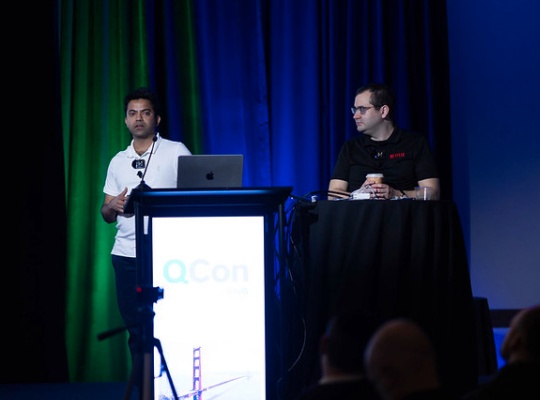
The speakers explain the inherent tension between service efficiency and reliability at Netflix's global scale. They share a mental model for "risk-adjusted net value," moving beyond simple CPU utilization to focus on capacity buffers. They discuss hardware shaping, proactive traffic steering, and reactive levers like "hammers" and prioritized load shedding to protect critical playback.
By Joseph Lynch, Argha CRead on the original site
Open the publisher's page for the full experience