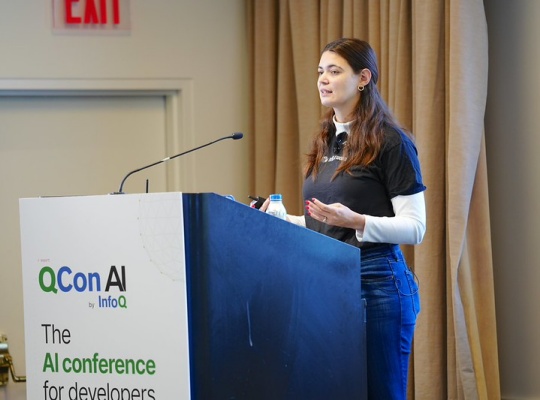
In her insightful presentation, Meryem Arik addresses a pressing challenge facing modern engineering teams: "inference chaos." As organizations increasingly adopt decentralized models, the complexities of managing AI models can lead to inefficiencies and risks. Arik's exploration of AI model gateways as a critical control layer offers valuable guidance for teams navigating these turbulent waters. By balancing the empowerment of decentralized teams with the need for centralized oversight, organizations can optimize their AI infrastructure while maintaining security, role-based access control (RBAC), and cost management. This topic is timely, especially as we see companies like Grab implement innovative solutions, such as in their Designing a Multi-Agent System for Engineering Support at Scale: A Case Study From Grab, which streamline operations across decentralized teams.
The concept of an AI model gateway is particularly significant in today’s landscape. As teams are empowered to choose their models for specific tasks, the risk of fragmentation increases. Arik emphasizes the necessity of a control layer that not only facilitates model selection but also ensures that security measures and cost controls are in place. This is crucial for organizations aiming to leverage AI effectively while mitigating risks associated with decentralized decision-making. The balance she proposes allows teams to innovate without compromising the integrity of the overall system. It echoes sentiments found in our article on the importance of automation and scaling in AI, as seen in Top 9 AI Events and Conferences in 2026 that you Must Attend, where the emphasis is on the evolution of AI from experimental to integral in business processes.
Moreover, exploring open-source solutions like LiteLLM and Doubleword, as suggested by Arik, opens the door to democratizing access to advanced AI capabilities. These tools can streamline AI infrastructure, making it easier for teams to implement and manage their models without the burden of extensive resources. By adopting such solutions, organizations can foster an environment of collaboration and innovation, ultimately leading to more agile responses to changing market demands. This is an encouraging development for teams looking to enhance their infrastructure while remaining competitive in an ever-evolving landscape.
As we look forward, the implications of Arik's insights are profound. Organizations must not only adopt these AI model gateways but also cultivate a culture that embraces both decentralization and centralized oversight. This dual approach will be essential for navigating the complexities of AI integration and ensuring that teams can innovate while remaining aligned with organizational goals. The question now becomes: how will organizations balance this empowerment with the necessary control as they scale? Monitoring this dynamic will be critical as we continue to explore the transformative potential of AI in data management and beyond.