actions
7 stories filed under actions on Beyond Market Intelligence. The newest of them: “A new security model keeps AI agents capable without exposing your credentials”, “Automate regression testing with AI that understands UI changes”, and “Scale Your Self-Hosted Runners with ARC's Latest Reliability Upgrades”. Edera's Object Capability Bounded Authority model gives AI agents real power without handing over the keys to your kingdom. Regression testing that breaks every time the UI changes is a costly cycle. Acme AI is the next-generation, AI-powered spreadsheet platform built to replace Excel and redefine how analysts, data scientists, and enterprise teams work… The list below is every actions story on Beyond Market Intelligence, newest first.

A new security model keeps AI agents capable without exposing your credentials
Edera's Object Capability Bounded Authority model gives AI agents real power without handing over the keys to your kingdom. By separating what an agent needs to do from the credentials behind it, hypervisor-enforced capabilities limit actions to specific tasks while keeping secrets out of the workload itself. That's practical security thinking. For a deeper look at securing modern workflows, our coverage of GitHub Actions Lockfiles explores a related approach to dependency protection.

Automate regression testing with AI that understands UI changes
Regression testing that breaks every time the UI changes is a costly cycle. QA Agent, a new source-available Playwright library by Bruno Couriol, tackles this directly. It translates natural-language test instructions into browser actions, caches those for faster CI replays, and remaps them when the interface shifts. Verification relies on multi-model consensus and vision evaluations. This is a practical step toward AI that adapts to your code, not the other way around.

Scale Your Self-Hosted Runners with ARC's Latest Reliability Upgrades
For teams managing their own CI infrastructure, ARC 0.15.0 brings meaningful improvements to how self-hosted runners operate on Kubernetes. The focus on reliability and observability means less time troubleshooting infrastructure and more time shipping code. This release respects that scaling compute shouldn't introduce complexity. For those exploring how AI infrastructure scales independently, our coverage of Tenstorrent's recent funding offers a complementary look at building trust in open-source foundations.
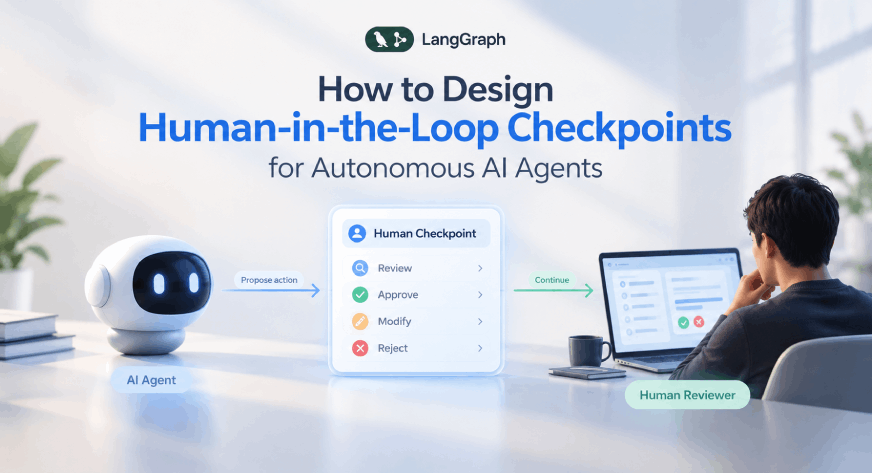
Build Smarter AI Agents by Adding Human Oversight Where It Matters Most
Autonomous AI agents can read, retrieve, reason, and trigger actions in seconds, useful speed, but real risk when the next step touches money, customer records, or live systems. Human-in-the-loop checkpoints add control exactly where a recommendation is about to become action. That's the smart design. For deeper context, our piece on Anthropic restricting internal AI tests from live internet shows how even the most advanced labs are rethinking control.

Why a Decision-First Model Can Rein In Risky AI Agent Actions
A single bad tool call can turn an AI agent from a helpful assistant into a liability. TypeSafe's Jev addresses this by putting decisions first, catching risky actions before they ripple into the real world. That's a pragmatic layer of safety we can get behind. It pairs well with our look at how open data center deals signal a smarter path to community trust, both show that proactive guardrails build better outcomes.

Empower AI agents with precise controls for safer data actions.
Cloudflare's WriteGuard, now in private beta, takes a meaningful step toward safer AI agents by giving MCP servers fine-grained control over which tools can modify data or trigger actions. That shift from broad access to precise permissions feels like the right kind of guardrail for a rapidly evolving space. It's a practical move, not a flashy one, and that's what makes it worth your attention. For a broader look at how MCP is shaping workflows, our visual guide offers a solid starting point.

GitHub's Default Security Shift Puts Waiting Periods Ahead of Signing
GitHub's latest npm and Actions updates, shipped from March through July 2026, harden defaults against supply chain attacks rather than just adding new options. That's a sensible shift, though Hacker News commenters are split on whether waiting periods truly solve the problem or merely delay it. Author-side package signing still feels like the missing piece. These controls are welcome, but they shouldn't replace a more direct path to trust.