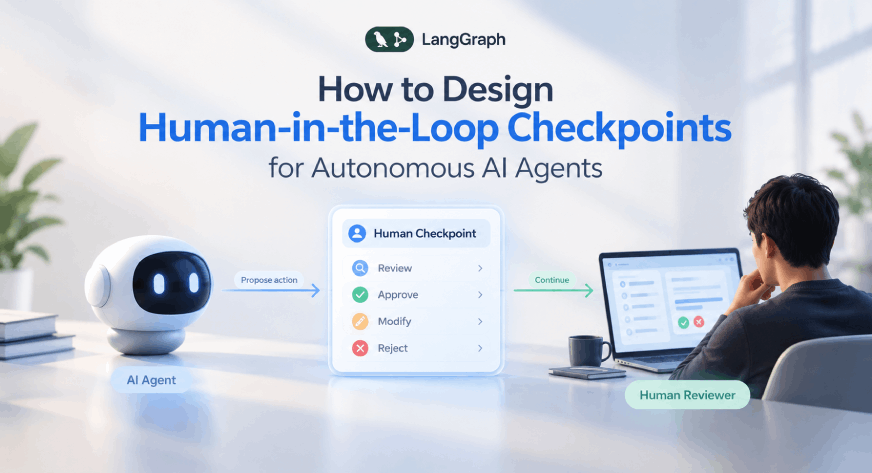
Autonomous AI agents are fast, but speed without safeguards is just recklessness disguised as efficiency. That is the core tension in the recent discussion around designing human-in-the-loop checkpoints for these systems, and it is a tension every team building with AI needs to reckon with now. We agree wholeheartedly that the moment an agent's recommendation is about to impact money, customer records, or an external system, a human checkpoint is not a bottleneck, it is the only intelligent control.
The case for human oversight is not about distrusting the technology. It is about acknowledging where the stakes live. An agent can read a request, retrieve data, reason through options, and trigger an action in seconds. That speed is valuable for repetitive or low-risk tasks, but it becomes a liability the second the action affects something irreversible. Consider how Anthropic restricts internal AI tests from live internet to ensure control. That move was not a confession of weakness; it was a recognition that autonomous systems need boundaries. The same logic applies to checkpoints: you do not slow down the agent, you slow down the decision to commit. That is a deliberate, not defensive, design choice.
What makes this approach practical is that it does not force a binary choice between full autonomy and total manual control. Instead, it asks builders to identify the moments where a recommendation crosses from helpful to actionable. That is where a human pause adds real value. Tools like the decision-first model for catching risky tool calls show that you can intercept dangerous actions before they happen, not after. The checkpoint becomes a guardrail rather than a stop sign. The distinction matters because it preserves the agent's autonomy for the work it does well, pattern recognition, retrieval, drafting, while reserving judgment for the moments that require context, ethics, or business logic that no model can fully encode.
The practical takeaway here is direct: design your human-in-the-loop checkpoints at the action boundary, not at the recommendation boundary. Let the agent reason and suggest freely. Then, when it wants to execute, pause. That one rule separates tools you trust from tools you merely tolerate. The open question is whether the industry will adopt this discipline voluntarily or wait for a costly failure to force the lesson.