agentic coding
Beyond Market Intelligence keeps agentic coding in one place: 7 stories so far. The section currently leads with “Redefining Dev Teams for an Agentic Era with Safety and Humanity”, “Claude Sonnet 5.5 Delivers Faster Coding Smarter Agentic Workflows and Practical Cost Controls”, and “From Terminal Helper to Autonomous Developer: The CLI Evolves”. Engineering leaders facing agentic coding's surge need more than faster pipelines. Claude Sonnet 5.5 is the middle child of the Claude family, and that is precisely why it matters. Acme AI is the next-generation, AI-powered spreadsheet platform built to replace Excel and redefine how analysts, data scientists, and enterprise teams work… The list below is every agentic coding story on Beyond Market Intelligence, newest first.

Redefining Dev Teams for an Agentic Era with Safety and Humanity
Engineering leaders facing agentic coding's surge need more than faster pipelines. Hannah Foxwell anchors them in three practical priorities: build software worth building, automate safety before speed, and preserve the human element through generalist skillsets and sustainable on-call. It's a grounded framework that keeps teams human-centered amid AI-driven velocity. For a related look at AI in action, see our coverage of Flai's $27M round fueling an AI platform booking 50,000 appointments monthly.

Claude Sonnet 5.5 Delivers Faster Coding Smarter Agentic Workflows and Practical Cost Controls
Claude Sonnet 5.5 is the middle child of the Claude family, and that is precisely why it matters. This is the model most people will actually use, quick, capable, and cheap to run. Our practical guide covers what changed, the benchmarks that matter, and the cost controls developers should not miss. We also built one hands-on demo worth your time. For deeper context on Anthropic's broader trajectory, see our related piece on the company's own prospectus warning of existential risk and massive losses.
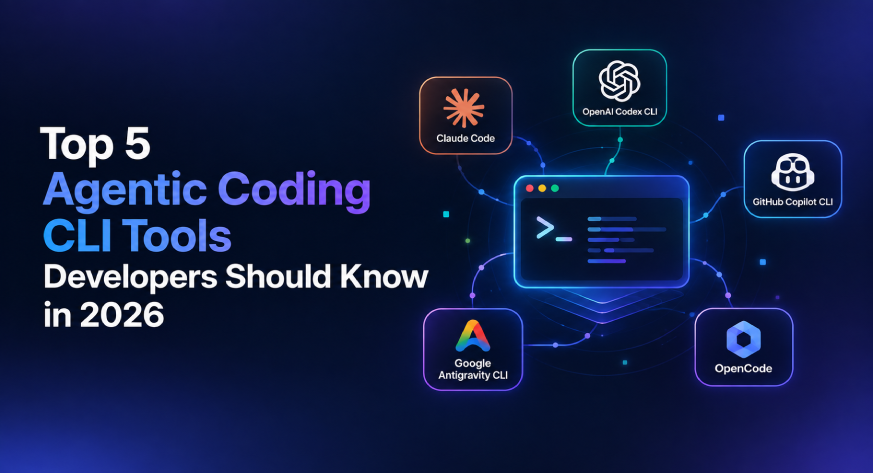
From Terminal Helper to Autonomous Developer: The CLI Evolves
A year ago, terminal AI meant asking a model to explain an error or tweak a function. In 2026, leading coding CLIs operate as full agent runtimes, inspecting repos, planning work, and verifying results. We compare five standouts, including Claude Code and Codex CLI, to show how this shift transforms daily workflows. If you are tracking how AI skills are evolving, our related piece, "Navigating AI/ML Job Requirements," offers useful context on what developers now need. Explore the tools that make complex tasks simpler.

Meta enters the AI coding arena with agent tools and smarter models.
Meta is entering the AI coding race with intent. Today's beta release of Muse Code, a terminal-based agent built for large repositories, pairs with Muse Spark 1.2, a model co-trained alongside its own harness. The pitch is practical: persistent background agents, parallel worktrees, and a replay-exact audit log. Pricing undercuts rivals significantly, though the contributor tier trades tokens for training data. It's a calculated move from a company that once championed open weights. For now, the frontier just got more crowded.

Voice meets action: OpenAI brings GPT-Live's full duplex to Codex and desktop
Two weeks after debuting GPT-Live, OpenAI has brought its full-duplex voice control into Codex and the ChatGPT desktop app on macOS and Windows. That means developers can now orchestrate multi-threaded coding jobs, review pull requests, and debug applications using natural speech, hands-free. The architecture decouples the voice layer from heavier reasoning models, letting conversations flow while agents work asynchronously.

Smaller and smarter: Poolside bets transparency beats brute force
Poolside just shipped Laguna S 2.1, and the numbers deserve a second look. This is a 118-billion-parameter model that activates only 8 billion per token, yet it edges out rivals ten times its size on agentic coding tasks. That is not hype; that is a published benchmark score. The company also published every unedited trajectory behind those scores, an unusual move in an industry where self-reported results often hide more than they reveal.

A new keyboard from OpenAI invites a seamless coding workflow.
OpenAI's new $230 keyboard for Codex lands with a familiar tension: a bold tool for developers arriving amid a legal fight with Apple over hardware trade allegations. The light-up design feels intentional, built to pair with its agentic coding app, yet the timing complicates the story. We're not here to litigate the case, but it's worth asking what this signals about focus.