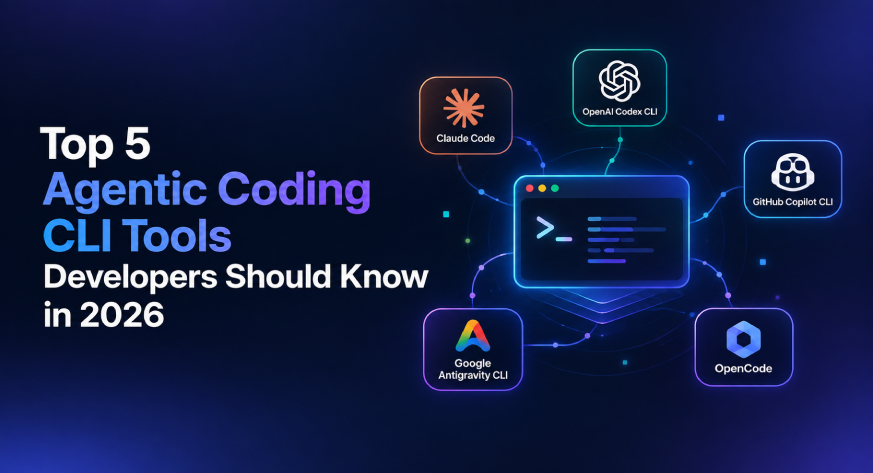
A year ago, asking a terminal AI to help meant getting an explanation for a cryptic error or a quick command to pipe through a script. That was the ceiling. Agentic coding CLIs show how quickly the floor has moved. These tools have become full agent runtimes that can inspect a repository, map out a plan, modify files, run tests, and verify their own work. That is not a minor feature update. That is a different division of labor between developer and machine.
For anyone who has spent the last few years wrestling with spreadsheets that break the moment someone adds a column, or with scripts that fail silently, the shift should feel familiar. We are seeing the same pattern that is reshaping data work: the tool stops being a passive object you manipulate and starts being an active participant in the task. This is why we recently explored how the Forrester function moves beyond pure mathematics into practical machine learning applications, and why we have been tracking how Verify Your AI's Understanding: A Simple Check for Tax Season points to a core truth: verification is the new bottleneck. The same applies here. A CLI that can write code is interesting. A CLI that can write code, run the tests, and tell you why it failed is transformative.
Our honest take is that the gap between the top five tools is less about raw capability and more about workflow trust. Claude Code and Codex CLI are not just faster autocompletes; they are junior engineers that never sleep. But with that agency comes a new responsibility for the developer. You are no longer just reviewing code for logic. You are reviewing the plan, the assumptions, and the order of operations. This mirrors the shift we highlighted in Navigating AI/ML Job Requirements: A Shift in Expected Skills, where the ask is no longer just "can you code" but "can you direct an AI to code well."
What would we tell a reader who asks whether these tools are worth adopting now? The answer is yes, but with a specific expectation. Do not adopt them to write more code faster. Adopt them to close the loop on quality. The real value is in the verify step: the tool that runs the test suite and catches a regression before you commit is worth more than one that generates a thousand lines of boilerplate. The practical consequence is that your workflow changes from writing code to writing better prompts and reviewing diffs with a sharper eye. The specific detail to watch, and the one that will separate the useful tools from the toys, is how they handle failure. A tool that says "I tried, here is the error" is good. A tool that says "I tried, here is the error, and here is the fix I already applied and tested" is the future. That is the bar. Watch for it.