AI deployment
9 stories filed under AI deployment on Beyond Market Intelligence. The newest of them: “Anthropic, Clay, and Gamma on moving AI from demo to deployment”, “Explore the Future of AI Deployment: Key Topics at QCon AI New York”, and “Google Cloud and Accenture team up to accelerate enterprise AI adoption”. The leap from AI demo to daily deployment is the hardest part of the journey. QCon AI New York has confirmed 23 sessions that dig into the real mechanics of AI deployment: agent authorization, production guardrails, shared inference infrastructure, and post-deployment evaluation. Acme AI is the next-generation, AI-powered spreadsheet platform built to replace Excel and redefine how analysts, data scientists, and enterprise teams work… The list below is every AI deployment story on Beyond Market Intelligence, newest first.

Anthropic, Clay, and Gamma on moving AI from demo to deployment
The leap from AI demo to daily deployment is the hardest part of the journey. At TechCrunch Disrupt 2026, Anthropic, Clay, and Gamma will share exactly what that transition demands. We expect real talk about friction, not just polished results. If you are serious about moving past the pilot phase, this session is worth your time. Register now and get 50% off a second pass. For more on Anthropic's latest advances, read our coverage of "Sonnet 5.5 delivers faster insights while reducing your token spend."
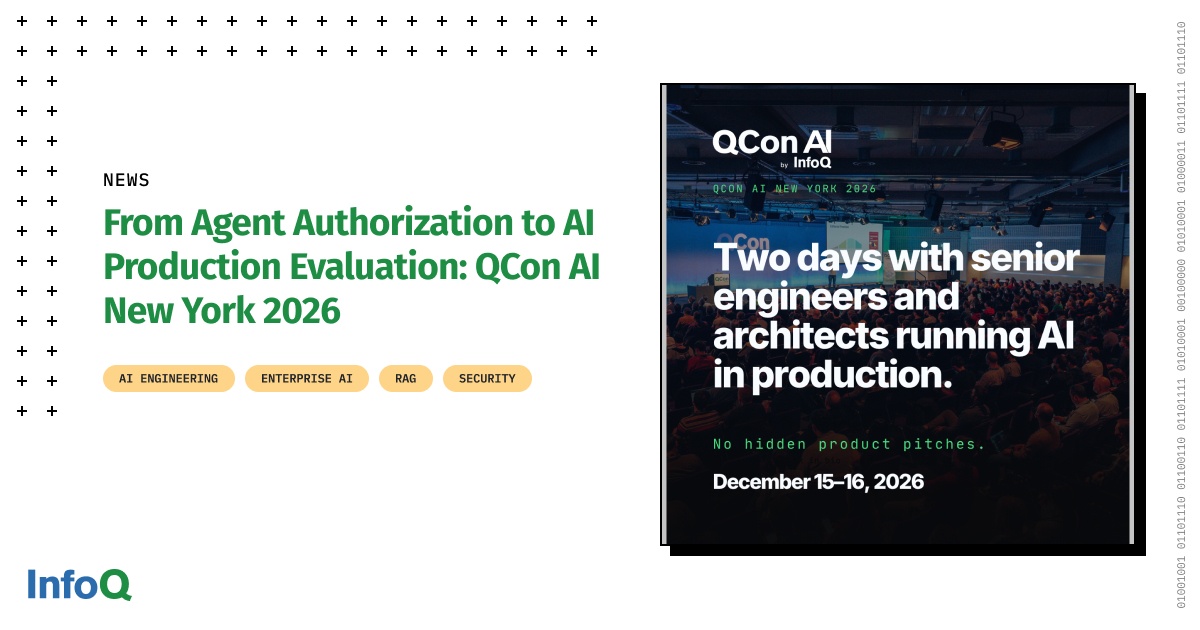
Explore the Future of AI Deployment: Key Topics at QCon AI New York
QCon AI New York has confirmed 23 sessions that dig into the real mechanics of AI deployment: agent authorization, production guardrails, shared inference infrastructure, and post-deployment evaluation. That is a refreshingly practical lineup. We talk a lot about building AI, but the hard part is running it responsibly at scale. If you are moving from experimentation to production, this agenda feels like a direct response to the questions we are all asking.

Google Cloud and Accenture team up to accelerate enterprise AI adoption
Google Cloud's new Accenture partnership is a calculated bet that forward-deployed engineers, not just flashy models, will close the AI adoption gap. It's a pragmatic move, acknowledging that deployment bottlenecks are where good ideas stall. Pair this with our guide, "Verify Your AI's Understanding: A Simple Check for Tax Season," and you'll see the same theme: execution is the real differentiator. This isn't about hype; it's about showing up where the work happens.

Reduce Uncertainty Before Agents Speed Up Your Data Workflows
Agentic AI moves fast. Too fast to skip the hard part. Before you let it run, you need to be sure you're solving the right problem. This practical framework helps you slow down, reduce uncertainty, and get clarity before the acceleration begins. It's a smart, grounded read. For more on how agents handle tasks, check out *Bridging Retrieval and Action* to see the mechanics in action.

From mining to data: Caterpillar applies hard-won AI lessons to new frontiers
For decades, Caterpillar has run autonomous machines across remote mining sites, learning what it takes to make AI work where failure isn't an option. That hard-won experience now anchors its approach to broader AI deployment. It's a natural evolution, and one worth watching. If you're curious how such systems verify their own understanding, our piece, "Verify Your AI's Understanding: A Simple Check for Tax Season," offers a practical starting point. The takeaway: proven grit beats hype every time.

Building Trust into AI: Secure Architecture for Enterprise Agents
Taking an AI agent from prototype to production is where the real test begins. This piece tackles the often-messy transition head-on, focusing on the responsible AI, security, and governance layers that keep enterprise deployments safe. It's a grounded look at building trust into the architecture itself, not bolting it on later. For those wrestling with similar scaling challenges, it pairs well with our broader coverage on agentic workflows. We appreciate the clarity here, as it makes a complex subject feel genuinely approachable.

June raises $20 million to make AI deployment simpler and more accessible
June emerged from stealth today with a $20 million pre-seed round, a clear signal that Marc Benioff-backed investors see real potential in simplifying AI adoption. The startup's premise is refreshingly direct: the hardest part of AI isn't building it, it's deploying it without drowning in complexity. That resonates. We've explored the human side of these tools before, like in our piece on questioning AI clones, and this feels like a natural next step.
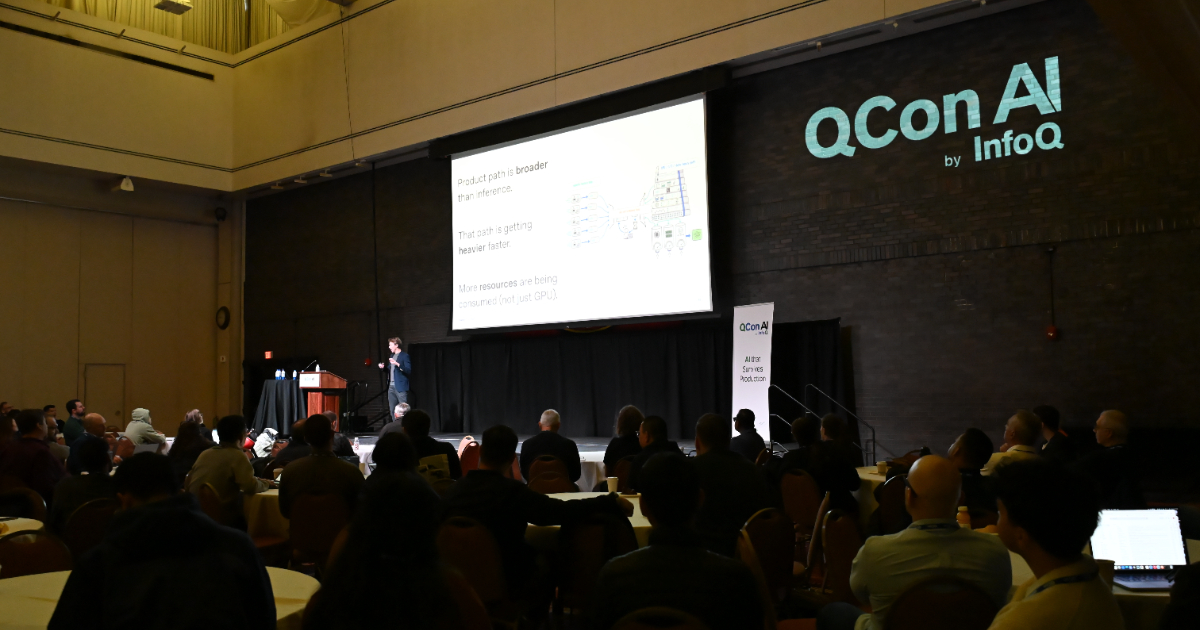
From Prompts to Platforms: Building the Infrastructure for Production AI
The operational reality of AI agents is finally taking center stage, and QCon AI Boston 2026 is where that conversation sharpens. The focus has shifted from what prompts can do to how we build dependable systems around them. We're talking about serious infrastructure: managing context effectively and wrapping agents in a security harness that keeps them safe in production. This is the unglamorous, essential work of making AI actually usable.

Open models are reshaping where enterprise AI actually runs
Hugging Face CEO Clem Delangue sees the AI race shifting ground. Enterprises are increasingly choosing open models for cost, accessibility, and ownership, not because frontier tech lacks dazzle, but because production reality demands control. That raises a fair question: does the latest benchmark matter if most real-world AI runs on open alternatives? I think the answer is nuanced, and it's worth exploring how these choices play out in practice.