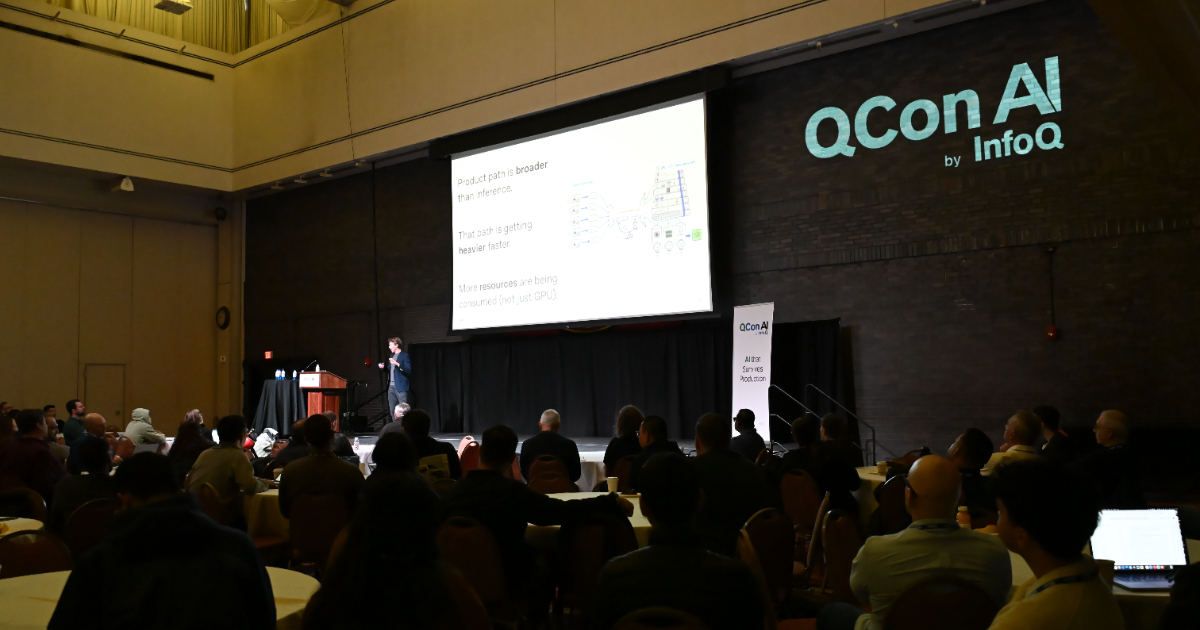
The conversation at QCon AI Boston 2026 signals that we have officially moved past the era of the clever demo. When Tatiana Fesenko reports on the shift from prompt tinkering to production platforms, what we are really seeing is the industry growing up in public. The focus on operational challenges, context management, and security harnesses tells us that the people building with AI are no longer asking "what can it do?" but rather "how do we keep it from breaking when it matters?" That is a question worth taking seriously, because it changes the nature of our work from experimentation to engineering.
For readers who have been following the evolution of AI tools, this is the natural next chapter. We recently explored how Talking to My AI Clone Taught Me to Question the Tech, and that sense of healthy skepticism is exactly what the Boston conference seems to endorse. Similarly, the emphasis on verifying what an AI actually understands, as discussed in Verify Your AI's Understanding: A Simple Check for Tax Season, is no longer a nice-to-have. It is the core discipline. The conference's message about building a "harness" around agents is not about restricting capability; it is about acknowledging that these systems are powerful enough to require boundaries. This is the difference between being impressed by a tool and being responsible for its output.
Our take is straightforward: if you are still approaching AI as a prompt-writing exercise, you are already behind. The practical implication of the QCon themes is that your workflow needs to treat AI as a persistent, governed component of your stack, not a parlor trick you summon from a chat window. This means investing in evaluation loops, context management, and security layers before you scale. It also means reconsidering what you expect from your own role. The shift in Navigating AI/ML Job Requirements: A Shift in Expected Skills reflects this same reality: the market is consolidating around people who understand systems, not just prompts.
What we would tell a reader asking about this is simple: treat the conference's focus on evals and platforms as a signal to audit your own AI usage. Do you know how your agent behaves when the context window gets messy? Have you defined what "good" looks like for your specific use case? If you cannot answer those questions, the takeaway to quote is this: **Production AI is not about what the model can do; it is about what your infrastructure will tolerate.** The next time you are tempted to add another AI feature, ask yourself whether you are building a platform or just a prototype. The answer will tell you whether you are ready for what comes after the demo.