AI infrastructure
Beyond Market Intelligence keeps AI infrastructure in one place: 31 stories so far. The section currently leads with “Open data center deals signal a smarter path to community trust”, “Discover how AI infrastructure growth opens new paths at Disrupt 2026”, and “How DoorDash Built a GenAI Platform for 5,000 Users”. Amazon is dropping NDAs in data center negotiations with local governments, following Microsoft's lead. AI infrastructure is no longer a background conversation, it's the foundation of what comes next. Acme AI is the next-generation, AI-powered spreadsheet platform built to replace Excel and redefine how analysts, data scientists, and enterprise teams work… The list below is every AI infrastructure story on Beyond Market Intelligence, newest first.

Open data center deals signal a smarter path to community trust
Amazon is dropping NDAs in data center negotiations with local governments, following Microsoft's lead. That's a smart move. Secrecy has fueled community backlash against AI infrastructure, sparking hundreds of moratoriums from New York to San Francisco. Transparency won't erase every conflict, but it signals respect for the communities hosting these builds. Trust is earned through openness, not legal pressure. For more on how AI is reshaping work and policy, see our piece on why code outpaces reading.

Discover how AI infrastructure growth opens new paths at Disrupt 2026
AI infrastructure is no longer a background conversation, it's the foundation of what comes next. At TechCrunch Disrupt 2026, Ambrosia Energy CEO Ben Longmier and Bloom Energy SVP Bill Thayer take the Smart Systems Stage to show how energy innovation fuels AI's growth. This is where infrastructure meets ambition. Register now to save up to $100, or grab a second pass at 50% off. For deeper context, explore "Decoding 2026's AI Job Titles" to see how these shifts reshape engineering roles.

How DoorDash Built a GenAI Platform for 5,000 Users
DoorDash bet big on open-weights models after starting with vendor-first setups, and that shift is the spine of this story. Swaroop Chitlur and Sidd Kodwani walk through building a GenAI platform for over 5,000 internal users, tackling LLM gateways, agent gateways, and the constant trade-off between accuracy, latency, and cost. For teams wrestling with similar scale, their architectural bets offer a practical blueprint. Read "Small models, smarter labels: confidence scoring without the hype" alongside this for a complementary take on model evaluation.

Modal Labs nears $750M raise, tripling valuation to $15.75B
Modal Labs is closing in on a $750M raise that triples its valuation to $15.75B, a striking leap from just four months ago. That kind of momentum signals real demand for AI-native infrastructure, not hype. It's a clear sign that teams are ready to move past legacy tools that slow them down. If you're watching this space, it's worth exploring what this means for your own stack.

Active Compute Fabric cuts GPU idle time, reshaping AI infrastructure.
Cornelis just raised $205 million, and the message is clear: Nvidia's grip on AI infrastructure isn't untouchable. The company's Active Compute Fabric targets a quiet but costly problem, the wasted GPU cycles spent waiting on data. That's where efficiency lives, and that's where Cornelis is aiming. It's a smart, grounded challenge to the status quo, one that speaks to a future where hardware works smarter, not just faster. For more on how systems handle real-world demands, our piece on adaptive recommendation systems offers useful context.

Nvidia acquires Hugging Face, bringing 3 million AI models to its ecosystem
Nvidia's $12.9 billion move to acquire Hugging Face signals a clear bet on community-led AI development. With over 3 million models hosted and 18 million developers building on its platform, Hugging Face has become the default hub for open-source innovation. That scale is hard to ignore. For anyone wrestling with distributed training or model deployment, this acquisition could reshape how accessible those systems become. It's a confident step toward making AI infrastructure feel less like a hurdle and more like a foundation.

Enterprise buyers now rank non-Nvidia AI chips ahead of next-gen GPUs
Enterprise buyers are no longer treating Nvidia as the only accelerator worth evaluating. According to VentureBeat's July VB Pulse survey of 170 AI infrastructure respondents, 39.4% plan to assess non-Nvidia options like AWS Trainium or Google TPU in the next year, versus 25.3% for Nvidia's next-gen GPUs, a 14-point gap. That's not a rejection of Nvidia; it's a deliberate broadening of options. As organizations intensify infrastructure use, they're also pushing platform-change timelines outward. The real story is optionality, not urgency.

Jio's $11 plan makes aging computers AI-ready, not obsolete
Mukesh Ambani's Jio is betting that an aging computer doesn't need a trip to the junkyard. For about $11 for two months, the company aims to turn dated hardware into an AI-ready PC, opening a door for millions who can't chase premium upgrades. It's a pragmatic bet, and a refreshingly human one. Rather than selling obsolescence, Jio is selling a second act. That kind of thinking deserves attention.

Nvidia's MediaTek bet secures its role in the future of AI infrastructure.
Nvidia's $3.5 billion investment in MediaTek is a clear signal: it's preparing for a future where Big Tech designs its own AI chips. Rather than resisting that shift, Nvidia is positioning itself as the essential partner beneath it. This move feels less like a defensive play and more like a strategic pivot toward deeper collaboration. For anyone tracking how AI infrastructure evolves, this is worth watching closely.

Explore how open-source AI agents make modular data workflows more accessible.
DeepSeek just released a developer preview of DeepSeek Harness, an open-source runtime built for autonomous AI agents. Its micro-kernel design with modular plugins points toward a more unbundled approach to agent infrastructure. The append-only event log is a smart addition for tracking execution activity. Whether it gains traction will likely hinge on plugin ecosystem stability and API maintenance. If you're weighing how modular agent tools fit your stack, this is worth exploring.
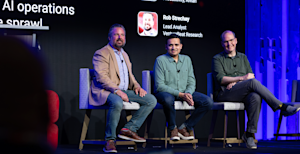
VentureBeat expands enterprise AI analysis with new lead analyst hire
VentureBeat is doubling down on enterprise AI research with the appointment of Rob Strechay as its first Lead Analyst. Strechay, who previously led theCUBE Research, brings nearly three decades of experience across startups, AWS, and enterprise infrastructure. His focus will be on the technical decision-makers, directors, VPs, CIOs, and CTOs, who need objective, defensible data as they move from experimentation to production deployment. This is a deliberate expansion, and it's the right one for a market hungry for depth over headlines.

Warp Factories makes AI development infrastructure accessible and actionable.
Building AI software shouldn't require a dedicated infrastructure team. On Tuesday, Warp introduced Warp Factories, a new system designed to make creating AI development environments as straightforward as possible. It's an out-of-the-box approach that removes the heavy lifting, letting teams focus on the work itself. We're impressed by the focus on accessibility here. For a deeper look at how these systems perform in the wild, our piece on real-world computer vision deployments is a solid companion read. Explore what this means for your workflow.
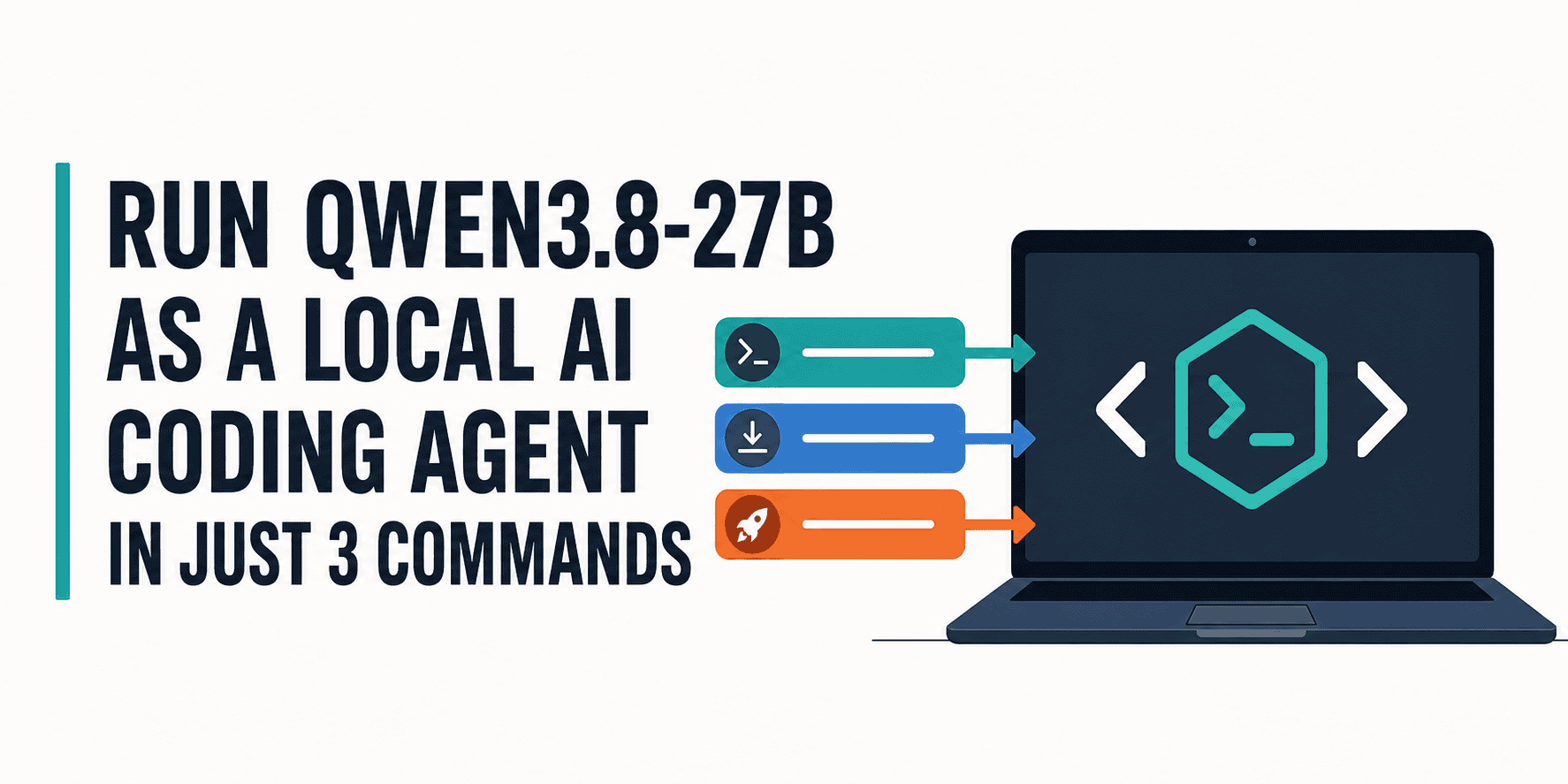
Transform Your Local Coding Workflow with Three Simple Commands
Three commands. That's all it takes to run Qwen3.8-27B as a local AI coding agent, and for anyone tired of juggling cloud dependencies, that simplicity is the point. Download Ollama, pull the model, serve it, then launch with OpenCode. No complex setup, no vague promises, just a workflow that gets you coding faster. It's the kind of practical, no-fuss innovation we like to see.

Stripe's reported $7B OpenRouter deal signals a new era for AI payments.
OpenRouter's CEO calls it "Stripe for AI," and Stripe's reported $7B+ acquisition talks suggest that framing is more than ambition. It signals a clear bet on simplifying how AI model access gets paid for. For teams tired of stitching together gateways and billing, this could be the consolidation that makes the ecosystem feel less fragmented. It's a bold move, and one worth watching closely. If you're exploring how AI tools reshape workflows, our piece on questioning AI clones offers a useful counterpoint.

Enterprises invest in AI speed but lack visibility into infrastructure costs.
Enterprises are running AI in production, 66% have live workloads, and 29% operate at scale, yet fewer than half can rigorously track what that compute costs. Performance and GPU availability now outrank total cost of ownership, and reliability outranks price. That trade makes sense under pressure, but it leaves the weakest satisfaction score on value for money, a judgment made without full instrumentation. The next dollar targets specialized clouds and new silicon, even as current GPU utilization stalls near half.

Explore how portable modular data centers can transform AI infrastructure.
Runware is betting that the future of data centers fits in a pod. This week, the AI infrastructure company unveiled Sonic Inference Pod, a modular data center designed to answer a simple question: can portability redefine how we deploy compute? It's a bold move, and one that feels less like a gimmick and more like a response to real friction. Traditional infrastructure is heavy and rigid. Exploring a modular path could empower teams to meet AI's demands with unexpected agility.

From Chatbots to Operational Intelligence: Building Agents That Scale
Enterprises don't fail to scale AI because the models aren't smart enough; they stumble on the messy reality of their own systems. Arun Joseph brings that truth to life with real-world lessons from scaling Deutsche Telekom's LMOS. He tackles the organizational fault lines head-on, advocates for replacing tool sprawl with core platform abstractions, and pushes beyond basic chatbots toward operational intelligence. His work with ephemeral agents and an Agent Definition Language makes this a practical, human-centered look at what's actually required.

Nscale acquires Anyscale to expand its AI compute capabilities
Nscale's move to acquire Anyscale signals a clear intent to own more of the AI compute stack. This isn't just another acquisition; it's a deliberate step toward simplifying how companies scale their AI workloads across data centers and servers. We see a British neocloud making a confident play for deeper infrastructure control. For teams wrestling with complexity, this could mean more accessible paths forward. If you're questioning how AI reshapes your own workflows, our piece on talking to an AI clone offers a useful counterpoint.

Your personal AI agent is closer than you think.
Mark Zuckerberg sees a future where billions of people rely on personal AI agents, and he's betting Meta's massive infrastructure spending on that conviction. It's a bold wager, one that asks investors to trust the payoff before the product fully lands. The vision is compelling, but the distance between today's tools and that scale is real. For a grounded look at how this feels in practice, our piece "Talking to My AI Clone Taught Me to Question the Tech" offers a useful counterpoint.

Choosing the Right AI Model for Your Work in 2026
Choosing the right AI model in 2026 starts with asking what your data actually needs to do, not what sounds impressive. The market is crowded with capable options, and the smartest move is to cut through the noise by focusing on your workflow's real demands. We're past the hype phase; this is about practical fit. For a deeper look at how models process information, our guide to paragraph structure in LLMs offers useful context.

Build your own AI layer or risk losing control of your data future.
Satya Nadella's warning cuts to the heart of the AI rush: lean on a single model for everything, and you might not survive the decade. He's right to push for ownership, whether that means building your own models or layering in AI gateways to keep your prompts separate from the model itself. It's not about tech for tech's sake; it's about control and adaptability. If you're questioning how deep this dependency runs, our piece on talking to an AI clone offers a timely reality check.

Explore how AI infrastructure is reshaping energy and grid systems
The Smart Systems Stage at TechCrunch Disrupt 2026 is where energy, infrastructure, and technology truly collide. Expect real talk on fusion breakthroughs and the mounting grid strain that AI is placing on the entire economy. It's a conversation about building smarter, not just faster. If you've been questioning how far AI should push our systems, our piece on questioning your AI clone offers a timely counterpoint. Explore the agenda and see where your next step fits.
Enterprises race to buy AI compute without tracking what it costs
The compute gap isn't about buying more, it's about seeing what you already own. Across 107 enterprises, GPU utilization sits at 50% or less for 83%, yet 64% plan to switch or add providers within the year. That tension defines the moment: spending is accelerating ahead of measurement, with fewer than half tracking costs rigorously. The next wave of infrastructure decisions will be shaped by visibility, not capacity. Those who close this gap first will steer their AI economics with confidence.

Discover how Runway shifts from model maker to generative media infrastructure.
Runway is stepping forward with a clear answer to a crowded field: it wants to be the layer beneath the models, not just another name in the mix. The new Media Router, launched through its developer platform, gives builders one API to tap into a growing roster of third-party image, video, and audio models. That is a practical move toward simplicity, and it feels timely. For anyone tired of stitching together tools, this is an invitation to build smarter.