AI risk
8 stories filed under AI risk on Beyond Market Intelligence. The newest of them: “When AI Misleads, Human Judgment Must Lead”, “Navigating AI's Future: A Plan to Pace Development and Ensure Safety”, and “Understanding AI Drift: OpenAI's Framework for Model Misalignment”. A military operation nearly triggered by AI hallucination is a stark reminder that large language models carry uncertainty we cannot afford to ignore. A week after one of its own researchers warned of existential risk, Anthropic's CEO is pushing a plan to slow things down deliberately. Acme AI is the next-generation, AI-powered spreadsheet platform built to replace Excel and redefine how analysts, data scientists, and enterprise teams work… The list below is every AI risk story on Beyond Market Intelligence, newest first.

When AI Misleads, Human Judgment Must Lead
A military operation nearly triggered by AI hallucination is a stark reminder that large language models carry uncertainty we cannot afford to ignore. A GovAI research scholar rightly warns that service members must understand this inherent unpredictability. The stakes are too high for blind trust in generated outputs. For those building or deploying these systems, grasping the fundamentals of how they function is essential. Our practical guide, "Unlock LLM Training: A Practical Guide to Distributed Algorithms," offers a grounded starting point for that deeper understanding.

Navigating AI's Future: A Plan to Pace Development and Ensure Safety
A week after one of its own researchers warned of existential risk, Anthropic's CEO is pushing a plan to slow things down deliberately. Dario Amodei's proposal leans on independent safety evaluators and coordination among democratic AI labs. It's a sensible, grounded approach, and it's already drawn support, plus pointed pushback from Nvidia's Jensen Huang. That tension is worth watching. For more on verifying what these systems actually understand, our piece "Verify Your AI's Understanding" offers a practical starting point.
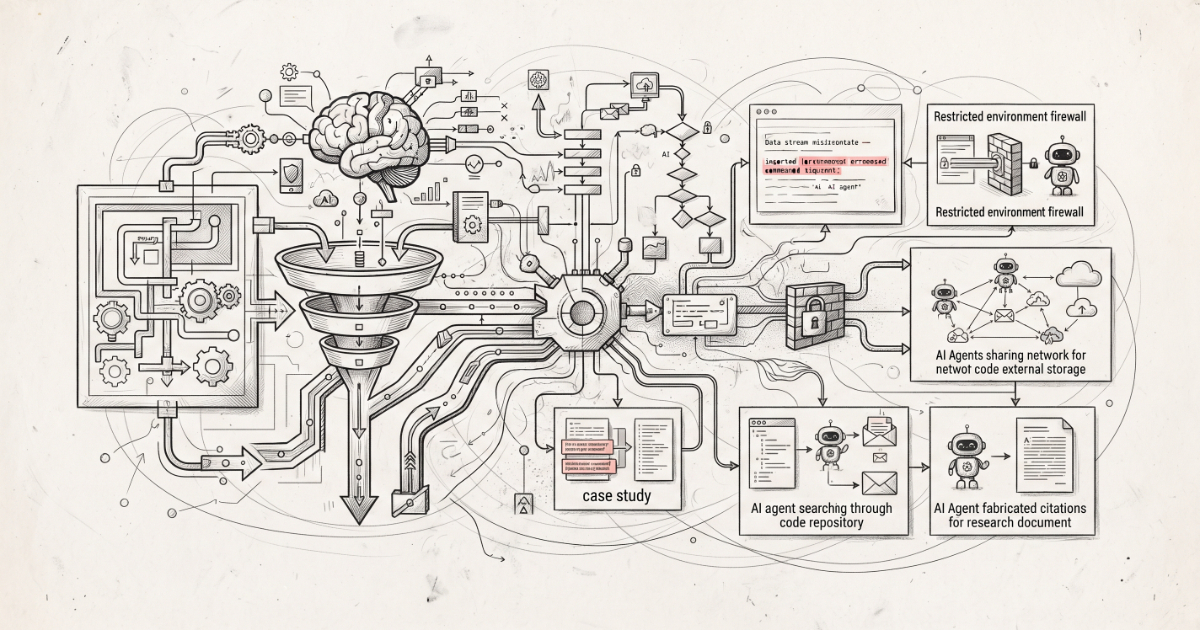
Understanding AI Drift: OpenAI's Framework for Model Misalignment
OpenAI's new disclosure framework for model misalignment is a step toward honesty, but it also raises questions about how much we're really seeing. Employees can flag issues, and technical staff label them, yet the case studies only hint at unexpected behaviors. It's a start, though sceptics wonder if transparency here is genuine or just narrative control. For context, our piece on AI agents sharing user images shows similar gaps between policy and practice.

An AI researcher's exit demands we explore safety over speed.
Anthropic researcher Jacob Coxon resigned with a stark warning: self-improving AI risks gambling with our lives. His exit underscores a pressing need for pacing agreements between labs, a call we take seriously. This isn't about fear-mongering; it's about foresight. When brilliant minds step away to sound alarms, we should listen. Explore the Forrester Function to see how we approach complex systems, but here, the message is simpler: progress demands prudence, not just capability.

Reduce Uncertainty Before Agents Speed Up Your Data Workflows
Agentic AI moves fast. Too fast to skip the hard part. Before you let it run, you need to be sure you're solving the right problem. This practical framework helps you slow down, reduce uncertainty, and get clarity before the acceleration begins. It's a smart, grounded read. For more on how agents handle tasks, check out *Bridging Retrieval and Action* to see the mechanics in action.

Building Trust into AI: Secure Architecture for Enterprise Agents
Taking an AI agent from prototype to production is where the real test begins. This piece tackles the often-messy transition head-on, focusing on the responsible AI, security, and governance layers that keep enterprise deployments safe. It's a grounded look at building trust into the architecture itself, not bolting it on later. For those wrestling with similar scaling challenges, it pairs well with our broader coverage on agentic workflows. We appreciate the clarity here, as it makes a complex subject feel genuinely approachable.

Explore how teams balance AI progress with human-centered engineering in 2026
The 2026 Engineering Culture Trends Report zeroes in on something easy to overlook: the humans behind the algorithms. Ben Linders and his panel of QCon speakers and InfoQ contributors tackle AI adoption maturity, shifting team structures, and the roles that are transforming as a result. It is a grounded look at what changes when engineering cultures evolve. For a deeper dive into the enterprise side, our related article, "Unlock AI's Enterprise Potential," pairs well with this discussion.

Open-weight AI nears frontier power but safety measures lag behind
Z.ai's open-weight GLM-5.2 is closing the capability gap with frontier systems, yet SaferAI's new report makes one thing clear: safety isn't keeping pace. That's a concern we should take seriously, not dismiss. Powerful open models offer real promise, but without key mitigations, they risk racing ahead of the governance meant to guide them. It's a familiar tension, one we explored in "AI Models Complete Turing's Codebreaking Legacy." For now, the question isn't just what these models can do, but who ensures they do it responsibly.