AI workflows
AI workflows at Beyond Market Intelligence is a file of 6 stories. The newest of them: “Explore Claude Haiku 5.5's faster workflows and 90% lower costs”, “Building trusted AI for regulated industries at global scale”, and “Build AI workflows that survive production without slowing your experiments”. Claude Haiku 5.5 slashes list prices by 90% while adding adaptive thinking and a 1M token context window. Building production-ready AI in healthcare isn't just about getting the model right, it's about engineering trust from the ground up. Acme AI is the next-generation, AI-powered spreadsheet platform built to replace Excel and redefine how analysts, data scientists, and enterprise teams work… The list below is every AI workflows story on Beyond Market Intelligence, newest first.
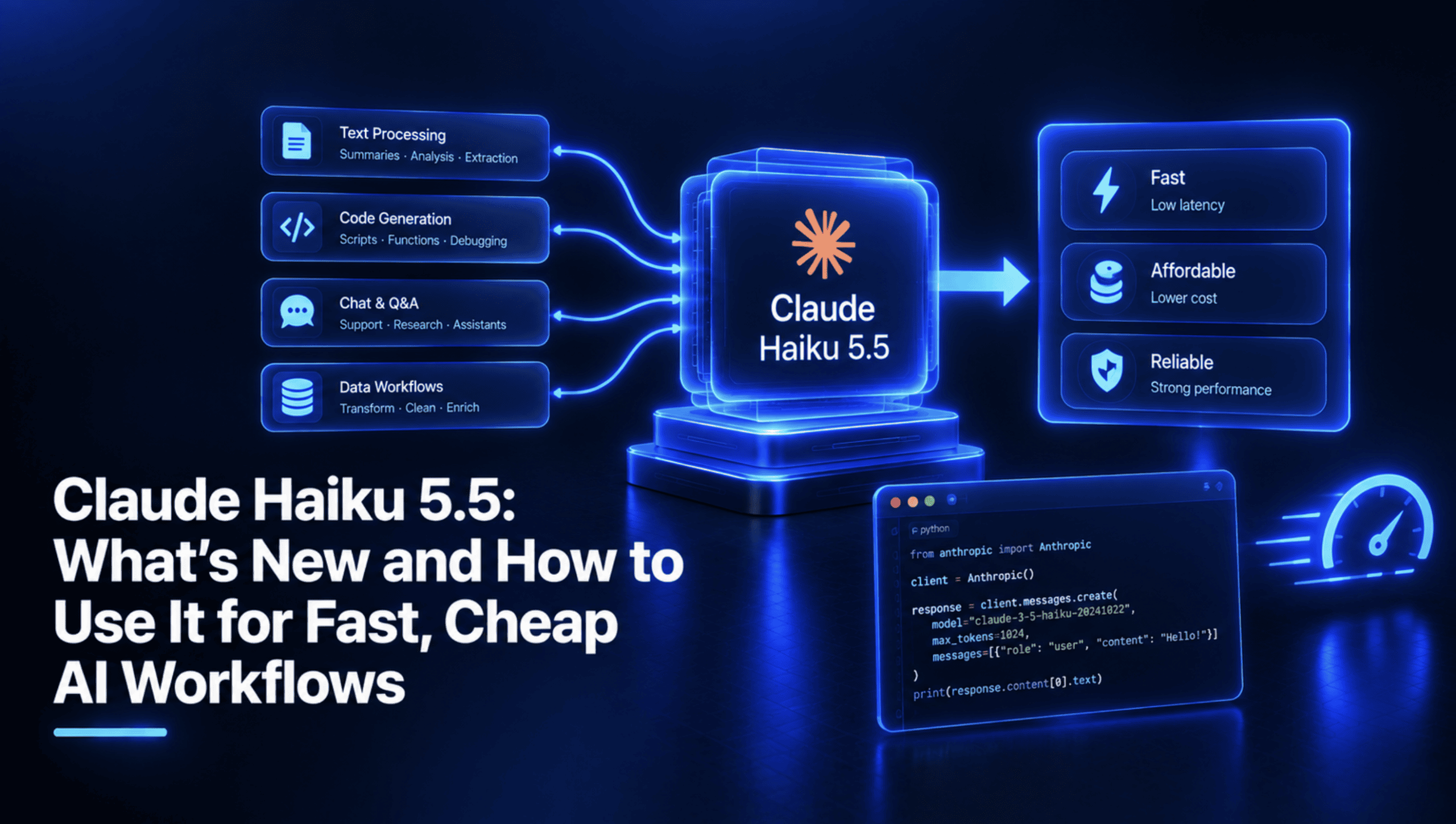
Explore Claude Haiku 5.5's faster workflows and 90% lower costs
Claude Haiku 5.5 slashes list prices by 90% while adding adaptive thinking and a 1M token context window. That's a dramatic leap from Haiku 4.5, making classification, extraction, and sub-agent workflows far more accessible in Python. Faster workflows at a fraction of the cost invite real experimentation. For deeper context on how AI agents learn from weaknesses, explore our coverage of Google's EnvHarness research.

Building trusted AI for regulated industries at global scale
Building production-ready AI in healthcare isn't just about getting the model right, it's about engineering trust from the ground up. Heidi, an Australian-founded AI Care Partner, proves this by automating clinical documentation across 190 countries, handling 2.7 million patient interactions weekly. The company's success rests on infrastructure decisions made years ago, prioritizing data residency, auditability, and safety by default. As CTO Yu Liu puts it, trust is architectural.

Build AI workflows that survive production without slowing your experiments
Every AI workflow faces a quiet tension. Production durability demands persisting every step, so a crash or deploy doesn't erase progress. But that same safety net weighs down the fast, throwaway loop you need to judge an LLM's output. Mateus Moury's pattern tackles this head-on, separating the two concerns instead of forcing a compromise. It's a practical framework for teams tired of choosing between resilience and speed. For more on AI's practical edges, our guide to distributed training offers a useful parallel.

Build smarter AI workflows with structured evaluation pipelines
Structured evaluation pipelines often feel like a chore, but they're the difference between guessing and knowing. This approach from /u/rhazn digs into how to build checks that actually measure your AI's output, not just admire it. It's practical, and that's what we need. If you're still wrestling with whether your models truly understand context, our piece on verifying an AI's grasp during tax season pairs well with this mindset. Test, learn, and refine.
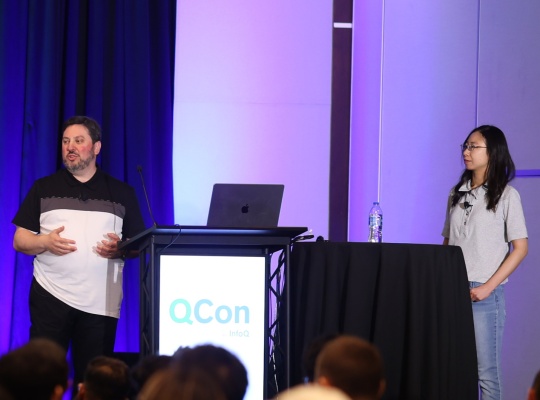
Durable workflows live in your database, not a separate orchestrator
External orchestrators promise flexibility, but they often add a fragile layer that undermines reliability. In this presentation, Jeremy Edberg and Qian Li make a compelling case for flipping the script: use your database as the engine for durable execution. Their approach with DBOS Transact, leveraging standard tables and SKIP LOCKED queues, is both elegantly simple and surprisingly robust. It's a smart, practical alternative for complex AI workflows that avoids the operational drag of separate systems.

Discover what it's like to rely on a luxury AI agent daily
Dropping $6,880 on a phone is a bold statement, and Vertu's latest AI agent makes that price tag feel justified, or at least intriguing. This luxury foldable isn't just about polish; it's about how well the AI actually handles daily workflows, battery endurance, and security under real-world pressure. We put it to the test, and the results are compelling.