algorithm
111 stories filed under algorithm on Beyond Market Intelligence. The newest of them: “YouTube updates its monetization threshold: earn with more hours or views”, “Why Pure Reasoning Reaches Its Limit Without Real-World Data”, and “Discover how a simple pattern can help you stay invisible to cameras”. YouTube just made the barrier to entry twice as steep. Reasoning alone has a hard ceiling. Acme AI is the next-generation, AI-powered spreadsheet platform built to replace Excel and redefine how analysts, data scientists, and enterprise teams work… The list below is every algorithm story on Beyond Market Intelligence, newest first.

YouTube updates its monetization threshold: earn with more hours or views
YouTube just made the barrier to entry twice as steep. Creators now need 8,000 qualified watch hours over the past year, or 20 million Shorts views in 90 days, before monetization kicks in. That is a serious jump from the old threshold. We get why they did it, but it puts real pressure on smaller channels still finding their footing.

Why Pure Reasoning Reaches Its Limit Without Real-World Data
Reasoning alone has a hard ceiling. No matter how advanced non-physical AI becomes, it cannot predict the chaotic, messy reality of the physical world without a sensory and motor interface. We are asking for breakthroughs in science and technology, but those demands outstrip what pure logic can deliver. This isn't a limitation to be coded around; it's a fundamental gap. To truly transform our data-driven future, intelligence must touch the ground.

Discover how a simple pattern can help you stay invisible to cameras
A security researcher has built an algorithm that generates adversarial patterns capable of hiding people, faces, and vehicles from surveillance cameras. It's a striking reminder that AI's power cuts both ways. While this work highlights vulnerabilities in computer vision, it also invites us to think critically about how these systems are deployed. For a deeper look at how real-world vision models handle unexpected inputs, check out "Exploring Real-World Computer Vision: Deployments, Edge Models, and Current Challenges.

Exploring the design logic behind the Transformer architecture
Most explainers hand you the finished Transformer and move on. We wanted to know why it looks the way it does. This piece steps back from Q, K, and V to ask the question that actually matters: what problem was the architecture solving in the first place? It is a thoughtful, grounded reconstruction that rewards curiosity. If you are ready to go deeper, our guide to distributed algorithms pairs well with this foundational view.

Explore how Airbnb uses AI to make search more intuitive
Airbnb is putting AI to work where it matters most: shipping features faster. The company is testing a new AI-powered search experience with a toggle, a small but telling step toward making discovery feel less like a chore and more like a conversation. It's a practical move, not a flashy one, and that's why it works. For anyone juggling complex tools, this kind of iterative approach resonates.

Discover how AI matchmaking is transforming dating for a generation seeking connection.
Ditching the swipe feels less like a rebellion and more like a survival instinct. Gen Z is tired of treating romance like a card game, where the deck is stacked against genuine connection. Ditto's pivot to AI matchmaking is a smart response to that fatigue. It's not about novelty; it's about outcomes. For a generation that grew up with algorithms curating everything else, letting one find a match feels less like a gamble and more like a relief. Curious how this plays out?

AI pioneers chart a new path to accelerate scientific discovery.
When Jeff Dean, a name synonymous with Google's AI dominance, departs alongside other top researchers to launch a new startup, it signals more than a shift in personnel. It's a clear vote for a future where AI's primary role is accelerating scientific discovery. We see this as a bold, necessary move. For those feeling the complexity of modern AI, this mission makes the technology's purpose tangible. It's about empowering breakthroughs, not just improving spreadsheets.

Spotting AI Text: Simple Cues and the Math Behind Them
You don't need a model to spot AI-generated text. Research-backed cues reveal LLM output, and the mathematical intuition behind *why* those signals hold up is also explained. That's the kind of practical clarity that empowers you to trust what you read. It's not about paranoia, it's about precision. For more on how AI shapes content creation, explore the related discussion on transforming open LLMs into classifiers.
Discover how AI transforms spreadsheets into intuitive productivity partners
When a Reddit post about AI-driven spreadsheets surfaces, it's worth pausing to see how far the tech has come. The conversation around automating data tasks is no longer theoretical; it's practical, and that's what makes it compelling. We're not here to sell you on hype, just to point out that the tools you already know are evolving in ways that genuinely simplify your workflow. If you're curious about the mechanics behind such progress, our piece on distributed algorithms offers a solid next step.

Explore how a third pretraining axis transforms end-to-end data generation.
Most language models are trained along two axes: data and compute. Gladstone and colleagues argue for a third: the modeling objective itself. Their work on explorative modeling suggests that how we frame the learning task is as important as the data we feed it. This isn't a tweak; it's a different approach to end-to-end generation. For a deeper look at how such models navigate structure, our guide on paragraph structure in token space is a useful next stop.

Understanding Adam's limits can transform how you train complex models.
Blindly defaulting to Adam without understanding what it's actually doing will cost you. That's the takeaway from a Reddit user whose work in reinforcement learning forced a rethink: Adam still works, but only if you coax it, and its loss "burstiness" can feel maddening. The mathematical intuitions matter. This piece re-covers where Adam fails spectacularly, and for anyone training deep transformers, it's a necessary read. For broader context on model behavior, our related piece on paragraph structure in LLMs is worth exploring.

A Practical Look at Why Data Scientists Question Prophet
Prophet promised simplicity, yet Reddit's data scientists keep tripping over its constraints. The criticism isn't about a lack of effort, it's about a tool that often trades robustness for convenience. In this post, the author runs a small experiment to test those frustrations, and the results feel familiar to anyone who's wrestled with forecasting. We appreciate the hands-on approach. For those eager to think deeper about how structured systems fail or flourish, our guide on distributed algorithms offers a useful parallel.

When AI Feels Too Good, It's Time to Reassess Your Habits
Hank Green's candid admission about his AI usage being "not healthy" lands with rare honesty. He didn't hide behind productivity or innovation; he named the dopamine loop directly. That kind of self-awareness matters, especially when we're all so eager to embrace what AI can do. It's worth pausing to ask what we're trading for that efficiency. For a deeper look at how these tools shape our thinking, our piece on talking to an AI clone offers a thoughtful parallel.

Snapchat refocuses Spotlight on human-made content, not AI-generated video
Snapchat is drawing a line in the sand: only videos made by real people will get Spotlight recommendations. It's a direct move against the flood of fully AI-generated content, and frankly, it's the right call for keeping the platform human. We're all for AI that assists, but when it replaces the creator entirely, the authenticity fades. This stance echoes our own exploration of AI's limits, like in "Talking to My AI Clone Taught Me to Question the Tech," where the human element still matters most.

LinkedIn empowers users to flag low-quality AI content with a simple tool
LinkedIn now lets you flag a post as "seems like AI slop," a blunt but practical addition to its reporting tools. It's also swapping its AI writing assistant for a proofreader, which feels like a step toward quality over gimmick. We're glad to see platforms addressing the flood of low-effort content, though the real test is enforcement. For a deeper look at how AI shapes our digital instincts, try "Talking to My AI Clone Taught Me to Question the Tech."

Redesigning Engineering Interviews to Measure Real-World Judgment
Daniel Doubrovkine has bombed LeetCode interviews. Despite decades of leadership, he failed basic algorithm tests, and he's here to explain why that matters. Traditional whiteboard grilling doesn't evaluate senior engineering talent; it rewards rote recall. He offers actionable frameworks to replace it, focusing on human judgment, system design, and hands-on AI collaboration. That's where real hiring signals live. If you're questioning your own screening process, this talk is worth your time.

Understand Adam's Optimization Dynamics Before Your Model Fails
Vibe coding an import feels efficient until the model quietly misreads your data. That's the trap Adam sets. Treating it as a default fix ignores how its optimization dynamics actually behave, and when they misfire, the failure is anything but subtle. Understanding why it breaks matters more than assuming it works. If you're chasing cleaner inputs, our piece on catching AI slop before it skews your model pairs well with this cautionary read.

Discover the core insight that makes backpropagation truly work.
If you've ever watched a neural network struggle through training, you know the feeling: there has to be a better way. This second part of our beginner's guide gets to the heart of that intuition, unpacking the core idea that makes backpropagation possible. The guide offers a clear, accessible look at a concept that often feels abstract, and it does a fine job keeping the explanation grounded. For those ready to push further, our guide on distributed algorithms offers a natural next step.
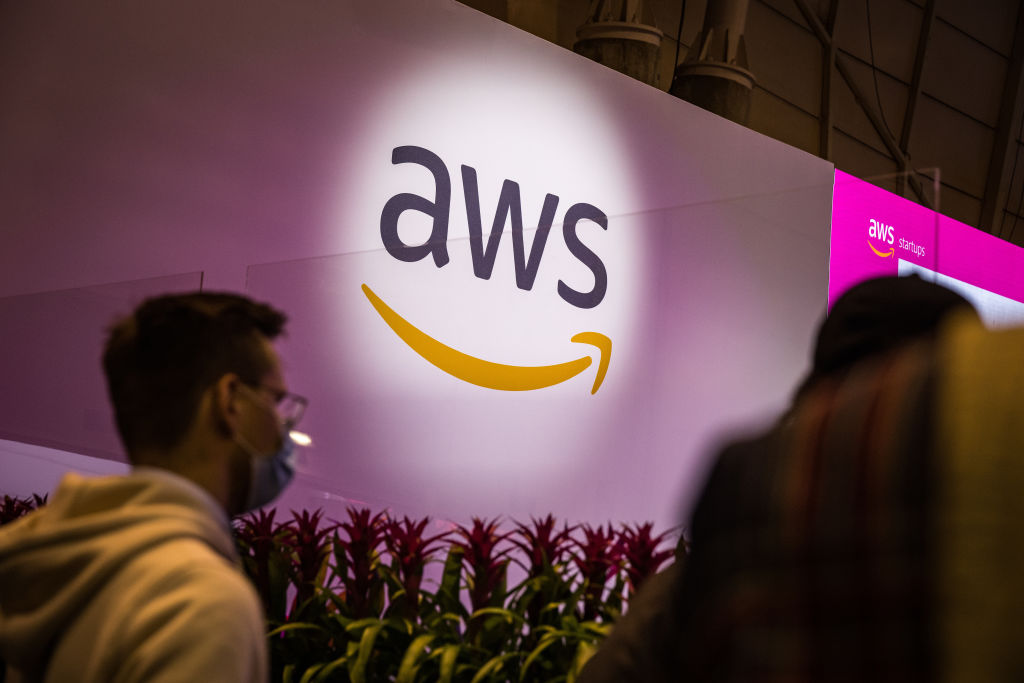
Recursive Superintelligence invests $410 million in compute to automate product development
Recursive Superintelligence just committed $410 million to Amazon for compute, and that number says more about their strategy than any product roadmap could. By steering what would traditionally go toward headcount and operations straight into infrastructure, they're betting that self-improving AI can automate its own development. It's a bold wager on a future where the company scales with algorithms, not armies. For anyone wrestling with how far AI can genuinely take over complex work, this deal reframes the question.

AI now powers nearly half of Google searches, reshaping discovery
Google's AI Overviews now appear in 43% of searches, a clear signal that AI-generated answers are becoming the default way people find information. That's not a distant possibility; it's happening now. For anyone still wrestling with clunky, manual data tools, this momentum is worth watching. It's also a reminder to stay curious about how AI shapes our choices. If you're questioning the tech's influence, our piece on talking to an AI clone offers a thoughtful counterpoint worth exploring.

Explore smarter data labeling by using AI to focus human effort where it matters most.
Human labeling is expensive, and most of it goes into teaching models what they should already learn from less. Using ML active learning to target annotation where it truly matters reduces paying for redundant work. It's a smart, grounded approach for teams feeling the squeeze on time and budget. If you're exploring smarter ways to train models, our guide on distributed algorithms pairs nicely with this mindset.

Explore cost-effective vector search with on-disk ANN indexes like DiskANN
RAM is the ceiling that most vector search budgets hit first. When that ceiling gets too expensive, the conversation shifts to disk. The real trade-offs between in-memory HNSW and on-disk options like SPANN and DiskANN are walked through, giving a practical lens on latency versus storage cost. It's a grounded look at architecting infrastructure that scales without breaking the bank. For a deeper dive into system-level choices, our piece on adaptive recommendation systems offers a useful parallel.

Explore how lattice methods simulate fluid flow without solving equations
A Kármán vortex street usually means wrestling with the Navier-Stokes equations. But this walkthrough skips that entirely. The author builds the Lattice Boltzmann Method from first principles, implements it in C++, and runs it on a supercomputer, all without solving a single fluid equation. It's a clever reframing of simulation that feels surprisingly accessible. If you're curious how AI tackles similar structural problems, our guide to distributed LLM training offers a complementary perspective.

Automate PII extraction from emails with intelligent cloud processing
Email inboxes are messy, and the sensitive data they hold makes manual classification both tedious and risky. This walkthrough shows you how to build an intelligent document processing system on AWS that automates the extraction of personally identifiable information. It is a practical, cloud-native approach to reclaiming control over your data workflows. The focus stays on actionable steps, not abstract theory. For those ready to push further into modern AI infrastructure, our guide to distributed training algorithms offers a natural next step.