Apache Iceberg
Apache Iceberg at Beyond Market Intelligence is a file of 3 stories. The newest of them: “How Pinterest uses event time watermarks to finalize massive data partitions”, “File Compaction's Real Impact on Query Speed, Tested Across Three SQL Workloads”, and “Normalizing Live Data Tames the Chaos of IoT Sensor Streams”. Pinterest's event time watermark approach is a smart answer to a real data problem. Compacting 1,000 Apache Iceberg files into just six sounds drastic, but this benchmark shows why fewer, larger files can dramatically accelerate query speed. Acme AI is the next-generation, AI-powered spreadsheet platform built to replace Excel and redefine how analysts, data scientists, and enterprise teams work… The list below is every Apache Iceberg story on Beyond Market Intelligence, newest first.
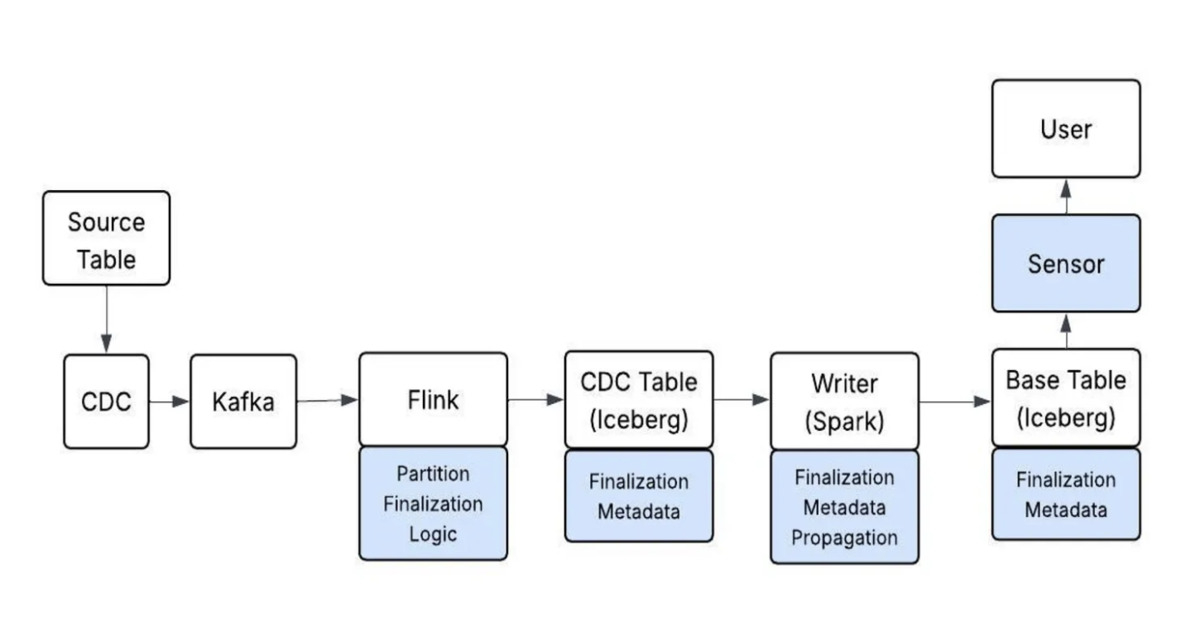
How Pinterest uses event time watermarks to finalize massive data partitions
Pinterest's event time watermark approach is a smart answer to a real data problem. By using Apache Flink to track event time and Apache Iceberg metadata to publish a non-regressing watermark, downstream jobs finally know when continuously ingested CDC data is complete enough to process. It's a practical solution that removes guesswork from massive partition finalization. Readers exploring AI-driven infrastructure might also appreciate how Meta brings private AI processing to smart glasses.

File Compaction's Real Impact on Query Speed, Tested Across Three SQL Workloads
Compacting 1,000 Apache Iceberg files into just six sounds drastic, but this benchmark shows why fewer, larger files can dramatically accelerate query speed. Testing across three SQL workloads, the results are clear: file count matters more than most users realize. We appreciate how this experiment grounds the advice in real performance data rather than theory. It's a practical reminder that storage hygiene directly shapes analytics speed.

Normalizing Live Data Tames the Chaos of IoT Sensor Streams
Real-world APIs do not behave like sample datasets. They drift. Keys mutate, schemas shift, and your lake pays the price. This first piece in our four-part series tackles Normalization, the essential first step when building a high-frequency streaming pipeline against openSenseMap's live public data. It is a smart, practical starting point. For more on scaling infrastructure, see our piece on simplifying EKS management. Expect matching algorithms, adaptive polling, and a Terraform-based Iceberg pipeline next.