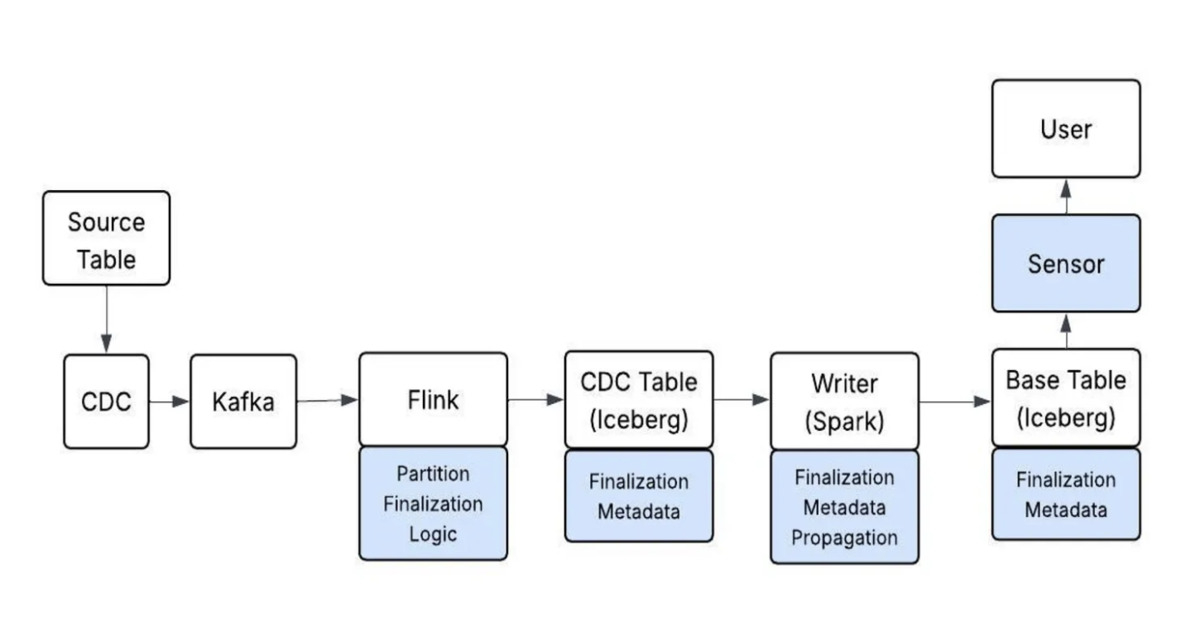
Pinterest's event time watermark approach is exactly the kind of practical, unglamorous engineering that separates mature data platforms from fragile ones. By using Apache Flink to track event time and Apache Iceberg metadata to publish a non-regressing watermark, the team has solved a problem that quietly plagues every organization running change data capture at scale: how do you know when a partition is actually done? The answer matters because downstream jobs, analytics, machine learning pipelines, reporting, depend on complete, consistent snapshots. Pinterest's solution is clever not because it invents new primitives, but because it ties two existing ones together with a clear contract.
This isn't the flashy kind of AI work that catches headlines, and that's the point. While How Meta Brings Private AI Processing to Smart Glasses tackles the frontier of on-device inference and From Model to API in One File: Flama's AI Architecture Now on arXiv rethinks deployment ergonomics, Pinterest is quietly making sure the data those systems rely on is trustworthy. None of the smartest models or sleekest APIs matter if the data feeding them arrives in inconsistent batches. Watermarking is the kind of foundational work that rarely gets celebrated, but it directly determines whether a data team spends its time debugging pipelines or building new capabilities.
For teams managing CDC-based ingestion, the practical takeaway is direct: you do not need to wait for a vendor to solve partition finalization for you. Pinterest's architecture uses open-source components, Flink and Iceberg, that many organizations already run. The innovation lies in the orchestration layer that publishes the watermark and teaches downstream consumers to respect it. This is a pattern any competent data engineering team can adapt. The harder question is whether your organization has the discipline to enforce watermark-based contracts across teams, or whether it will continue letting downstream jobs poll for whatever data happens to be present. Pinterest's approach forces a decision: either you commit to a completion signal, or you accept nondeterminism in your data products.
One specific consequence worth watching is how this pattern interacts with real-time and near-real-time use cases. A non-regressing watermark guarantees completeness, but it also introduces latency, the partition is only finalized after the watermark confirms no further changes will arrive. For batch analytics, that tradeoff is trivial. For latency-sensitive applications, the gap between data arrival and watermark publication becomes a design constraint. Pinterest's implementation does not pretend otherwise, and that honesty is valuable. The next step for the broader community is to build tooling that makes watermark-based finalization as easy to adopt as it is to understand. Until then, the teams that implement this themselves will have a reliability advantage that compounds over time.