Apple silicon
Beyond Market Intelligence keeps Apple silicon in one place: 5 stories so far. The section currently leads with “Muse Spark Open runs natively on Apple silicon, expanding AI access”, “Unlocking iOS 27 Virtualization for Security Research and Testing”, and “Keep data local while AI agents work across cloud and device”. Meta and Apple have quietly done something smart: Muse Spark Open now runs natively on Apple silicon, bringing serious AI inference directly to your Mac. The vphone-cli project brings full iOS 27 virtualization to Apple Silicon, built on Apple's own Virtualization.framework rather than emulation. Acme AI is the next-generation, AI-powered spreadsheet platform built to replace Excel and redefine how analysts, data scientists, and enterprise teams work… The list below is every Apple silicon story on Beyond Market Intelligence, newest first.

Muse Spark Open runs natively on Apple silicon, expanding AI access
Meta and Apple have quietly done something smart: Muse Spark Open now runs natively on Apple silicon, bringing serious AI inference directly to your Mac. No cloud dependency, no latency, just local processing that respects your privacy and your workflow. This is the kind of practical innovation that turns a capable model into a daily tool. For teams navigating similar transitions from experimentation to production, our piece on building reliable products from vibe-coded apps offers useful perspective.
Unlocking iOS 27 Virtualization for Security Research and Testing
The vphone-cli project brings full iOS 27 virtualization to Apple Silicon, built on Apple's own Virtualization.framework rather than emulation. That distinction matters. It means security researchers and developers testing automated workflows can run a complete iOS system with native performance, opening doors for deeper reverse engineering and more reliable testing. We're watching this closely because it removes a major barrier to practical, hands-on experimentation. For those feeling the pressure of evolving iOS development, this feels like a step toward simpler, more accessible tooling.

Keep data local while AI agents work across cloud and device
Your files stay put. That's the quiet power of Perplexity's hybrid compute launch for its agentic platform, Computer. Rather than forcing a choice between cloud intelligence and local privacy, this system lets a single agent split the difference, routing sensitive subtasks to open-weight models on your Mac while heavier reasoning stays in the cloud. It's a smarter gate, not a higher wall. For professionals juggling privileged files, that's a meaningful step toward practical, trustworthy automation.
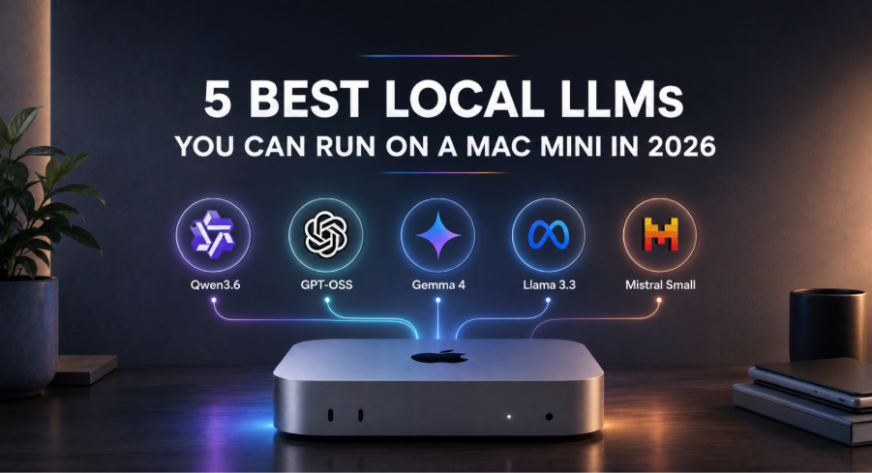
Run capable AI models locally on a Mac mini with these five tools.
Proprietary models deliver impressive results, but they often lock you into someone else's infrastructure. For those who value configurability over raw power, local LLMs are the answer. The Mac mini, with Apple Silicon and unified memory, has become a surprisingly practical host for on-device AI. If you are exploring distributed training to complement your local setup, our guide to distributed algorithms offers a solid next step. For now, discover which models run best on your Mac mini.

The True Energy Cost of Running Local LLMs on Apple Silicon
Five models, sustained generation, and a wall-socket meter don't lie: running a local LLM on Apple Silicon has a real, measurable price. This piece puts actual wattage under scrutiny at $0.31/kWh, and the findings land with more weight than the RTX-3090 numbers hinted at. We appreciate the rigor here; it turns vague claims into a practical cost conversation. For those ready to move beyond basics, our guide to distributed algorithms offers a natural next step.