Application Security
Beyond Market Intelligence keeps Application Security in one place: 4 stories so far. The section currently leads with “Test your RAG apps against unauthorized document access with an open-source tool”, “Secure Your AI Agents with Kernel-Level API Control”, and “A Sixteen-Year-Old Flaw in Media Decoders Demands Your Attention”. A RAG app that quietly retrieves documents a user shouldn't see is a risk most teams don't catch until it's too late. Your AI agents are generating code that no one owns, and that's a risk you can't ignore. Acme AI is the next-generation, AI-powered spreadsheet platform built to replace Excel and redefine how analysts, data scientists, and enterprise teams work… The list below is every Application Security story on Beyond Market Intelligence, newest first.
Test your RAG apps against unauthorized document access with an open-source tool
A RAG app that quietly retrieves documents a user shouldn't see is a risk most teams don't catch until it's too late. This open-source checker tackles exactly that gap, supporting both offline test cases and live HTTP API checks with bearer-token or API-key auth. It's a practical, no-frills tool for validating access boundaries before they become a problem. The call for hands-on feedback from engineers testing non-sensitive environments is the right move.
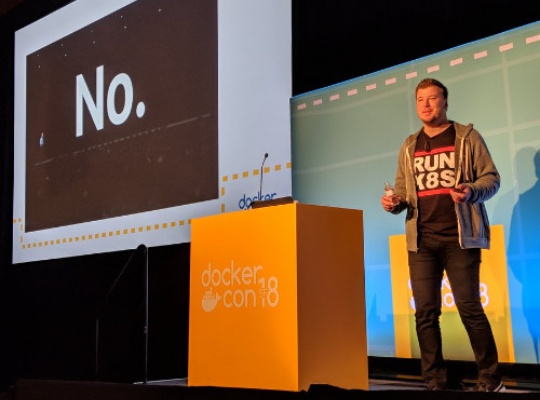
Secure Your AI Agents with Kernel-Level API Control
Your AI agents are generating code that no one owns, and that's a risk you can't ignore. Dan Finneran shows how eBPF can step in, intercepting API traffic at the kernel level to filter prompts, swap models, and enforce limits without touching your application code. It's a practical, transparent way to secure production systems. For more on questioning AI's output, our piece on verifying your AI's understanding offers a timely follow-up.

A Sixteen-Year-Old Flaw in Media Decoders Demands Your Attention
A sixteen-year-old vulnerability in FFmpeg's MagicYUV decoder is a stark reminder that even mature media frameworks can hide serious flaws. Dubbed "PixelSmash" by JFrog Security Research, it enables remote code execution or denial of service through nothing more than a crafted video file. That low barrier to entry makes this worth your attention. The fix is straightforward: patch promptly or disable the decoder if you cannot update.
Securing AI in production: Google's three-layer blueprint for GKE
Google Cloud's new GKE Security Blueprint arrives at a necessary moment. Moving AI from prototype to production has outpaced traditional security thinking, and that gap demands more than patchwork fixes. The three-layer approach, covering infrastructure, model integrity, and application security, offers a practical path forward. It's not about hype; it's about making production safer. For teams wrestling with these challenges, this guidance feels timely. If you're exploring how AI reshapes expectations, our piece on verifying AI's understanding during tax season pairs well with this conversation.