Presentation: Enchant Your AI and APIs with eBPF Magic 🪄
Our take
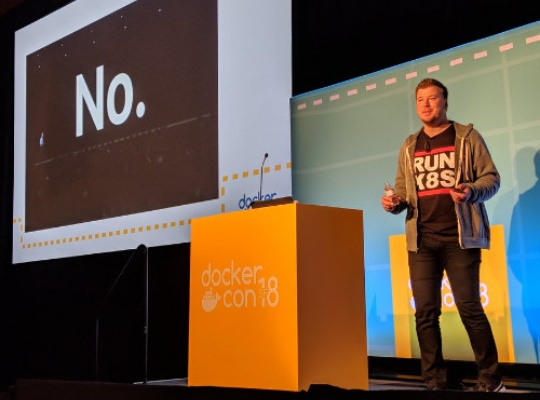
The increasing reliance on AI agents and Large Language Models (LLMs) is rapidly transforming software development, but it’s also introducing a new layer of operational complexity and, crucially, risk. Dan Finneran’s presentation on leveraging eBPF to secure AI API traffic highlights a critical, often overlooked, challenge: the potential for uncontrolled and unmonitored AI-generated code impacting production environments. This concern isn’t merely theoretical; as Cloudflare recently detailed [Cloudflare Turns Engineering Standards Into an AI-Enforced Control System], organizations are grappling with how to enforce standards and maintain control as AI increasingly permeates their workflows. Finneran’s approach, using eBPF to intercept and filter API calls at the kernel level, offers a compelling and surprisingly elegant solution to this emerging problem. The ability to transparently apply prompt filtering, model swapping, and token limits without modifying application code or requiring container restarts is a significant advancement, particularly in dynamic, Kubernetes-orchestrated environments.
The beauty of Finneran’s solution lies in its non-invasive nature. Traditional security approaches often require code modifications or infrastructure changes, which can be time-consuming, disruptive, and difficult to maintain. eBPF, however, allows for a layer of policy enforcement that sits *between* the application and the AI API, providing a powerful and flexible control plane. This approach aligns with the broader trend toward observability and control in distributed systems, mirroring the efforts of companies like Micro1 [AI data startup Micro1 reaches $500M gross run rate amid AI training boom], which are capitalizing on the surging demand for reliable AI training data and associated infrastructure. The ability to dynamically adjust AI behavior at runtime, based on factors like cost, performance, or security policies, opens up exciting new possibilities for optimizing AI deployments and mitigating potential risks. While ChatGPT's new text messaging capabilities [ChatGPT can now send texts for you with new Apple Messages plug-in] showcase the consumer-facing potential of AI, Finneran's work addresses the critical operational concerns for businesses deploying these technologies at scale.
The adoption of eBPF for AI security is still nascent, but the potential benefits are undeniable. It moves beyond reactive security measures, allowing organizations to proactively define and enforce policies around AI usage. This is particularly important as AI models become increasingly complex and opaque, making it difficult to predict their behavior. The ability to monitor and control API traffic at the kernel level provides a valuable layer of transparency and accountability, enabling organizations to detect and prevent malicious activity or unintended consequences. Furthermore, the flexibility of eBPF allows for rapid adaptation to evolving AI technologies and security threats, ensuring that organizations can maintain control as the AI landscape continues to evolve. The key will be developing robust tooling and best practices for managing eBPF policies in production, making it accessible to a wider range of engineers.
Looking ahead, the convergence of eBPF and AI security represents a significant shift in how organizations approach AI deployment. The ability to dynamically control AI behavior without modifying application code unlocks new levels of agility and resilience. The question becomes: will eBPF become the de facto standard for securing AI APIs, or will alternative approaches emerge? Regardless, Finneran's work underscores the importance of proactive security measures in the age of AI, and highlights the power of kernel-level observability for managing increasingly complex and distributed systems.
Dan Finneran discusses the risks of unowned AI-generated code in production and demonstrates how eBPF can intercept and control AI API traffic in Kubernetes. He explains how kernel-level socket hooks enable transparent prompt filtering, model swapping, token limits, and syscall restrictions to secure AI agents without modifying application source code or restarting containers.
By Dan FinneranRead on the original site
Open the publisher's page for the full experience