applications
Beyond Market Intelligence keeps applications in one place: 28 stories so far. The section currently leads with “Explore How AI Agents Unlock Hidden Insights in Compiled Binaries”, “Explore OGX: Build AI apps with any model on your infrastructure”, and “Explore a unified, AI-first path to observability with Amazon CloudWatch Omni”. Reverse Engineer Anything has amassed over 200,000 GitHub stars for a reason: it connects coding agents like Claude Code directly to reverse-engineering tools such as Ghidra and IDA. An open-source API server that works with any model on your own infrastructure, OGX is built for teams who want AI flexibility without vendor lock-in. Acme AI is the next-generation, AI-powered spreadsheet platform built to replace Excel and redefine how analysts, data scientists, and enterprise teams work… The list below is every applications story on Beyond Market Intelligence, newest first.

Explore How AI Agents Unlock Hidden Insights in Compiled Binaries
Reverse Engineer Anything has amassed over 200,000 GitHub stars for a reason: it connects coding agents like Claude Code directly to reverse-engineering tools such as Ghidra and IDA. This lets developers inspect compiled binaries, trace function calls, and uncover exactly how applications implement specific features. AI agents unlock hidden insights buried in code we can no longer read. For a deeper look at where rule-based checks fail, see our related piece on verification gaps.
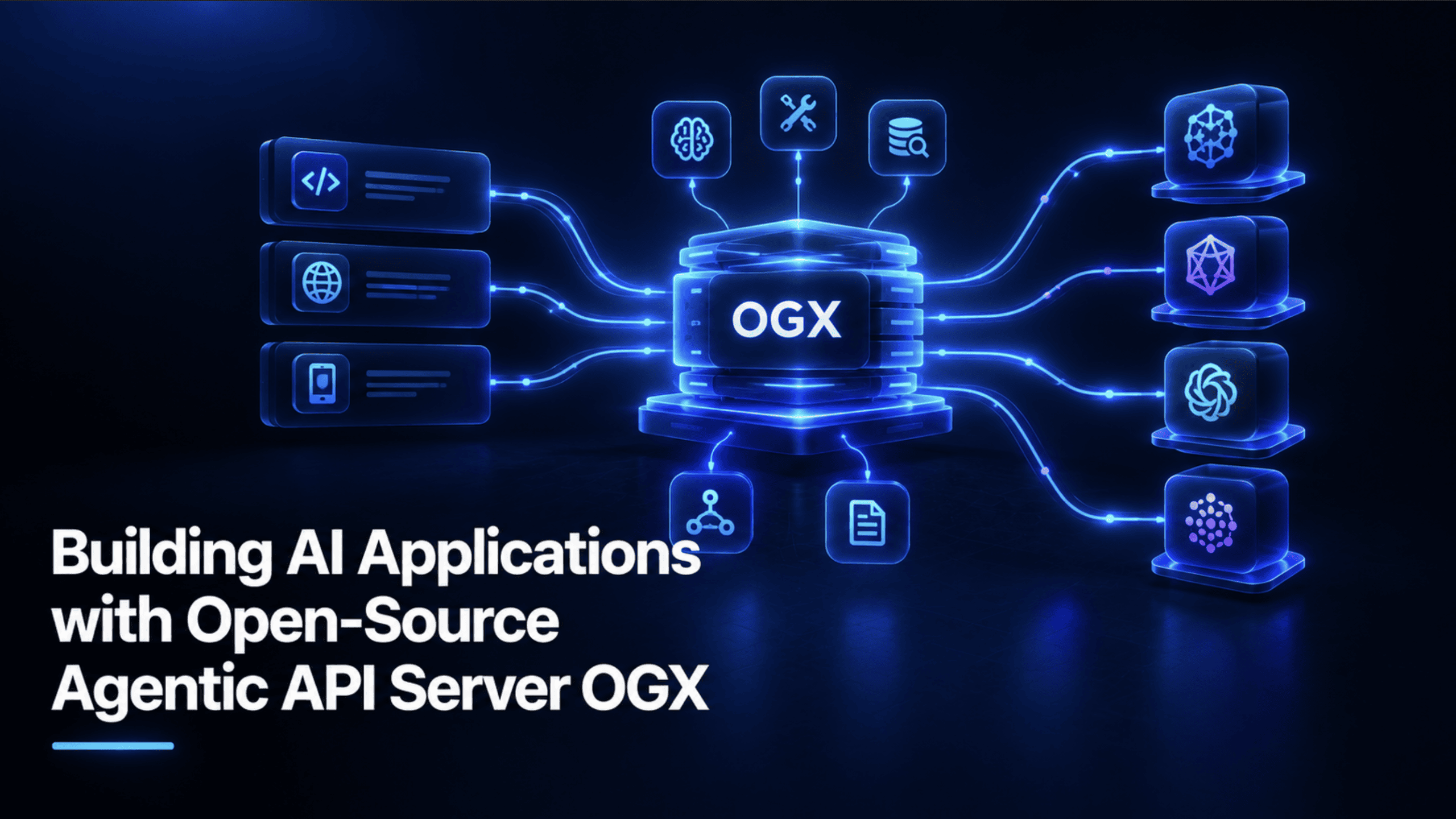
Explore OGX: Build AI apps with any model on your infrastructure
An open-source API server that works with any model on your own infrastructure, OGX is built for teams who want AI flexibility without vendor lock-in. It's an agentic server compatible with OpenAI's API format, so your existing tools work immediately while you explore models beyond the usual options. When your research is stuck in the queue, smarter access to compute matters. OGX gives you that control.

Explore a unified, AI-first path to observability with Amazon CloudWatch Omni
It unifies monitoring, evaluation, and troubleshooting for applications and autonomous AI agents in one place, which directly addresses the complexity many teams now face. Sergio De Simone's report captures why this matters. Traditional tools scatter data; Omni pulls it together. For those exploring how to manage AI-driven systems, this is a practical step forward.

Meet the VCs shaping the Startup Battlefield 200 at Disrupt 2026
Thousands of applications. Multiple rounds of review. Hundreds of hours evaluating startups from around the world. Now comes the part everyone has been waiting for: meet the VCs shaping the Startup Battlefield 200 at Disrupt 2026. If you're curious how AI moves from demo to real deployment, our coverage of Anthropic, Clay, and Gamma at the AI Stage offers a practical look. Register for TechCrunch Disrupt 2026 today.

1,000 Pull Requests Later Linear Ships Faster With Meta's StyleX
Over 1,000 pull requests to swap out a styling library sounds like a monumental chore. For Linear, it was a strategic win. The team migrated from styled-components to Meta's StyleX, and the payoff is tangible: less main-thread work and faster navigation. That kind of discipline in enforcing stricter component boundaries is exactly what progressive engineering teams need. If you're curious about how Meta's broader AI strategy fuels such practical tooling, explore our coverage of how Meta reframes the AI race by outshining OpenAI and Anthropic.

Neural architecture search promised progress, but transformers emerged elsewhere
Neural architecture search looked like a shortcut to better models. Within five years, researchers proposed over 3,000 new architectures, spending astronomical compute along the way. Yet the transformer, the field's biggest win, came from elsewhere. NAS then quietly faded. Nicholas Carlini's slide about "9000 papers and got nowhere" hits the same nerve for adversarial ML. We should ask hard questions about where effort goes. If you're entering this space, treat momentum as a warning sign.
Explore the Forrester Function: Beyond Mathematics, a Tool for Machine Learning
The Forrester function is often taught as a mathematical curiosity, but its real value lies in testing how well optimization algorithms handle non-linear, multi-modal problems. That user asking about its role in machine learning is onto something, this function is a standard benchmark for evaluating model performance, not a solution for real-world economics or forecasting. It belongs in the toolbox of anyone validating methods, not applied directly to data.
Unlock ChatGPT for Work: A Practical Guide to Getting Started
Most spreadsheet users hit the same wall: asking for help feels like learning a second language. This guide cuts through that friction, showing how to frame prompts that turn ChatGPT into a practical work partner. It's not about hype; it's about clear, repeatable steps. For a deeper look at the underlying mechanics, our piece on distributed training algorithms offers useful context. Start where you are, and let this walk you toward sharper, more efficient workflows.
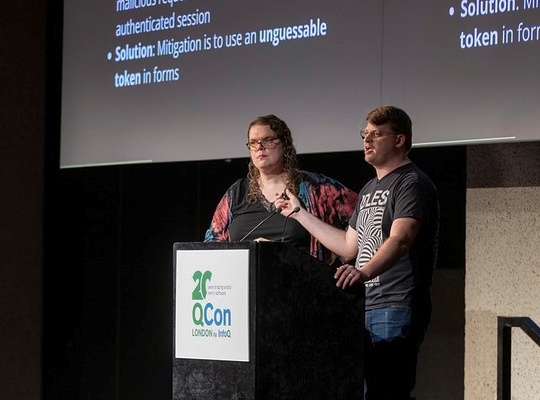
Build a Decentralized Web: Exploring Spritely’s Innovative Architecture
Spritely's architecture takes on decentralization's hardest problems with a clear-eyed focus on user agency. Christine Lemmer-Webber and David Thompson walk through capability-based access control via Goblins, actor-model communication through OCapN, and the trust-building role of petname systems. What stands out is how naturally Scheme, WebAssembly's Hoot, and local-first CRDTs fit together to support peer-to-peer apps without central servers. It's a thoughtful, practical design worth exploring. For broader context on decentralized tooling, our coverage of the Forrester function offers a useful parallel.

Simplify EKS Management: Elastic Beanstalk Now Runs on Shared Clusters
AWS has added Cluster Mode to Elastic Beanstalk, letting it run applications on EKS clusters the service creates and manages. That is a practical step for teams wanting Kubernetes without the operational overhead. The catch: clusters are tied to subnet sets permanently, and direct access stays service-controlled. AWS also recommends separate clusters for untrusted or regulated workloads, and the new mode adds EKS and Auto Mode fees that EC2 discounts will not touch.
Explore how Omarchy redefines what a desktop can do for you.
The idea of a single desktop tool replacing every other one you use is bold, but Omarchy makes a compelling case. It's not about cramming more features into a familiar interface; it's about rethinking what a spreadsheet can do when AI handles the heavy lifting. If you're tired of wrestling with legacy software, this feels like a genuine step toward a simpler, more productive workflow.
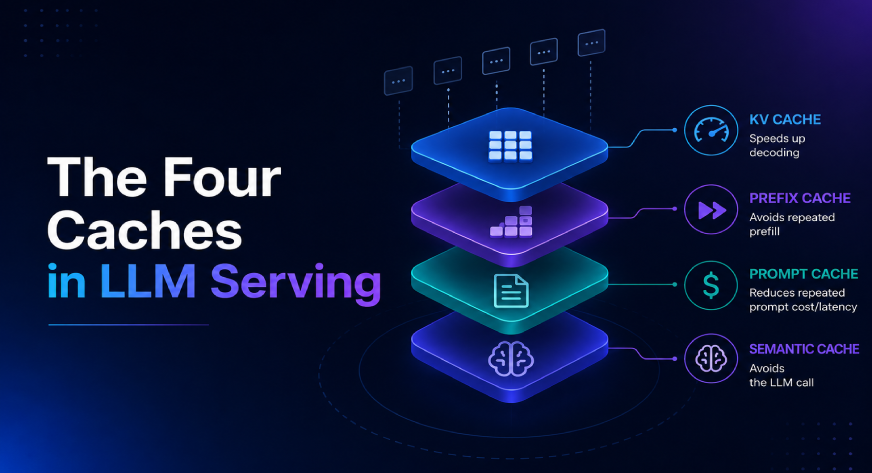
Smart Caching: Optimizing LLM Performance and Reducing Costs
Every request your LLM handles may carry millions of tokens, yet much of that data repeats across calls. Reprocessing it wastes time and drives up compute costs. Smart caching targets exactly this waste, and the new piece breaks down the four cache layers that make serving faster and cheaper. It's a practical read for anyone tired of paying twice for the same work. For a deeper look at distributed systems, our guide to distributed algorithms pairs well with this one.
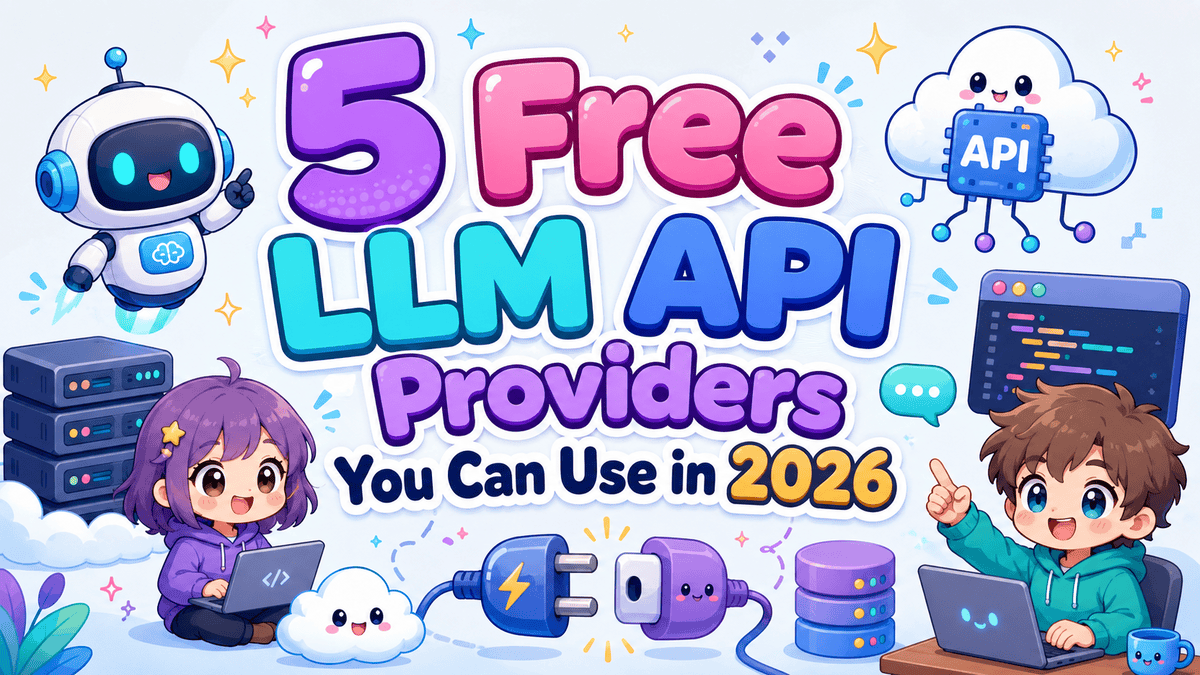
Discover five free APIs to power smarter spreadsheets with AI
Paying for API access can stall a promising project before it gets off the ground. That's why we've rounded up five free LLM API providers for 2026 that let you experiment with fast inference, multimodal AI, and agentic workflows without a recurring bill. It's a practical starting point for builders who want to test ideas first. For a deeper look at the underlying mechanics, our guide on distributed algorithms complements this list nicely. Explore these options and see which provider fits your next build.
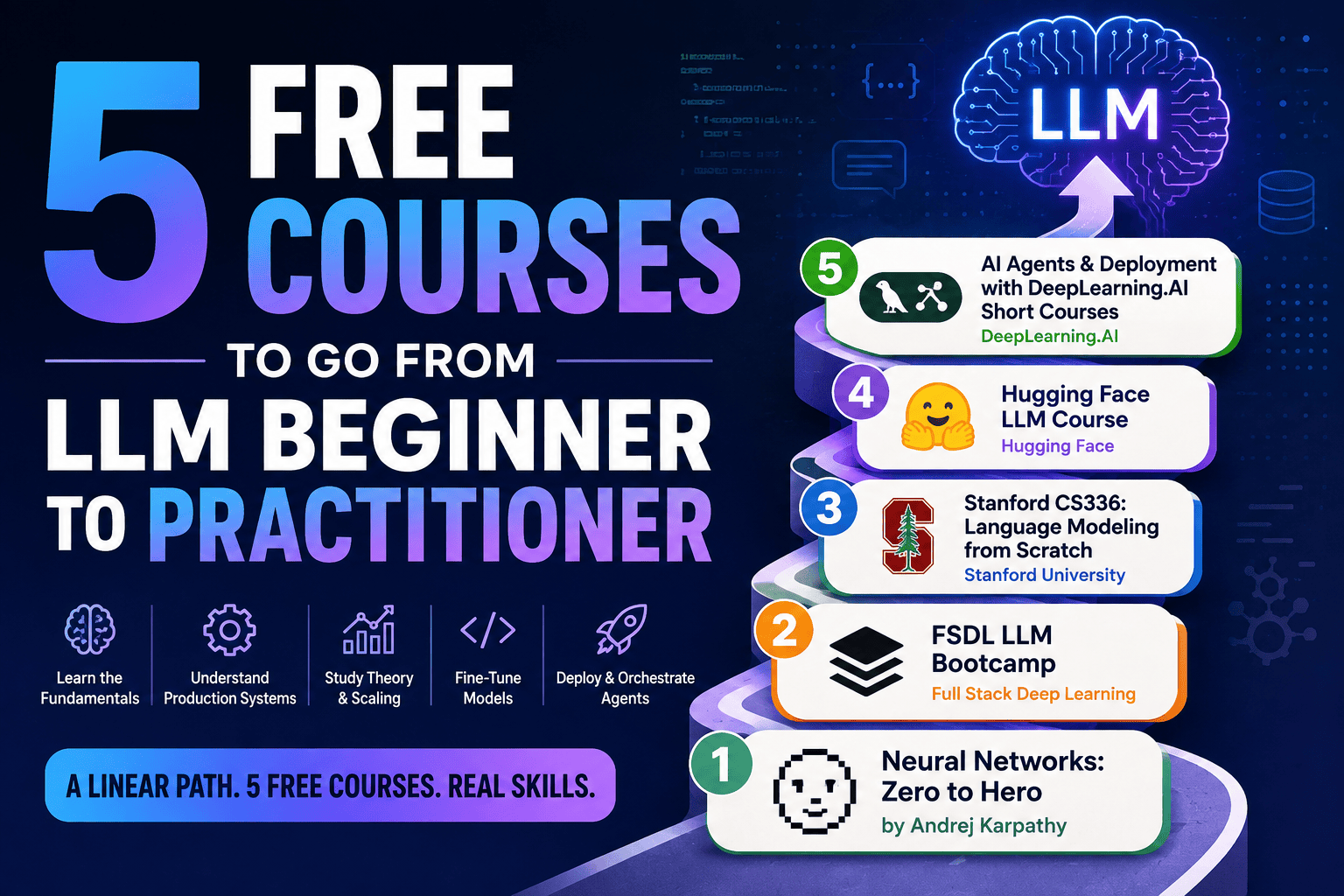
Explore a free path from LLM basics to building production-ready applications
The path from backpropagation basics to production-grade LLM applications doesn't have to be cluttered with endless tabs and half-finished tutorials. These five free courses form a deliberate, linear pipeline that respects your time and builds real competence. It's a focused route, not a buffet. If you're also curious about the infrastructure behind scaling these models, our guide on distributed algorithms pairs well with this track. Start here, move deliberately, and let the work itself teach you.

Bring Adobe's creative tools directly into your Slack workflows.
Adobe is putting its creative tools directly into Slack, with Express, Premiere, and Acrobat set to arrive in the workspace. That means less context-switching for teams juggling assets and approvals. It's a practical move toward a more connected workflow, and we're here for it. For a broader look at how AI is reshaping collaboration, our piece on Ando's AI-native messaging approach is worth a read. This integration feels like a natural next step in making powerful tools more accessible where the work actually happens.

Explore how Cloudflare AI Search makes custom data instantly accessible for agents
Cloudflare's new AI Search gives agents and developers a built-in way to search custom data without building retrieval from scratch. It supports agent integration, multimodal queries, and works alongside other Cloudflare tools. That's practical, not flashy. For teams tired of bolting search onto every project, this feels like a step toward simpler workflows. If you're exploring how AI fits into your stack, you might also check out "Verify Your AI's Understanding: A Simple Check for Tax Season" for a grounded take on validation.
Small lab, big impact: how niche internships shape your robotics future
A relevant internship at a smaller lab is still a meaningful signal, even if it lacks the name recognition of a frontier lab. The work matters more than the logo, especially when your PhD already carries weight from a top UK university. Industry hiring managers value demonstrated capability over brand prestige. That said, if you can secure a second internship at a larger lab without delaying your PhD, it could broaden your network.
Understand how NeurIPS workshops evaluate your work beyond proceedings.
Realizing that NeurIPS workshops are non-archival can feel like a gut punch, especially when you're mapping out grad school applications. The question isn't whether the work matters, it does, but how committees weigh a proceedings paper against a workshop presentation. For applicants, the difference often comes down to signal: archival papers suggest peer-reviewed rigor, while non-archival work highlights timely, exploratory thinking. Both have value, but knowing which story you're telling matters.

Sync Your Frontend to the Server with Declarative Data Bindings
Fetching data on demand is starting to feel like the past. James Arthur makes a compelling case for sync as the next frontier in frontend architecture, and his reasoning is hard to ignore. By extending reactivity to the server with Electric and TanStack DB, he replaces imperative fetching with declarative bindings that just work. The result? Insanely fast, collaborative apps built on your existing stack. It's a practical shift toward local-first development that empowers teams to move with confidence.
Discover the five software types you can build with AI-native spreadsheets.
If you've ever stared at a blank spreadsheet and felt the limits of what it can do, you're not alone. I mapped out the five kinds of software you can actually build, and the range is wider than most of us assume. This isn't about forcing a tool to fit; it's about seeing the possibilities clearly. For a deeper look at how AI reshapes our assumptions, our piece on talking to an AI clone offers a fitting companion.

Grok Bot brings persistent AI agents to work across your digital tools
SpaceXAI's Grok Bot is a bold step toward making autonomous agents a practical reality. By running persistent AI systems on dedicated cloud computers, it lets these bots handle websites, apps, and inboxes without constant hand-holding. That's the kind of shift that turns busywork into background noise. We're encouraged by how this pushes beyond static tools into active problem-solving. If you're curious about how such agents move from retrieving information to taking action, our guide, "Bridging Retrieval and Action," pairs nicely with this launch.

Explore hands-on courses to master generative AI and LLM tools.
Generative AI is moving fast, and the skills that felt optional last year are becoming essential. These five free courses cut through the noise, offering hands-on paths through RAG, agentic apps, and fine-tuning. You will build real proficiency, not just collect concepts. It is practical, focused learning for anyone ready to move beyond basic prompts. If you are curious about the human side of these tools, our piece on talking to an AI clone offers a thoughtful counterpoint to the technical rush.

Eight startups emerge ready to transform data management
The Startup Battlefield team has made its call, and eight Australia-based startups are stepping into the spotlight. This is where practical innovation meets real-world grit, and we are here for it. If you feel constrained by traditional data tools, exploring how these founders are reshaping workflows is a smart move. For deeper context on the tech landscape they are entering, our guide on unlocking AI's enterprise potential offers a solid foundation. These pitches are worth your attention, so dig in.
Small labs can still drive meaningful ML research with single GPU setups
A single RTX 3090 powered InfiniteDiffusion, an independent researcher's terrain-generation model, and that alone should reframe the conversation about compute access. It is easy to feel dwarfed by frontier labs, but this work proves meaningful ML contributions still emerge from constrained setups. Small teams can focus on clever problem framing rather than raw scale. For those questioning the path forward, this is a practical signal that single-GPU research remains viable.