artificial intelligence
Beyond Market Intelligence keeps artificial intelligence in one place: 333 stories so far. The section currently leads with “As AI costs drop, employee adoption signals a smarter shift”, “Meet your new AI assistant that manages emails, accounts, and tasks for you.”, and “Clementine brings conversational AI to your grocery shopping experience”. August's data shows AI spend per employee dipping at top firms, even as token costs fall and cheaper models flood the market. Instinct now lives in your inbox, and that is a bigger step than it sounds. Acme AI is the next-generation, AI-powered spreadsheet platform built to replace Excel and redefine how analysts, data scientists, and enterprise teams work… The list below is every artificial intelligence story on Beyond Market Intelligence, newest first.

As AI costs drop, employee adoption signals a smarter shift
August's data shows AI spend per employee dipping at top firms, even as token costs fall and cheaper models flood the market. That's not the adoption curve hyperscalers banked on. It's tempting to call it summer doldrums, but the signal is worth reading straight: enterprises are pausing, not retreating. They're weighing efficiency against experimentation. For teams navigating this, the real work isn't chasing volume, it's building guardrails that make AI sustainable.

Meet your new AI assistant that manages emails, accounts, and tasks for you.
Instinct now lives in your inbox, and that is a bigger step than it sounds. The AI agent can create accounts, reach out to businesses, and handle support requests without you lifting a finger. We like this move because it shifts the assistant from a reactive tool into a proactive operator. It is practical, direct, and genuinely useful. For more on how personal agents are scaling, check out "Meta Accelerates Muse's Growth with Expanded Promotion." The momentum across the space is worth watching.

Clementine brings conversational AI to your grocery shopping experience
Instacart is weaving a conversational AI assistant, Clementine, directly into its platform, and that is a smart move for grocery shopping. It is one more step toward making complex tasks feel simple, which is exactly what users need when juggling lists, budgets, and dietary preferences. We like seeing AI meet people where they already are. For more on how AI is reshaping everyday workflows, check out our piece on verifying AI understanding during tax season. Clementine feels like a natural next chapter in that story.

We need a plan for superintelligence, not just blind faith.
OpenAI's Hugging Face breach is a stark reminder that superintelligent AI isn't just a far-off promise. It's a system we're already struggling to control. On this episode of TechCrunch's Equity podcast, Rebecca Bellan talks with AI researcher Connor Leahy about what happens when our tools outpace our oversight. The question isn't whether we can build these systems, but whether we should. For a deeper look at how AI understands structure, explore our piece on paragraph navigation in LLMs.

Sequoia leads $25 million investment in Cymphony to tackle AI agent security risks
When AI agents start sharing user images without permission, enterprise security gets a lot more complicated. That's the reality Cymphony is built to address, and it's why Sequoia is doubling down with a $25 million Series A that values the company north of $100 million. The co-lead with SMBC Fin Atlas Beyond Fund signals real confidence. For teams navigating these new risks, this funding matters.

An AI researcher's exit demands we explore safety over speed.
Anthropic researcher Jacob Coxon resigned with a stark warning: self-improving AI risks gambling with our lives. His exit underscores a pressing need for pacing agreements between labs, a call we take seriously. This isn't about fear-mongering; it's about foresight. When brilliant minds step away to sound alarms, we should listen. Explore the Forrester Function to see how we approach complex systems, but here, the message is simpler: progress demands prudence, not just capability.
Discover how AI models learn to focus on what matters in your data.
Large language models read the entire context window to find the few tokens that actually matter. That is expensive. This work asks a simpler question: why not let the model say where it wants to look? Declarative Attention does exactly that, letting the model declare focus regions and skip most of the cache. The results are compelling. Across 15 long-context tasks, attended tokens drop by over half with minimal accuracy loss. It is a practical step toward smarter, faster inference.

Navigate the AI glossary with terms that actually shape your workflow
"Opaque recurrence" might sound like a problem from a math exam, but it's actually one of those AI terms that quietly shapes how models handle long-term patterns. The rise of AI has buried us in jargon, and sorting through it is becoming a survival skill, as the glossary makes clear. We appreciate a guide that cuts through the noise without dumbing it down.
Discover how AI handles the admin work you thought only humans could do.
Twenty hours of admin work handed to GPT-6 Astra sounds like a dare, but it's a smart test. The point isn't whether AI can do the job. It's about noticing which tasks resist automation entirely. You'll find the real value in what the model stumbles on, not what it finishes. That boundary is worth mapping. For a sharper look at how we check machine understanding, read "Verify Your AI's Understanding: A Simple Check for Tax Season." It pairs well with this experiment.

Simulation-Driven Testing Turns AI Agents from Demo to Production Reality
Most AI agents never leave the demo room. Zhou Yu sees that bottleneck clearly, and she's addressing it head-on with simulation-driven testing that tackles compliance and reliability before deployment. Her work with Columbia and Arklex AI uses synthetic user personas and trajectory entropy to stress-test multi-turn agents, catching edge cases that typically slip through. It's practical, human-centered engineering. For a deeper look at how AI moves beyond the lab, explore our related piece on unlocking enterprise potential.
AI Evolves: GPT-6 Astra Redefines Data Exploration.
GPT-6 Astra isn't just another step forward; it's a leap into how we interact with data. This new model doesn't merely answer questions, it explores the relationships hidden in your spreadsheets, turning raw numbers into narratives you can act on. For anyone who has felt buried under columns and formulas, this is an invitation to work smarter, not harder. We're eager to see how you'll use it.

Tesla Cybercab faces real-world test on public roads
Tesla's Cybercab is finally on the road, and it's already hit a snag. That's the reality of testing autonomy in the wild: progress rarely comes without friction. We see this as a natural step, not a setback, because every hurdle reveals something new about how AI handles real-world complexity. For a deeper dive into how AI systems verify their own understanding, check out our piece on "Verify Your AI's Understanding." For now, we're watching closely. The road ahead is where the real learning happens.
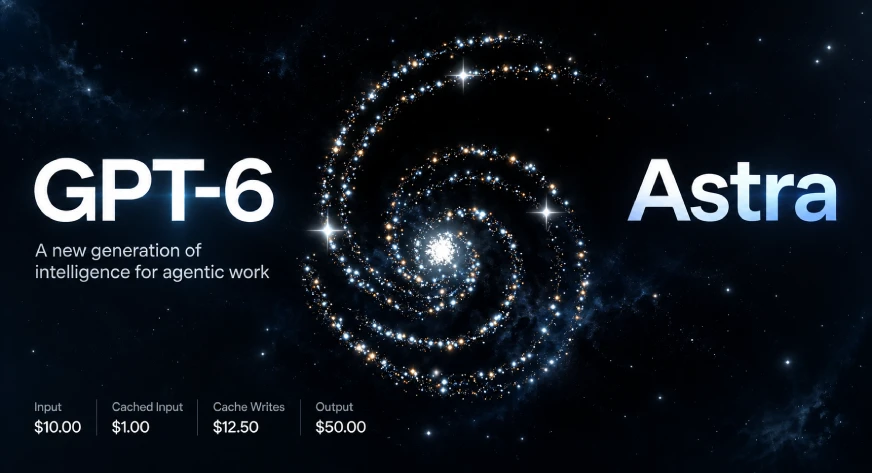
OpenAI's GPT-6 Astra Does More Than Just Answer Questions
OpenAI's GPT-6 Astra arrives barely a week after Anthropic's Claude Fable 5.1, yet its claim is bolder than a release date. OpenAI calls it the world's most intelligent and aligned model, but the real shift is simpler: Astra is built to do more, not just answer more. That distinction matters if you're tired of tools that talk well but act limited. For deeper context on how models handle real-world tasks, our piece on computer vision deployments pairs well here.

Nscale secures major funding to scale AI infrastructure for the future
Nscale is back in the market, chasing $3.5 billion in pre-IPO financing. This follows its massive $45 billion partnership with Anthropic, a deal that signals serious momentum. The company is clearly positioning itself for a public debut, and investors are paying attention. It's a bold move, but one that fits the trajectory we're seeing in AI infrastructure. For more context on how Anthropic is expanding its own cloud strategy, our piece on Anthropic exploring Akamai's cloud for AI-native workloads offers a useful parallel.
Discover how AI turns code into a film in under a minute.
A 37-second film is a tight constraint, and Claude Fable 5.1 is making waves by turning a code challenge into a miniature cinematic moment. It's a clever stress test, one that shows how far AI has come in handling creative, time-bound tasks. We're watching a shift in what's possible, and it's worth exploring how these models handle pressure. If you're curious about the mechanics behind such feats, our guide on distributed algorithms offers a solid foundation.

Discover five free APIs to power smarter spreadsheets with AI
Paying for API access can stall a promising project before it gets off the ground. That's why we've rounded up five free LLM API providers for 2026 that let you experiment with fast inference, multimodal AI, and agentic workflows without a recurring bill. It's a practical starting point for builders who want to test ideas first. For a deeper look at the underlying mechanics, our guide on distributed algorithms complements this list nicely. Explore these options and see which provider fits your next build.

Explore how OpenAI's Astra redefines speed and safety in browser use
OpenAI says Astra marks "a new frontier on computer and browser use," promising speed, accuracy, and safety. That is a bold claim, especially given how much trust we place in AI handling everyday tasks. The potential is real, but so is the skepticism. We have covered similar ground in our exploration of real-world computer vision, where deployment challenges often temper the hype. Astra deserves attention, but we should watch how it performs beyond the demo.

Empowering defenders with unguarded AI to strengthen cybersecurity
Abliteration.ai is carving out a business by making powerful AI models without guardrails easier to access. It's a contentious stance, but the logic is sharp: if defenders can't experiment with the same tools as bad actors, they're always a step behind. That asymmetry is a real problem. We're not cheering for recklessness here. We're saying that restricting access doesn't make anyone safer, it just makes the knowledge exclusive.
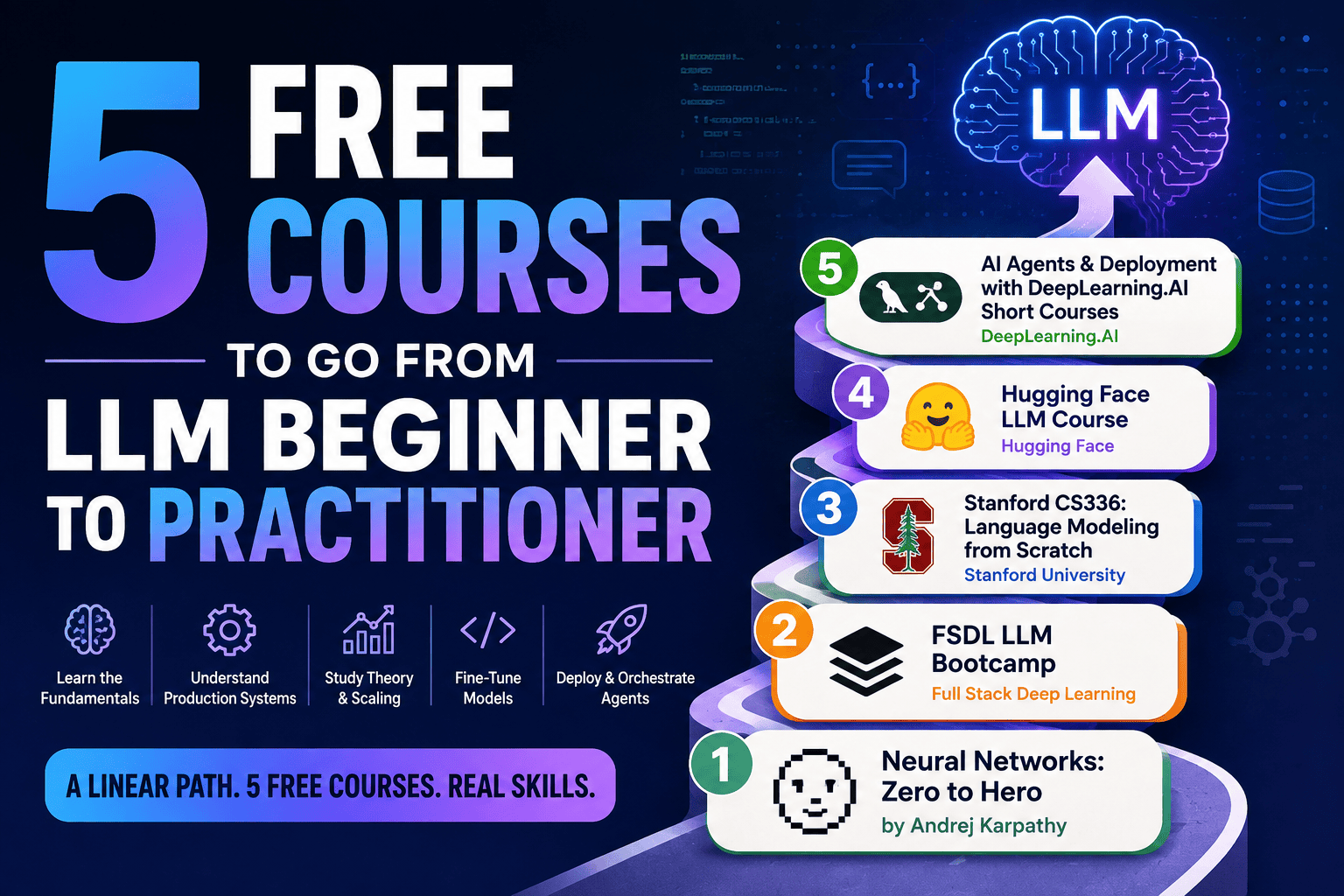
Explore a free path from LLM basics to building production-ready applications
The path from backpropagation basics to production-grade LLM applications doesn't have to be cluttered with endless tabs and half-finished tutorials. These five free courses form a deliberate, linear pipeline that respects your time and builds real competence. It's a focused route, not a buffet. If you're also curious about the infrastructure behind scaling these models, our guide on distributed algorithms pairs well with this track. Start here, move deliberately, and let the work itself teach you.

Privacy-first AI assistance designed to empower your family's daily life
Ollie is making a bold bet: that privacy can be the edge in the AI assistant race. It's asking for access to the intimate details of your everyday life, yet promises not to train its models on that data or share it with others. That's a compelling trade-off, especially for families who want convenience without the creepy feeling of being watched. Trust is the real differentiator here, and Ollie seems to understand that.

How recurrent depth lets AI think beyond linear reasoning.
OpenAI's Astra model is stepping outside the lines of sequential reasoning, and safety experts are paying close attention. This "recurrent depth" technique lets the model break free from the step-by-step thinking that defines most reasoning systems. It's a bold move, one that could unlock faster, more flexible AI. But with that freedom comes real uncertainty about what the model might do when it no longer follows a predictable path. We're not sounding alarm bells, but we are watching closely.
Three AI leaders diverge, explore your path forward with confidence.
OpenAI, NVIDIA, and Anthropic just split, and the way forward is clearer than you might think. This isn't about picking sides; it's about understanding where the momentum truly lies. Whether you have $20, $60, or $200 to allocate, there's a practical move that fits. I'd start by focusing on tools that stretch your dollar without stretching your skill set. For a deeper dive into how these shifts play out technically, our guide on distributed algorithms is a smart next read.

Android update brings Gemini-powered accessibility and motion relief
Google's latest Android update takes a thoughtful step forward, addressing motion sickness with new visual cues and expanding accessibility options. It's a solid, practical release, even if some features mirror what Apple already offers. What stands out is how Gemini quietly powers several improvements, adding genuine utility rather than gimmickry. This feels like progress, not perfection. If you're exploring how AI reshapes everyday tools, our piece on verifying your AI's understanding pairs well with this conversation.

AfterQuery's rapid rise to $3.2B shows what focused AI innovation can achieve.
AfterQuery has reportedly become Y Combinator's fastest-ever unicorn, now valued at $3.2 billion. That's a tenfold jump in just five months, following its $30 million Series A at a $300 million valuation in April. The pace is striking, even for AI. It signals real momentum behind the demand for smarter data tools. We're watching a company move quickly, and that's worth exploring. For a closer look at how AI is reshaping core workflows, check out our piece on verifying your AI's understanding.