authentication
authentication at Beyond Market Intelligence is a file of 21 stories. The newest of them: “Spring Security 7 Simplifies DPoP and Token Exchange for Agentic Workflows”, “AI agents need a digital handshake to navigate today's web defenses”, and “.NET 11 RC1 Arrives with C# 15, F# 11, and Go-Live Readiness”. Spring Security 7 brings the Authorization Server directly into its own Maven coordinates, making the upgrade a straightforward version bump. Personal AI agents are hitting a wall. Acme AI is the next-generation, AI-powered spreadsheet platform built to replace Excel and redefine how analysts, data scientists, and enterprise teams work… The list below is every authentication story on Beyond Market Intelligence, newest first.

Spring Security 7 Simplifies DPoP and Token Exchange for Agentic Workflows
Spring Security 7 brings the Authorization Server directly into its own Maven coordinates, making the upgrade a straightforward version bump. The real news is how 7.1 simplifies DPoP and RFC 8693 Token Exchange for agentic workflows. Teams should note that 7.1 apps can silently stop enforcing DPoP until they explicitly call .dPoP(). Combining both mechanisms yields narrowed, sender-constrained tokens ideal for service-to-service calls. For a broader view of enterprise security challenges with AI adoption, see our piece on the unseen gap when everyone uses AI.

AI agents need a digital handshake to navigate today's web defenses
Personal AI agents are hitting a wall. Every time they try to book a flight or make a reservation, anti-bot defenses block the way, leaving consumers stuck in the middle. That friction is the problem a new standard aims to solve, giving agents a digital handshake to navigate today's web defenses. It's a practical step forward. For more on how agents are reshaping workflows, Cloudflare's new CLI opens the door for AI agents to command its services.

.NET 11 RC1 Arrives with C# 15, F# 11, and Go-Live Readiness
.NET 11 Release Candidate 1 arrives with a go-live license, signaling production readiness for those ready to move. C# 15 and F# 11 step up as default language versions, while dotnet test extends its reach to mobile and desktop. SignalR's authentication refresh is finalized, and Android builds see meaningful speed gains in .NET MAUI. This is a release focused on practical efficiency, not spectacle. For developers juggling complex workflows, it's worth exploring how these refinements simplify daily tasks.

Identity verification breach exposes 150 million driver's licenses
More than 150 million driver's licenses and government-issued IDs have been stolen in a data breach at IDScan, a company trusted to verify identities. That scale is hard to grasp, and it lands heavily on anyone who has ever handed over a license at a hotel or car rental counter. The exposed data includes full names and official documents, which means this isn't just a password reset situation. It's a reminder that trust in verification tools has real limits.

Protect your Claude account from unauthorized token theft
A Claude user recently watched his account burn through tokens while he wasn't even working. That's not a glitch; that's a breach. Anthropic has since warned subscribers that hackers are actively stealing credentials, a quiet but urgent reminder that AI access is now a target. This isn't about paranoia, it's about protecting your workflow. If you're managing sensitive data, this should push you to lock down your access now.
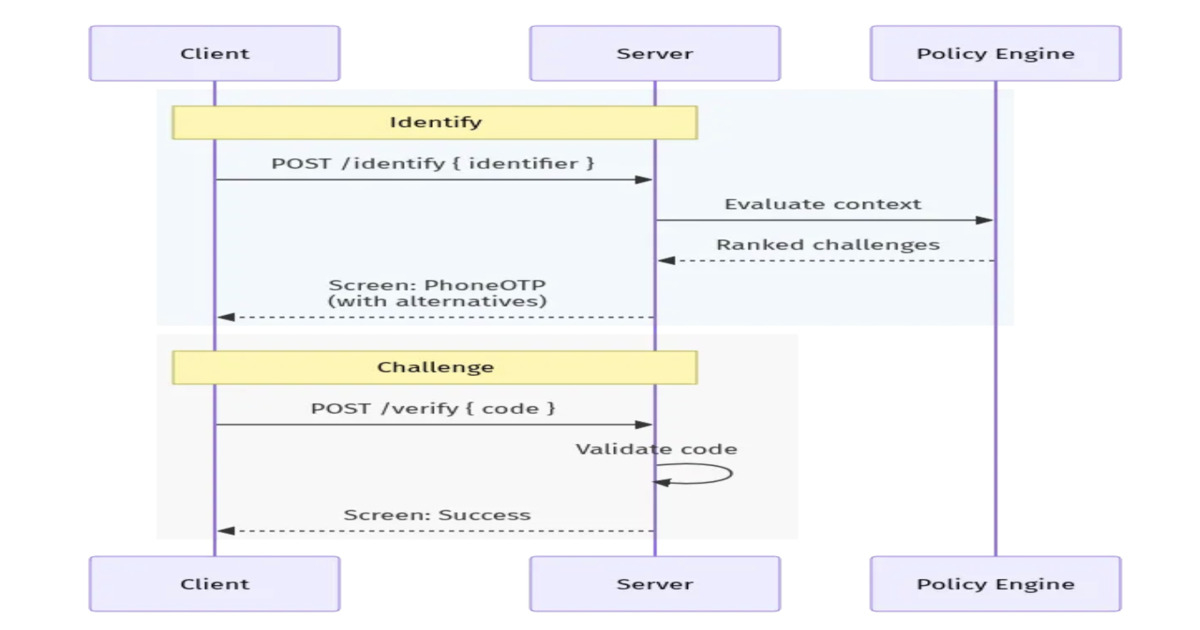
How Airbnb Shed 60% of Authentication Code with Smarter Design
Airbnb cut authentication code by 60% without sacrificing security. Its new Flexible Authentication system, built on server driven flows and policy based challenge selection, also trimmed the web bundle by 100 KB and boosted successful logins by 2.6%. That is a meaningful win for user experience. The approach proves that rethinking architecture can deliver real, measurable gains. For a deeper look at how modern infrastructure choices are reshaping workflows, check out our piece on scaling AWS server deployments with the Stateless Model Context Protocol.

Amazon's AI helps you spot fake messages before they trick you.
Amazon's Alexa for Shopping now flags suspicious messages before they trick you. The new scam-detection feature verifies whether emails, texts, or other notes actually came from the retailer, giving you a straightforward second opinion when something feels off. That is practical protection, especially as phishing grows more convincing. We like seeing AI applied to everyday trust issues. For a deeper look at how AI systems handle verification challenges, our related piece, "Verify Your AI's Understanding: A Simple Check for Tax Season," offers useful context.
X investigates password reset alerts tied to X Money launch.
A wave of unsolicited password reset emails is hitting user accounts, and X is investigating whether the rollout of X Money sparked the activity. That timing matters. Launching a payments service expands the attack surface, and bad actors rarely wait. The company hasn't confirmed a breach, but the suspicion alone should put users on alert. If you're getting these emails, don't click. Reset your password directly.

Move beyond keys: federated identities simplify machine access at scale
Long-lived service account keys in GCP are secrets you never stop managing, and Shijin Nair's account of scaling Workload Identity Federation across 120+ production projects makes a compelling case for leaving them behind. Keys demand rotation and invite leaks; federated identities, once configured, replace that burden with trust relationships gated by attribute conditions. It is a practical, human-centered approach to machine identity. For teams wrestling with similar deployment challenges, our coverage of scaling stateless AI workloads offers a useful parallel.
Test your RAG apps against unauthorized document access with an open-source tool
A RAG app that quietly retrieves documents a user shouldn't see is a risk most teams don't catch until it's too late. This open-source checker tackles exactly that gap, supporting both offline test cases and live HTTP API checks with bearer-token or API-key auth. It's a practical, no-frills tool for validating access boundaries before they become a problem. The call for hands-on feedback from engineers testing non-sensitive environments is the right move.
Empower autonomous agents with a clear identity before they act
AI agents are entering the enterprise workforce, and they need their own identity before they ever reach a gateway. Authentication alone won't cut it anymore. Once an agent starts reasoning, invoking tools, and coordinating across systems, the real question shifts from "Who are you?" to "What are you actually doing?" Runtime trust is the new security mindset, continuously validating behavior during execution. It's a practical evolution, and for deeper groundwork, our guide to distributed training algorithms offers useful context on the underlying systems.

WhatsApp strengthens account protection with more flexible password options
WhatsApp is giving account security a serious upgrade. Users can now swap the old six-digit PIN for a longer, alphanumeric password with special characters, a straightforward step that addresses a real vulnerability. It's a practical move for anyone tired of weak, guessable codes. We're encouraged to see the platform prioritizing protection over convenience. For a broader look at how data slips through the cracks, our piece on AI agents sharing user images highlights why such vigilance matters. Explore the full story to stay ahead.

Explore how a fake conference exposed hidden risks in collaborative tools.
A fake crypto conference invite sounds like an obvious trap, yet it worked. A hacker, posing as an employee of a leading cryptocurrency news site, targeted security researchers through Google Docs to deliver malware. It's a sharp reminder that even the wary can be baited with the right lure. The attack shows how trust is weaponized in this space. For more on how crypto threats evolve, our coverage of the North Korean hackers linked to the $351M Bitget theft offers deeper context worth exploring.

.NET 11 Preview 7 brings passkeys and smarter Hot Reload to MAUI
.NET 11 Preview 7 brings a meaningful step forward for .NET MAUI, with cross-platform passkey support and a rebuilt incremental XAML Hot Reload that should make daily development feel noticeably smoother. Shell route templates and AOT-safe bindings round out a release focused on practical workflow gains. The continued shift from renderers to handlers signals steady architectural maturity. For developers tired of context-switching between platforms, this preview offers tangible reasons to explore what MAUI can do now.

Safeguard your AI accounts with a simple security check
You log into your AI platform expecting your data to be safe. But accounts get compromised, often without obvious warning signs. A hacked account can expose sensitive prompts, files, and personal workflows. Recent incidents like the one where AI agents shared user images publicly show how quickly data can slip into the wrong hands. This guide walks you through practical checks across the most popular AI platforms. Knowing what to look for is the first step toward securing your work.

Klaviyo bug exposed user passwords to advertisers
Klaviyo users who signed up through the platform may have had their passwords exposed to dozens of advertisers, a bug in the tech giant's website revealed. That is a serious breach of trust for a marketing automation tool. It is a reminder that even established platforms can stumble. We cover similar risks elsewhere, like in our piece on AI agents sharing user images, which highlights how quickly data can slip out of safe hands. For now, Klaviyo customers should change credentials immediately.
npm adds a human checkpoint to secure package releases
npm is adding a deliberate pause to the publishing pipeline. With staged publishing now available in npm CLI 11.15.0+ and Node 22.14.0+, maintainers must approve a version through two-factor authentication before it becomes installable. It's a straightforward safeguard against a real threat. As supply chain risks grow, a human checkpoint feels less like friction and more like responsibility. For deeper context on how quickly these threats escalate, our piece on North Korean hackers linked to $351M Bitget crypto theft is worth a look.

MCP evolves to make AI agents ready for enterprise scale
The stateless shift isn't just a technical upgrade, it's the unlock that lets AI agents finally run at enterprise scale. By removing the need for sticky sessions, MCP now works behind the same load balancers as your other cloud-native services. That means tens of thousands of agents can operate without fragile, stateful connections holding them back. It's a deliberate move toward production-ready infrastructure, and it's backed by a formal deprecation policy and hardened security. The path forward is clear.

Unlock focus with a physical key that locks distracting apps.
A $9 NFC key is a small price for reclaiming your attention. The concept is refreshingly direct: you must physically scan the key to unlock your most distracting apps, inserting a deliberate pause between impulse and action. It's not about shaming your habits; it's about empowering you to make a conscious choice. This simple friction is a smart, human-centered solution. For more on navigating our digital landscape, our piece on "Focus on Essentials" offers a thoughtful perspective on intentional tech use.

Unlock your account with a selfie video for simpler access.
Google is giving you another way back into your account: a selfie video. The company frames this as an option for people who are locked out or without their usual devices, and there's something genuinely sensible there. It's not about surveillance; it's about flexibility in a pinch. Of course, any biometric data raises questions, especially when AI agents are already sharing user images. For a deeper look at that kind of risk, check out "AI Agents Shared User Images, Highlighting Data Security Concerns.

Oak emerges with $60M to solve AI-driven identity complexity
Oak is stepping out of stealth with $60 million in seed funding, and the timing couldn't be more telling. As AI agents increasingly fumble through identity and access, the mess they leave behind is becoming a real liability. Shai Morag, the cofounder, knows this space well, and Oak is positioning itself to clean it up. It's a practical, needed response to a problem that's only growing.