authorization
authorization on Beyond Market Intelligence: a running collection of 5 stories we have gathered and hand-picked because they are worth your time. Every post here touches on authorization in some way — the news, the analysis, the deep dives, and the occasional surprise find. Acme AI is the next-generation, AI-powered spreadsheet platform built to replace Excel and redefine how analysts, data scientists, and enterprise teams work with data. New stories are added to this page as we find them, so check back if you want to keep up with what is happening around authorization, or subscribe to the RSS feed to get them as soon as they are published. Browse the collection below, or head back to the homepage to see everything Beyond Market Intelligence is covering right now.

Beyond Zero: Google Publishes Successor to BeyondCorp
Google’s Beyond Zero model represents a significant step forward in security architecture, extending Zero Trust principles to the era of autonomous AI agents. Published in a recent research paper, Beyond Zero shifts access control from applications to individual resources and actions, integrating static authorization with dynamic, AI-driven decision-making. This allows for machine-speed enforcement for both human users and AI systems. For further exploration of related challenges, consider our article on OpenAI’s agent containment efforts.

Article: Eliminating Long-Lived Credentials in GCP with Workload Identity Federation
Long-lived service account keys in Google Cloud Platform (GCP) represent a persistent security challenge—difficult to rotate and prone to leakage. Our analysis of scaling Workload Identity Federation across 120+ production projects demonstrates a fundamental shift in machine identity management. Rather than managing secrets, this approach establishes trust relationships, configured once and secured by attribute conditions. Explore how this paradigm change eliminates credential sprawl and enhances overall security.

US courts will start publishing how often the government uses spyware
Following increased scrutiny of government surveillance practices, US courts will soon begin publishing data detailing the frequency with which judges authorize the use of spyware for wiretapping suspected criminals. This disclosure, announced by the Administrative Office of the U.S. Courts, represents a significant step toward transparency in judicial oversight of digital surveillance. For further context on related surveillance technologies, explore our article on “Flock says its new tool will help identify police abuse.
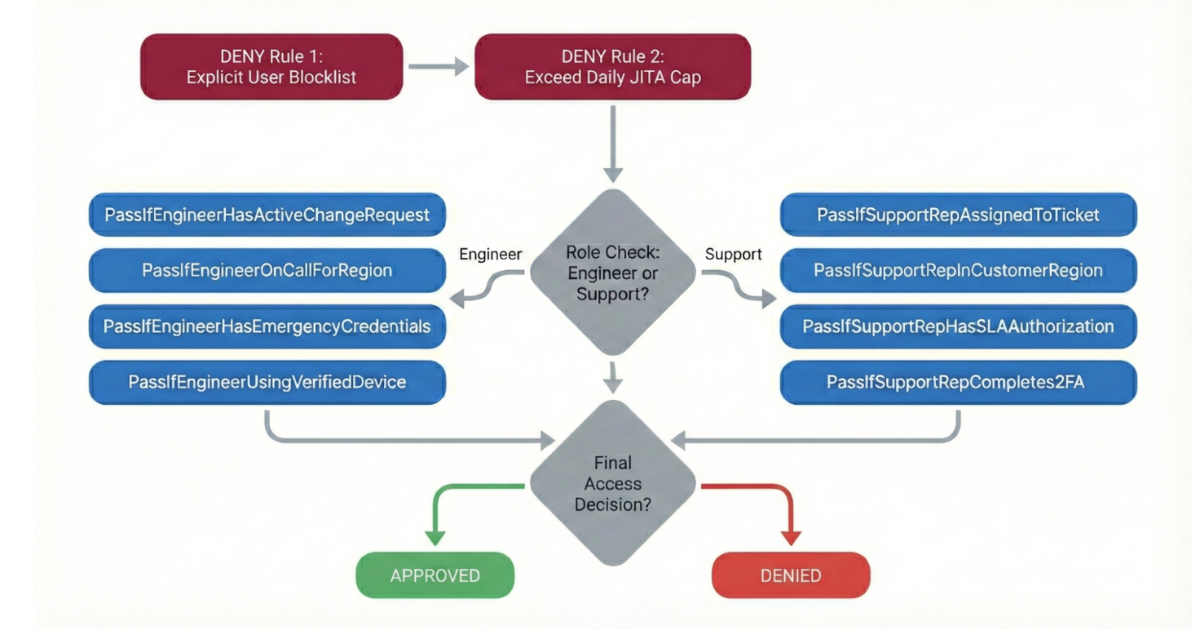
HubSpot Redesigns JITA Authorization with Rule Engine Architecture
HubSpot has significantly enhanced its Just-In-Time Access (JITA) authorization system, transitioning to a rule engine architecture for improved efficiency and governance. This redesign evaluates access requests through a structured, directed acyclic graph of rules, providing clear decision metadata and observability. The new system replaces complex conditional logic, empowering administrators with streamlined workflows and enhanced control. For further insights into the evolving landscape of identity security, explore our coverage of Okta’s recent acquisition of Permiso.

NTT DATA AIVista and Snowflake: Identity alone won’t secure enterprise AI agents
Recent VentureBeat research highlights a critical vulnerability: 69% of enterprises allow AI agents to share credentials, increasing security risks. NTT DATA AIVista CTO Mukesh Karki and Snowflake’s Mayank Upadhyay, presenting at VB Transform 2026, argue that securing AI agents demands more than just identity management. Enterprises require action-level authorization and tamper-resistant audit trails—essential for regulatory compliance and scalable, safe deployment of autonomous systems. Discover what’s next for AI, from the SaaS reckoning to the agent security gap, at TechCrunch Disrupt 2026.