autoencoders
Beyond Market Intelligence keeps autoencoders in one place: 5 stories so far. The section currently leads with “When a benchmark was stacked against PCA, the classic technique still outperformed”, “Discover a smarter path to your next great white wine recipe.”, and “Discover how information theory reveals hidden data structure beyond linear limits.”. It's refreshing to see a benchmark humble the hype. A white wine recipe scored between 7.30 and 7.58 is a strong result, and the approach here is genuinely clever. Acme AI is the next-generation, AI-powered spreadsheet platform built to replace Excel and redefine how analysts, data scientists, and enterprise teams work… The list below is every autoencoders story on Beyond Market Intelligence, newest first.
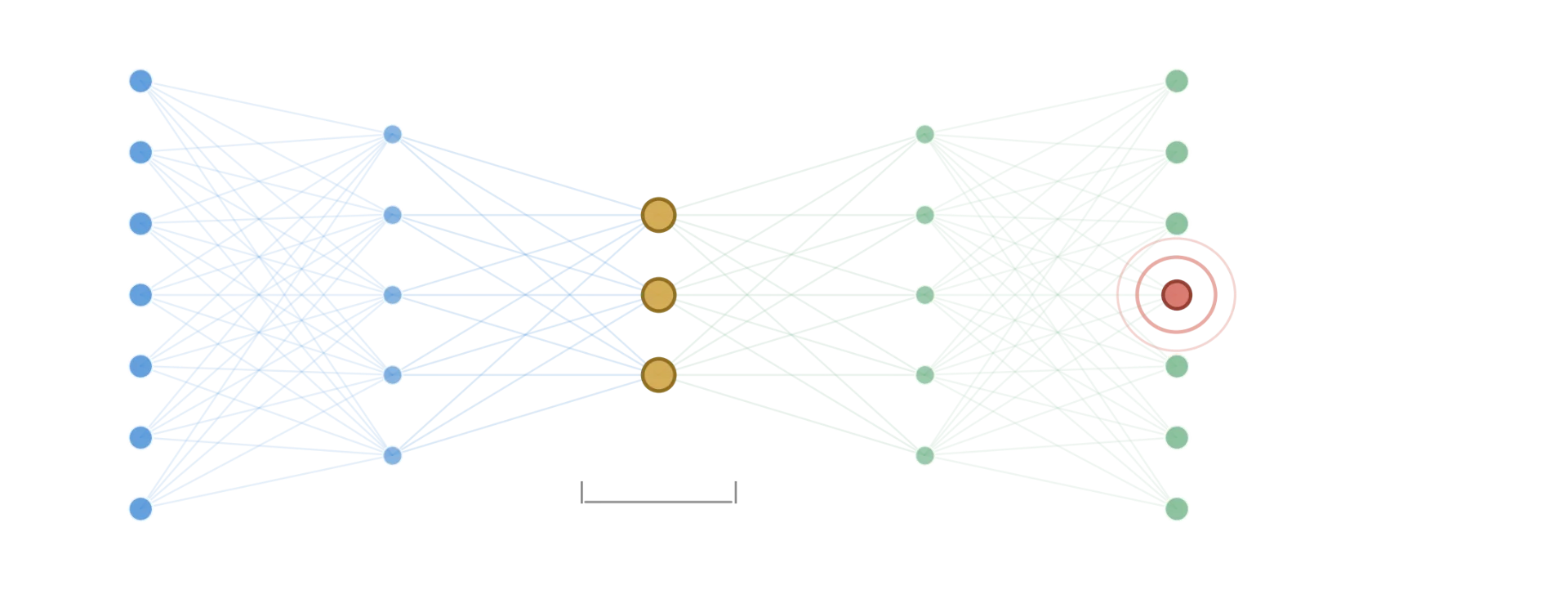
When a benchmark was stacked against PCA, the classic technique still outperformed
It's refreshing to see a benchmark humble the hype. When a test pit autoencoders against PCA, the classic technique won, not on theory, but on real-world performance. That's a result worth pausing over. The author rigged the test to favor the newer approach, and PCA still held its ground. Sometimes the simplest tool is the right one. If you're rethinking your data workflow, our piece on "File Compaction's Real Impact on Query Speed" explores another quiet efficiency worth your attention.

Discover a smarter path to your next great white wine recipe.
A white wine recipe scored between 7.30 and 7.58 is a strong result, and the approach here is genuinely clever. This project navigates a latent space to find where the best wines cluster, then takes 100 careful steps toward the highest possible score. The loss question is a fair one; plateaus matter more than absolute numbers with MSELoss. This is thoughtful experimentation, not just tinkering. For anyone exploring similar generative modeling, our piece on the Forrester function offers a related angle on optimization.
Discover how information theory reveals hidden data structure beyond linear limits.
Standard principal component analysis doesn't just lose accuracy on tangled, non-linear data, it fabricates thousands of phantom dimensions. This work confronts that collapse directly, offering a non-parametric diagnostic that reads pure probability mass instead of spatial distance. The stress test is telling: where PCA inflated 20 true roots into 5,700 false ones, the Entropic Scree lands exactly on 20. That is not a tweak; it is a reframing of how we map intrinsic structure.

Explore how VAEs generate new data through math and practical insight
Variational autoencoders ask a deceptively simple question: how do you generate something new from a learned distribution of what already exists? This walkthrough takes the math-first route, tracing the path from theory to the evidence lower bound and the reparameterization trick that makes training possible. It is a precise, grounded explanation for anyone ready to move past surface-level intuition. If distributed training feels like the next step in your LLM journey, our guide on distributed algorithms pairs well with this foundation.

Unlocking Efficiency by Compressing Data Into Lower Dimensions
Compressing heavy, unstructured data is one of the biggest hurdles in modern machine learning, and autoencoders offer a surprisingly elegant way forward. By learning to squeeze inputs into a lower-dimensional latent space, they preserve the core context while slashing computational load. It's a practical, accessible approach that turns a complex problem into a manageable workflow. For readers ready to see how this fits into the broader AI toolkit, our guide on distributed algorithms for LLM training pairs naturally with this foundational idea.