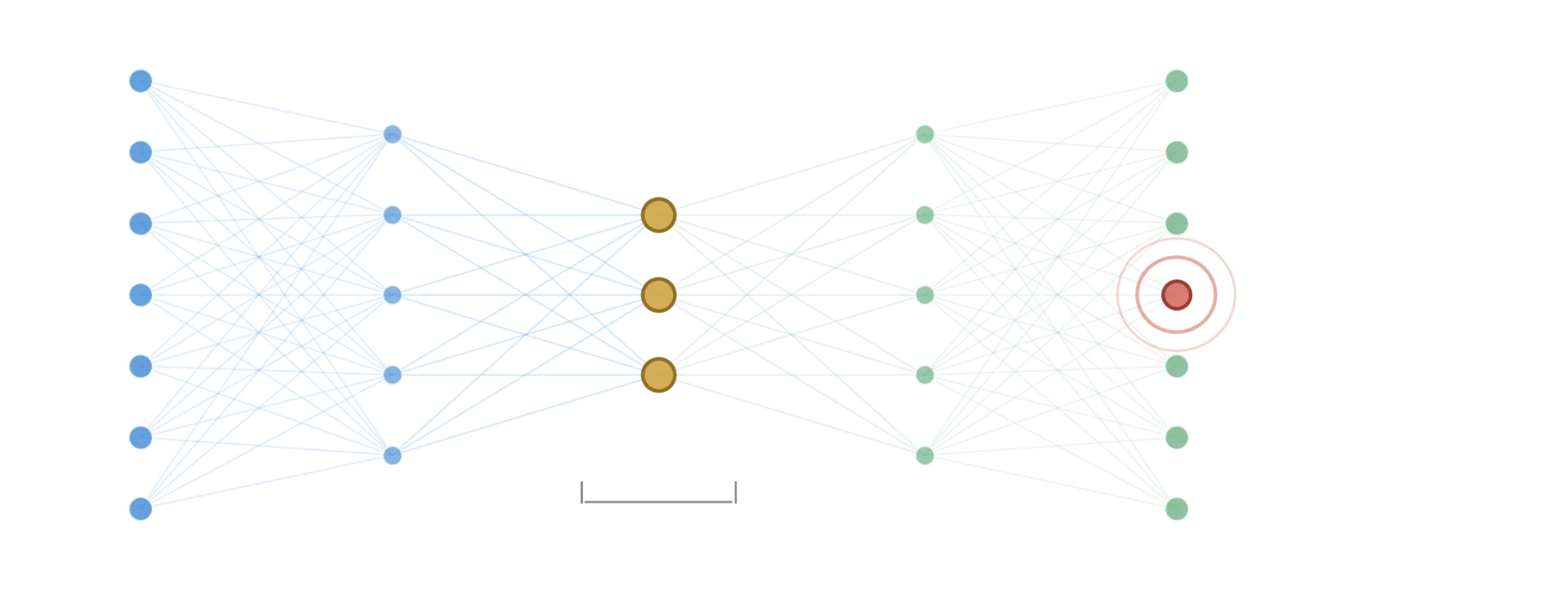
Principal Component Analysis, a technique from the early 20th century, just outperformed a modern autoencoder in a benchmark that was deliberately stacked against it. The takeaway is not that AI is overhyped, but that we often overlook the power of simpler tools when chasing novelty.
The experiment, detailed in a recent article, pitted PCA against a three-layer autoencoder on a standard dimensionality reduction task. The author even gave the autoencoder an advantage, more parameters, more training epochs, and a non-linear activation function. Yet PCA still delivered lower reconstruction error and cleaner latent representations. This matters because many teams today are building complex AI pipelines without first asking whether a classical method would suffice. The parallel is clear in our related piece on Stop Overpaying for AI Tools Hidden in Your Data Workflow, which shows how hidden costs accumulate when we default to premium solutions. Similarly, Discover how data shapes the stories you see: and the ones you miss reminds us that the way we represent data, whether through PCA or an autoencoder, fundamentally changes what insights we extract.
What does this mean for your workflow? First, it suggests that benchmarking your actual data, not theoretical advantages, is non-negotiable. The autoencoder's theoretical edge in modeling non-linear relationships simply did not translate to better performance on this real dataset. Second, it challenges the assumption that newer always means better. PCA is interpretable, computationally cheap, and requires no hyperparameter tuning, qualities that matter in production environments where time and budget are constrained. The File Compaction's Real Impact on Query Speed, Tested Across Three SQL Workloads article reinforces this theme: sometimes the most impactful optimizations come from revisiting fundamentals rather than adopting the latest trend.
Our opinion is straightforward: let the data decide. If you are building a dimensionality reduction step into a pipeline, run PCA first. It might win. And if it doesn't, you now have a clear baseline against which to measure whether the added complexity of an autoencoder is worth the cost. The specific question to watch is how these results generalize across different data types, image, text, time series, where non-linear relationships might finally tip the scales. Until then, PCA remains the quiet champion that deserves a second look before you commit to a more expensive approach.