automated
Beyond Market Intelligence keeps automated in one place: 7 stories so far. The section currently leads with “Uber Governs AI Agent Access Across 800 Servers and 5,000 Tools”, “Anthropic's new scanner empowers open-source maintainers to strengthen security”, and “Factory robots retrain in minutes, not weeks, for delicate assembly tasks”. Uber now governs AI agent access across more than 800 MCP servers and 5,000 tools through its MCP Gateway, which standardizes how agents discover and invoke internal services. Anthropic is giving open-source maintainers a powerful new ally. Acme AI is the next-generation, AI-powered spreadsheet platform built to replace Excel and redefine how analysts, data scientists, and enterprise teams work… The list below is every automated story on Beyond Market Intelligence, newest first.

Uber Governs AI Agent Access Across 800 Servers and 5,000 Tools
Uber now governs AI agent access across more than 800 MCP servers and 5,000 tools through its MCP Gateway, which standardizes how agents discover and invoke internal services. Separating tool registration from runtime execution is the smart part: automated API discovery, access controls, sensitive data redaction, and response filtering all live in one place. Incremental discovery through Omni MCP keeps agents from drowning in options.

Anthropic's new scanner empowers open-source maintainers to strengthen security
Anthropic is giving open-source maintainers a powerful new ally. The company's OSS Scanner offers free, opt-in vulnerability reports generated by its strongest models, including Claude Mythos. There is no human review, just raw AI analysis delivered periodically, leaving maintainers to validate findings and decide which fixes to accept. It is a smart, trust-first approach to security. For more on how AI models are reshaping decision-making, see our coverage of OpenAI opening its decision model to all.

Factory robots retrain in minutes, not weeks, for delicate assembly tasks
Factory robots can now retrain for delicate assembly tasks in minutes, not weeks. Industrial Next is solving a real problem: automating complex work that has long required human hands. This isn't about replacing people, it's about empowering manufacturers to move faster. If you're curious about how technology reshapes established industries, you might also enjoy learning how Apple reframes the smart home with its newest connected display.

Explore smarter async API management with real-world practices from Just Eat Takeaway
Messaging is easy until it isn't. At scale, async APIs quietly become the backbone of event-driven systems, and Ian Cooper from Just Eat Takeaway knows exactly where the friction lives. He walks through the ABCs of messaging, Address, Binding, Contract, then shows how discovery, governance, and provisioning hold up under real-world pressure. Using AsyncAPI, CloudEvents, and schema registries, he turns theory into practice. If you're building event-driven infrastructure, this one's worth your attention.

Uber's €825M GDPR fine signals new accountability for automated systems
Uber's latest regulatory headache is a big one: the Dutch Data Protection Authority has slapped the ride-hailing giant with a €825 million fine, the second largest ever issued under Europe's GDPR. The penalty stems from automated driver suspensions, a practice that clearly clashes with the transparency and fairness Europe demands. For a company built on data, this is a stark reminder that automation without human oversight carries real costs. It's a bold move, and one that signals regulators are watching closely.
How Spotify's AI Agent Standardizes Thousands of Code Repositories
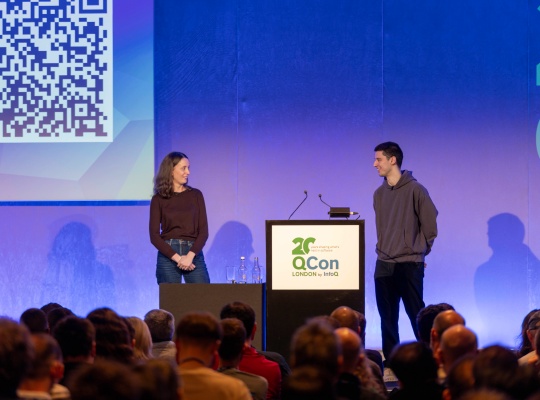
When Spotify set out to rewrite its entire codebase, it didn't just throw more engineers at the problem. Jo Kelly-Fenton and Aleksandar Mitic built Honk, an AI coding agent designed to handle fleet-wide migrations that would otherwise stall for months. Their approach decouples CI verification from the agent itself, a smart move that prevents bottlenecks before they start. It's a practical, forward-thinking look at how to standardize thousands of repositories without losing momentum.
When AI Remixes Research Papers, Originality Becomes a Question of Trust
A paper assembled from favored sources, with the gaps and commented-out lines stitched together by an LLM, is being submitted as novel work. It clears syntactic overlap checks because the text is technically new. This is not a clever hack; it is a direct assault on the integrity of academic review. A researcher is gaming a system built on trust. We are calling this out. It is time to confront how AI is enabling a collapse in research ethics.