Presentation: Rewriting All of Spotify's Code Base, All the Time
Our take
Spotify’s recent foray into AI-powered codebase migration, detailed in their presentation on “Honk,” represents a fascinating and increasingly necessary evolution in software engineering. The sheer scale of Spotify’s engineering organization – thousands of repositories – makes manual refactoring and migrations a near impossibility. Their solution, an AI coding agent, highlights a pivotal shift from simply *using* AI for creative tasks to leveraging it for deeply technical, operational needs. It’s a pragmatic response to the realities of maintaining a vast and complex system, a reality echoed by companies of all sizes, and a trend we're seeing accelerate. This aligns with recent explorations in AI-driven productivity tools, such as the platform developed by ex-Spotify employees aiming to bring AI-powered recommendations to e-commerce [Ex-Spotify employees raise $10M to bring the AI behind its recommendations to e-commerce]. The ability to automate these low-level, repetitive tasks frees up human engineers to focus on higher-level design and innovation, a significant win for overall productivity.
The architectural choices Spotify made with Honk—specifically decoupling CI verification runtimes from the AI agents and addressing pull request bottlenecks—are particularly insightful. These aren't just clever technical implementations; they are crucial considerations for deploying AI at scale within a production environment. The challenge of automated pull requests, in particular, is one many organizations will face as they increasingly adopt AI coding tools. It's also worth noting the emphasis on standardization across repositories, a necessary prerequisite for any successful AI-driven automation effort. This standardization isn't about stifling creativity, but rather creating a stable foundation upon which AI can reliably operate. Comparing this to the ongoing discussion around optimizing AI writing tools, where skills are ranked by GitHub stars [Top 5 Claude Skills for Writing (Ranked by GitHub Stars)], reveals a parallel: the value of structured, reliable tooling is paramount, regardless of the specific domain. The Hark Handoff computer use agent also underscores the growing focus on AI as a collaborative assistant rather than a complete replacement for human workers [AI startup Hark unveils first product: an affordable, fast computer use agent Hark Handoff].
The significance of Honk extends beyond Spotify itself. It provides a blueprint—albeit a complex one—for how large organizations can tackle the daunting task of modernizing legacy codebases and scaling engineering efforts. The traditional approach of large, coordinated refactoring projects is often slow, expensive, and prone to disruption. Honk demonstrates a more agile, iterative approach, where AI incrementally improves the codebase while minimizing risk. This paradigm shift has implications for the future of software development, suggesting a move towards more autonomous systems that can continuously evolve and optimize code. It also highlights the growing importance of AI literacy for all engineers, regardless of their specialization. Understanding how to interact with and leverage AI coding agents will become an essential skill in the coming years.
Ultimately, Spotify’s experience with Honk raises a crucial question: as AI coding agents become more sophisticated, how will the role of the software engineer evolve? Will we see a shift from writing code directly to architecting and overseeing AI-powered coding systems? The answers remain to be seen, but one thing is clear: the era of AI-assisted software engineering is here, and companies that embrace this transformation will be best positioned to thrive in the years ahead.
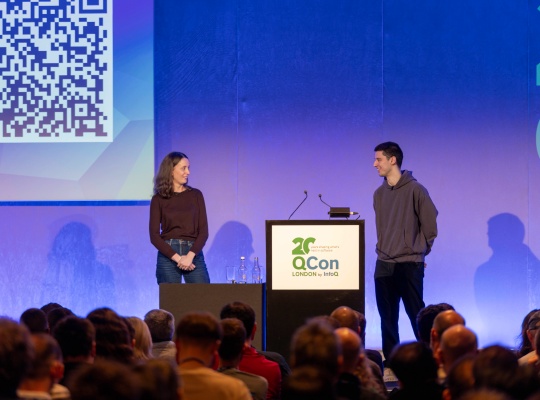
Jo Kelly-Fenton and Aleksandar Mitic explain how Spotify created "Honk," an AI coding agent, to handle complex fleet-wide codebase migrations. They share key architectural insights on decoupling CI verification runtimes from AI agents, dealing with automated pull request bottlenecks, and driving aggressive standardization across thousands of engineering repositories.
By Jo Kelly-Fenton, Aleksandar MiticRead on the original site
Open the publisher's page for the full experience