automotive
37 stories filed under automotive on Beyond Market Intelligence. The newest of them: “River raises $120M to scale production and expand EV lineup”, “Lucid's path forward focuses on a midsize EV and smarter spending”, and “Waymo expands Dallas robotaxi access, inviting more riders to explore autonomous travel”. River just raised $120 million in a Series C, and that's a serious signal for the Indian EV market. New CEO Silvio Napoli has laid out four must-win priorities for Lucid, and the list is telling: launch the midsize EV, finish the Saudi factory, cut costs, and pursue robotaxis. Acme AI is the next-generation, AI-powered spreadsheet platform built to replace Excel and redefine how analysts, data scientists, and enterprise teams work… The list below is every automotive story on Beyond Market Intelligence, newest first.

River raises $120M to scale production and expand EV lineup
River just raised $120 million in a Series C, and that's a serious signal for the Indian EV market. The company isn't just scaling production; it's laying groundwork for a new factory and models slated for 2027, with an eye on profitability. That's a mature, focused path forward. For teams watching how AI-native tools are reshaping industries, this momentum feels familiar. It's about building infrastructure with intent. If you're tracking similar shifts in tech infrastructure, our piece on Nscale's $3.36B raise offers useful context.

Lucid's path forward focuses on a midsize EV and smarter spending
New CEO Silvio Napoli has laid out four must-win priorities for Lucid, and the list is telling: launch the midsize EV, finish the Saudi factory, cut costs, and pursue robotaxis. That first item is the real test. A $1.4B cash savings plan buys time, but time only matters if the product lands. The robotaxi bet is ambitious, though it feels like a distraction from the immediate survival math. Lucid needs execution, not vision.

Waymo expands Dallas robotaxi access, inviting more riders to explore autonomous travel
The waitlist is gone. Waymo has opened its robotaxi service to everyone in Dallas, a decisive move in its push to scale self-driving technology across the U.S., U.K., and Europe. This isn't just another city launch; it's a signal that the company believes its system is ready for broader, unscripted use. We're watching a deliberate expansion, not a test. For a deeper look at how this momentum fits into the wider investment surge, check out our piece on AI-native companies driving major capital interest.

Musk's focus shifts from cars to AI in Tesla earnings calls
Elon Musk now spends half of Tesla's earnings calls talking about robots and AI, not cars. An analysis of the past seven years shows how far the conversation has drifted from the company's core business. That focus is bold, but it raises a real question: what happens to the vehicles while he chases the next machine? For a clearer look at where this tech obsession can lead, our piece on talking to an AI clone offers a grounded counterpoint.

Also begins e-bike deliveries with a broader vehicle vision ahead
After months of delays, Rivian's spinoff, Also, is finally set to start delivering e-bikes. It's about time. The startup isn't stopping at two wheels, though. They call themselves a "vehicle" company, with plans to build four-wheel pedal-assist cargo vehicles for Amazon. That's a smart pivot. While the e-bike launch is the immediate focus, the real potential lies in that broader logistics partnership. It's a practical move. For more on scaling ambitious ventures, check out "Accelerate Your Startup's Growth: Final Hours to Save on Disrupt 2026."

Tesla hits 10 million EVs, marking a key step toward Musk's pay goal.
Tesla just rolled its 10 millionth electric vehicle off the line, a quiet but significant marker. That puts the company halfway toward one of the four core goals Elon Musk must hit to unlock his full $1 trillion pay package. It's a concrete sign of scale, not hype. For anyone watching the broader EV push, this is momentum worth tracking. And if you're following Tesla's logistics, our piece on the Semi production ramp-up pairs well with this milestone.

Mobileye founder shifts to chair as company accelerates autonomous future
Amnon Shashua is stepping aside as Mobileye's CEO, pivoting into the chairman's seat as the company doubles down on robotaxis and robotics. It's a meaningful shift, one that signals confidence in the next phase of autonomous mobility. Leadership changes like this often carry weight beyond the title. For context on how such transitions unfold elsewhere, our piece on Automattic's recent board reorganization offers a useful parallel. For now, Mobileye's move feels less like an ending and more like a deliberate recalibration.

Sila secures $300M to scale battery materials for over 100,000 EVs
Sila's fresh $300 million round is a clear signal that the EV market's momentum isn't fading. The funding will let the company scale its silicon-carbon anode material production, enough to power over 100,000 electric vehicles. That's not just a win for Sila; it's a step toward making batteries more efficient and accessible. While others hesitate, Sila is doubling down on the fundamentals. For more on how AI-native companies are attracting serious capital, check out our piece on the $5.75B investment surge.

Navigating the future of robotaxi rules with clarity and purpose
Robotaxi rules are turning into a battlefield, and that's exactly where things get interesting. The fight over who gets to deploy self-driving vehicles isn't just about technology; it's about trust, safety, and who decides what's acceptable on public roads. We're watching regulators and innovators circle each other, and the outcome will shape how we move for decades. If you're questioning how AI fits into this mess, you're not alone. It's a messy, necessary conversation, and we're here to break it down.

The Honda Prologue joins a growing list of EVs exiting the U.S. market.
The Honda Prologue is being discontinued in the U.S., and it's not alone. This year, a growing list of EV models are exiting the market entirely. It's a reminder that the electric transition isn't just about new launches; it's also about tough calls on what stays. For a broader look at how automakers are refining their strategies, our piece on Volkswagen's efficiency-focused EV offers useful context. Change is constant, and the market is clearly reshaping itself.
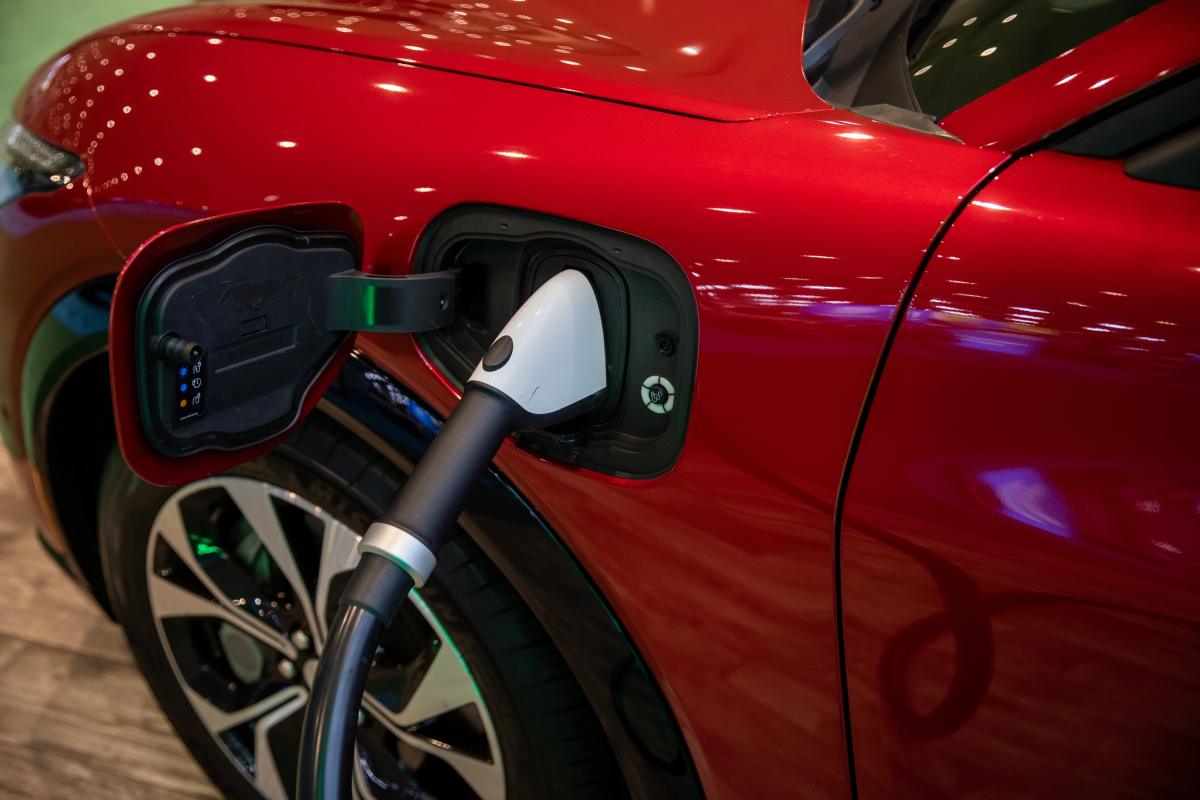
Data from a 600-mile road trip shows EV charging is finally reliable.
Six hundred miles in an EV used to mean a playlist of charging anxieties. But a recent road trip proved otherwise, as DC Fast charging across the U.S. has become notably faster and more reliable. That shift deserves attention, not because it's flashy, but because it removes a real barrier to adoption. For anyone hesitating, the data suggests the experience has quietly matured. It's an encouraging sign for practical, everyday use.

AI turns a smartphone into a powerful tool for fleet damage detection
Sheryl Sandberg is putting real money behind a simple idea: vehicle inspections shouldn't require a clipboard. Her firm is leading a $10 million investment in a 2021 startup that lets enterprise customers scan damage with a smartphone. That is practical AI, the kind that removes friction instead of adding it. We have covered how AI can mislead or clarify, and this feels like the latter. For more on questioning what these tools can do, see our piece on verifying your AI's understanding.

Lucid Motors dismisses bankruptcy claims as stock drops sharply
Lucid Motors isn't going anywhere, despite the rumor mill working overtime. After a report sent its stock tumbling more than 50%, the company fired back, calling the bankruptcy speculation "completely false." It's a sharp reminder that headlines can move markets faster than facts. For those watching the broader shift in next-generation tech infrastructure, the resilience here matters. If you're tracking how AI-native companies are securing their foundations, our piece on Anthropic's cloud commitment offers useful context.