autonomy
Beyond Market Intelligence keeps autonomy in one place: 15 stories so far. The section currently leads with “How autonomy lets Rivian rethink vehicle design from the R4 onward”, “Explore Autonomy-1: AI Takes the Lead in Space Data Management”, and “Car subscriptions pivot to gas, exploring a more accessible path forward”. Autonomy isn't just a feature for Rivian, it's a design philosophy. A small, transformer-based AI model is about to take the helm of a space probe. Acme AI is the next-generation, AI-powered spreadsheet platform built to replace Excel and redefine how analysts, data scientists, and enterprise teams work… The list below is every autonomy story on Beyond Market Intelligence, newest first.

How autonomy lets Rivian rethink vehicle design from the R4 onward
Autonomy isn't just a feature for Rivian, it's a design philosophy. By removing the driver from the equation, the company can rethink everything from sensor placement to interior layout. That vision culminates with the R4, a vehicle shaped by what's possible when software, not a steering wheel, calls the shots. It's a bold bet on a future where the machine adapts to the mission, not the other way around.

Explore Autonomy-1: AI Takes the Lead in Space Data Management
A small, transformer-based AI model is about to take the helm of a space probe. Autonomy-1 puts the "intelligence" in deep-space data management, trading ground control for a model that can make sense of the void on its own. That is a bold step toward letting machines handle the mundane, complex decisions we are too slow to make. It is a practical move, not a fantasy. For more on how AI systems reason through structure, our piece on paragraph navigation offers a useful parallel.

Car subscriptions pivot to gas, exploring a more accessible path forward
Scott Painter is nothing if not persistent. After years of chasing vehicle subscriptions, his latest move is a pivot back to gas-powered cars, a pragmatic shift to keep the model alive. The logic is simple: the dream of canceling a car anytime shouldn't be held hostage by EV charging headaches. It's a grounded concession that the market wants flexibility more than novelty.

GM EV brake failures raise urgent safety questions for drivers
Federal regulators are taking a harder look at GM's EVs after a driver reported resorting to steering a 2024 Blazer EV into a curb just to stop. That's not a minor inconvenience; it's a safety failure. When braking systems falter, the promise of smart technology rings hollow. We're watching this closely because trust in EVs depends on fundamentals working quietly in the background. For more on how data and control systems intersect, our piece on AI in fintech and healthcare offers useful context.
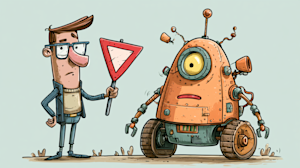
Empowering AI agents means knowing when to limit their autonomy.
The race to deploy the most autonomous agent is over. Enterprises winning with AI agents are now limiting how much those agents can do alone, because full autonomy breaks down in production. The companies that benefit won't be the ones with the most flexibility, but the ones creating agents with specific responsibilities and clear rules. Capability is outrunning control, and the 2026-to-2027 race is a trust race. For more on building these systems, explore our piece on orchestrating AI agents.
Navigating the Future of Robotics: Fresh Talent in an AI-Native World
You've built a strong foundation with Isaac Sim and ROS 2, and that's exactly where the market is heading. Entry-level Physical AI roles are competitive but open, especially for engineers who can connect simulation to real-world autonomy. Global hiring for freshers remains selective, so target companies with active robotics hubs in the EU or North America, and lean on your competition experience to stand out. Double down on reinforcement learning and deployment frameworks like TensorRT. For deeper insights, our piece on Xiaomi's MiMo-V2.
Freedom to explore your PhD path when you're ready to drive your own research
A PhD is a marathon of self-direction, but even the most independent researcher needs a compass. This setup offers total freedom, which sounds liberating, yet the near-total absence of feedback creates a real risk of drifting. For the right person, it is a dream; for others, it is a lonely trap. The choice hinges on whether you thrive on isolation or require a mentor's voice to sharpen your thinking. For more on navigating complex systems, explore our piece on unlocking LLM training.

When Evaluations Fail, Trust in Automation Grows, Not Shrinks
Confidence in automated agent evaluation surged this July, nearly tripling to 13% across 108 enterprises – a shift largely driven by those yet to experience a “false-confidence” failure. Critically, the failure rate of agents passing evaluations but then causing customer issues remained unchanged at just under half. While trust is rising, enterprises are simultaneously increasing investment in human review workflows, hedging against evaluations that don’t always reflect real-world outcomes.

Why Rivian's CEO sees autonomy and robotics as the next frontier
RJ Scaringe isn't hedging. The Rivian CEO is betting big on EVs, robots, and autonomy all at once, and he's bringing that full-throttle vision to TechCrunch Disrupt 2026. It's a bold play, and we're eager to hear how he balances the ambition without losing the plot. If you're looking to map his journey against other big swings, our piece on Automattic's recent boardroom shakeup offers a useful counterpoint in leadership under pressure. For now, Scaringe's session promises real insight.

Atoms assembles key Uber talent to drive financial strategy forward
Travis Kalanick keeps rebuilding his roster. Atoms, his robotics startup, just tapped Uber's former finance chief as CFO, a familiar face for a familiar mission. This follows the acquisition of Anthony Levandowski's autonomy startup and even a nudge for investment from Uber itself. It's a bold reclamation of talent, and it signals serious momentum. For anyone tracking AI-native infrastructure, the pattern is clear: Kalanick is assembling a team built to move fast. Curious how this compares to other big bets? Our piece on Nscale's $3.
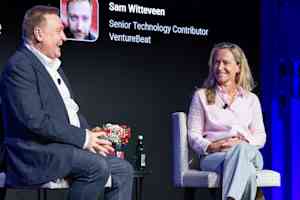
Your AI model is not your competitive advantage
Target's AI edge isn't the model, it's the discipline wrapped around it. Siobhán Mc Feeney argues that autonomy must be earned, not granted, and Target's four-level ladder proves it. Starting with observation and advancing only through proven accuracy keeps agents accountable. That's a sharp counter to the rush to deploy. For a deeper look at how this thinking scales, our piece on bridging retrieval and action shows why connecting systems matters just as much as the intelligence driving them.
Your AI agent passed your tests. Then it failed your customer.
Enterprise AI is granting agents more autonomy than the evaluations meant to govern it can support. Half of organizations have shipped an agent that passed internal tests, then failed a customer. Only 5% fully trust the automated evaluations in use today. The most-cited weakness: evaluations align poorly with real-world outcomes. Yet two-thirds are already deploying on automated results alone, or engineering toward it. That gap between autonomy and assurance is where failures scale.

Why Falling AI Confidence Signals Smarter Strategy Ahead
A 17-point drop in AI confidence sounds like bad news. It's actually the healthiest number in the report. When 40% of IT leaders claimed maturity six months ago, that was aspiration. The 23% who now admit production is harder than pilots are the ones doing the real work. They aren't retreating; they're recalibrating. That honesty builds the foundation for lasting adoption.
Your AI agents are passing tests but failing customers
Enterprise AI is granting agents more autonomy than the evaluations meant to govern them can support. Half of organizations have shipped an agent that passed internal tests, then failed a customer. Only 5% fully trust automated evaluation today. Yet two-thirds are moving toward zero-human deployment. That gap between trust and autonomy is the defining tension, and the market is responding. Tooling is fragmented, investment is shifting toward human review, and the next year will show whether assurance catches up to ambition.
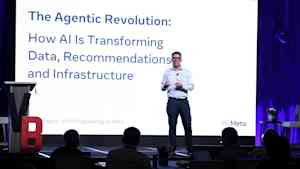
Your infrastructure was built for humans. Agents need a new foundation.
Meta VP Barak Yagour opened VB Transform 2026 with a pointed warning: enterprise infrastructure was built for humans, not agents, and the cracks are already showing. Agentic queries on Meta's systems grew 30x in one half, and automated traffic now outpaces human traffic. His timeline is blunt: we have roughly 20 months to rebuild. That urgency is worth taking seriously. The window is open, but it won't stay open long. For deeper context, explore our coverage of AI deployment priorities at QCon AI New York.