Bayesian
Beyond Market Intelligence keeps Bayesian in one place: 3 stories so far. The section currently leads with “Stop Misreading Your Data How Confidence Intervals Shape Decisions”, “Explore uncertainty to make smarter decisions with Bayesian neural networks”, and “Why Prediction Alone Fails to Uncover True Causal Effects”. Most of us assume that a 95% confidence interval means there's a 95% chance the true value lies within it. Point predictions give you an answer, but they don't tell you how much that answer is worth. Acme AI is the next-generation, AI-powered spreadsheet platform built to replace Excel and redefine how analysts, data scientists, and enterprise teams work… The list below is every Bayesian story on Beyond Market Intelligence, newest first.

Stop Misreading Your Data How Confidence Intervals Shape Decisions
Most of us assume that a 95% confidence interval means there's a 95% chance the true value lies within it. That's the illusion. This piece unpacks that confusion, clarifying how frequentist intervals and Bayesian credible intervals answer fundamentally different questions. It's a sharp, practical warning: misuse these tools, and you'll distort product decisions. For those eager to keep sharpening analytical instincts, the discussion pairs well with insights from our piece on adaptive systems, where similar precision matters in recommendation design.
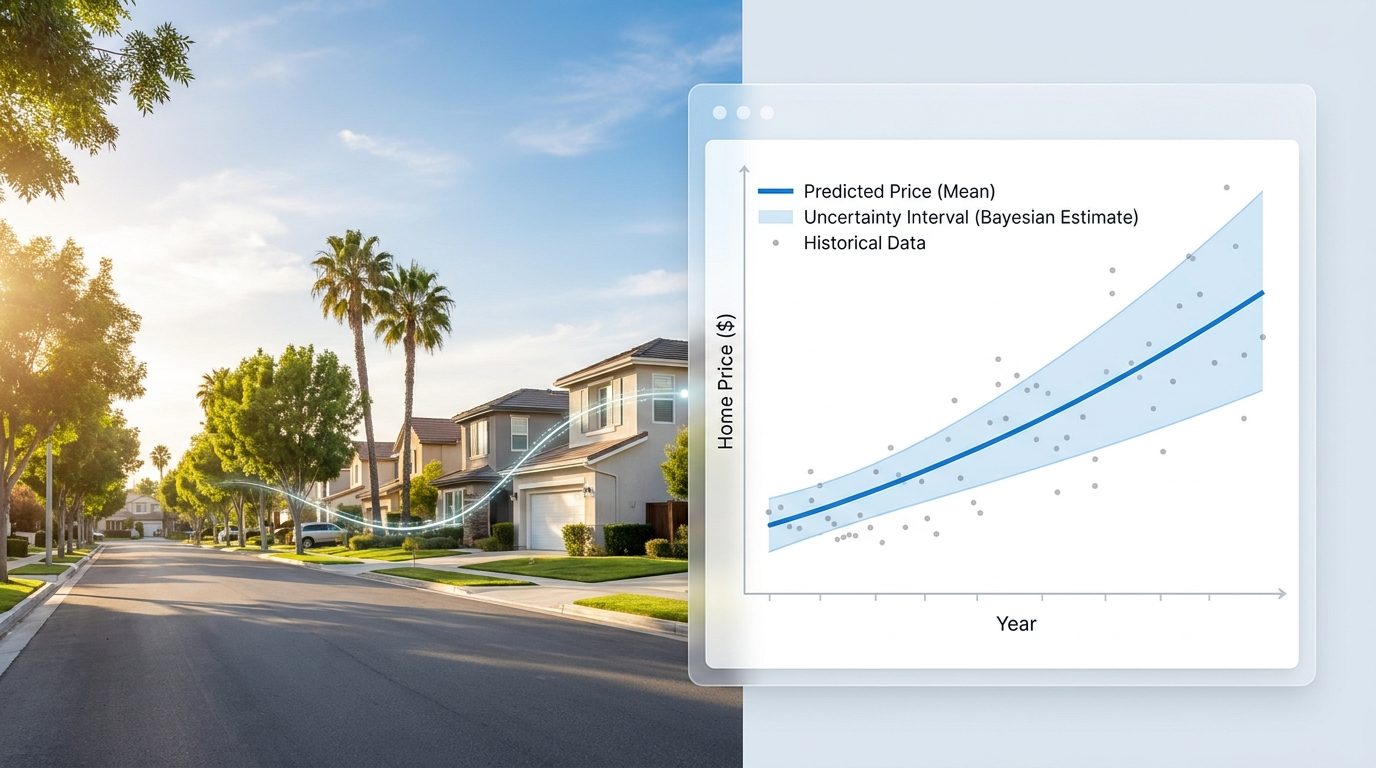
Explore uncertainty to make smarter decisions with Bayesian neural networks
Point predictions give you an answer, but they don't tell you how much that answer is worth. That's the gap this guide steps into. It walks through Bayesian neural networks in a practical, grounded way, showing how uncertainty quantification turns a single guess into a range of possibilities you can actually act on. It's a thoughtful read for anyone tired of blind confidence in their models.

Why Prediction Alone Fails to Uncover True Causal Effects
A model that predicts an outcome with high accuracy can still mislead you on treatment effects. That is the uncomfortable truth this piece tackles. The issue is variable selection: predictive models chase correlation, not causation, so they often drop confounders that matter for estimating impact. Bayesian Adjustment for Confounding offers a more principled path forward. It is a technical fix, but the lesson is practical. If your data strategy is off, even the smartest model will lead you astray.