benchmarks
32 stories filed under benchmarks on Beyond Market Intelligence. The newest of them: “Z.ai reveals its open AI model Ox Alpha, with weights on the way”, “Jalapeño delivers faster inference with greater energy efficiency”, and “Explore how DelveRL opens new paths for training game-playing agents.”. The mystery around Ox Alpha has finally broken. OpenAI's Jalapeño chip isn't just fast; it's fast where it counts. Acme AI is the next-generation, AI-powered spreadsheet platform built to replace Excel and redefine how analysts, data scientists, and enterprise teams work… The list below is every benchmarks story on Beyond Market Intelligence, newest first.

Z.ai reveals its open AI model Ox Alpha, with weights on the way
The mystery around Ox Alpha has finally broken. Z.ai has confirmed it is the lab behind this open AI model, which is already topping benchmarks and leaderboards. That alone is worth attention, but the real news is that the weights are set to be released soon. It is a confident move, and one that could reshape how we think about accessible AI development.

Jalapeño delivers faster inference with greater energy efficiency
OpenAI's Jalapeño chip isn't just fast; it's fast where it counts. Tested on SemiAnalysis' InferenceX benchmark, it delivered more tokens per user and higher throughput per kilowatt than any currently available model. That's the kind of efficiency that turns experimental AI into practical tooling. We're eager to see how this reshapes deployment decisions, especially for teams tired of trading speed for cost. For a closer look at how AI performance impacts real-world judgment, our piece on questioning an AI clone offers a useful counterpoint.

Explore how DelveRL opens new paths for training game-playing agents.
Most roguelikes punish agents with messy integration, but DelveRL flips that script. SnyderConsulting built an open-source, turn-based game with a structured API, deterministic simulation, and procedural floors, designed specifically for training game-playing agents. It runs locally, includes a recurrent PPO baseline that hits floor 18 on average, and everything is open source. That's a practical gift to the research community. The strategic depth looks promising, and the transparent benchmarks make it easy to test new ideas.
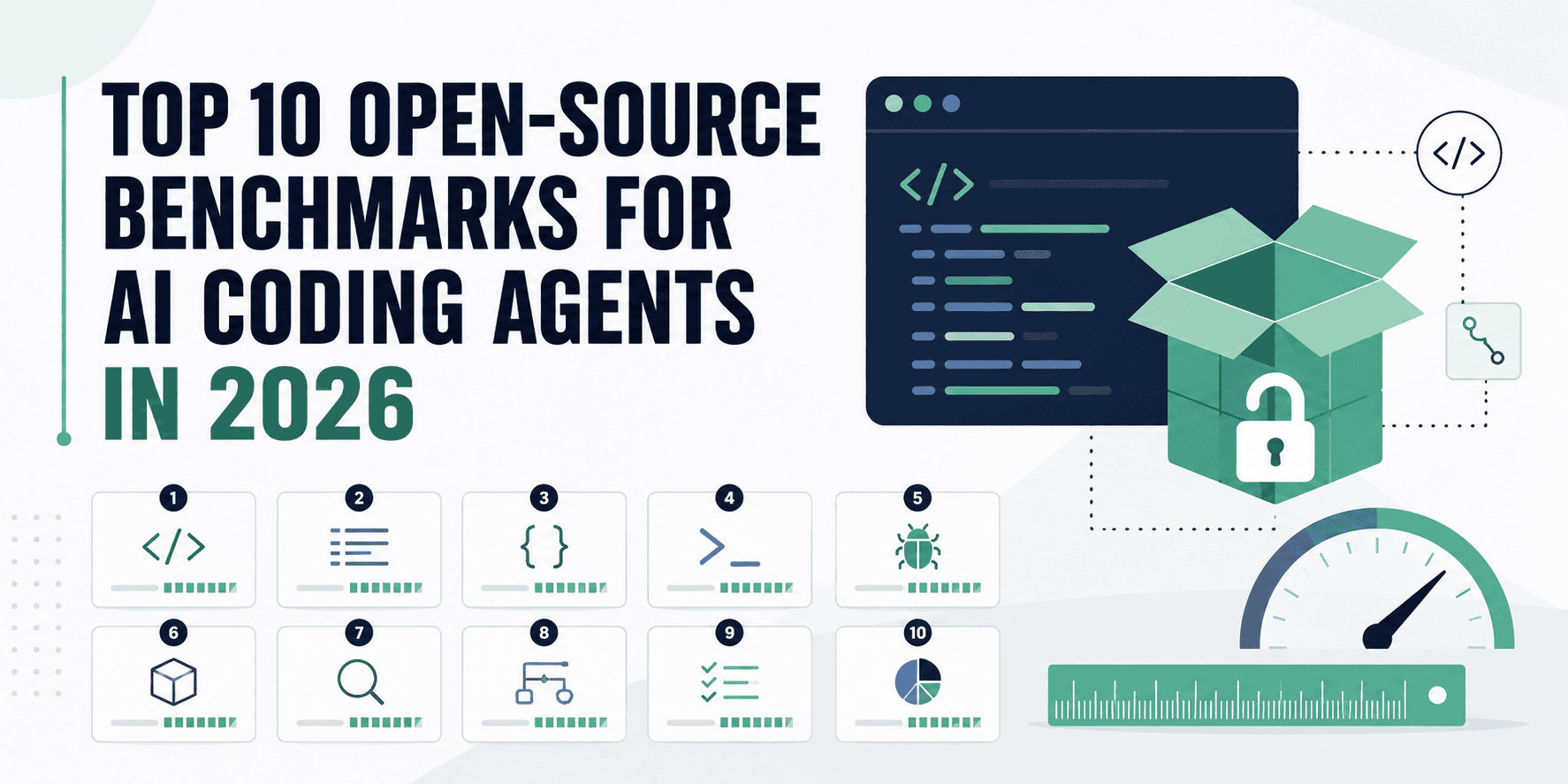
Evaluate AI Coding Agents with These Top Open-Source Benchmarks
Choosing the right benchmark is the first step toward building an AI coding agent you can actually trust. In 2026, the landscape has matured well beyond simple unit tests, with tools like SWE-bench, Terminal-Bench, and SlopCodeBench offering distinct lenses on real-world performance. We break down the top 10 open-source options to help you navigate the noise. If you are questioning how these models handle nuance, our piece on talking to an AI clone offers a timely perspective on the human side of the equation.
Beyond the Hype: A Practical Guide to Sparse Attention Claims
Reading how a practitioner can make sparse attention look deceptively strong, through careful benchmark selection, unoptimized baselines, and aggregate reporting, is both uncomfortable and necessary. The honest admission that even good-faith researchers fall into these traps makes it more valuable, not less. This isn't about dismissing the field but about demanding rigor where it's easy to cut corners. For anyone navigating efficient attention research, it's a practical warning worth internalizing before your next evaluation.

Smarter retrieval reduces inputs by 4-5x while improving chat accuracy
Automatic budget selection in chat retrieval is a puzzle many of us know well, and this user's experience at 25% accuracy is telling. They are seeing results that rival benchmarks, yet the system still grabs too much context far too often. It is smart to question whether CELF is the right tool for the job. Exploring a keyword-based trie feels like a practical step toward sharper, more intentional retrieval. This is the kind of iterative problem-solving that makes AI feel genuinely useful.
Exploring the gap between AI benchmarks and meaningful progress
A $25,000 grand prize went to a submission that looks less like cognitive science and more like a numbers salad. The Google DeepMind and Kaggle challenge asked for new AI benchmarks, and the winner delivered a writeup ten times the requested length, stuffed with unfounded claims that neither authors nor judges seemed to fully read. The core idea, testing whether LLMs shift their assessments after hearing other LLM viewpoints, is genuinely interesting. But the execution reads as vibes over rigor. The organizers call it subjectivity.

Explore a new recurrent architecture built for deeper reasoning and memory tasks.
After months of independent work, DABSN (Dynamic Adaptive Bias State Network) is now public, with a preprint and code that includes PyTorch, C++, and Triton implementations. The architecture's behavior on reasoning and long-sequence benchmarks is compelling, but the 24M-parameter language model trained on 1B tokens is where the results get genuinely interesting. Now, the ask is for collaborators: independent reproduction, stronger evaluations, or GPU access to push scaling further. It's a practical, open invitation to build on something promising, not a promise of perfection.