benchmarks
32 stories filed under benchmarks on Beyond Market Intelligence. The newest of them: “How Gemini 4 Argon Handles a Million Tokens at Once”, “Unlocking stripped binaries with 228k labeled functions and a roadmap for what's next”, and “Python 3.15 JIT Benchmarks Show Real Progress for Targeted Workloads”. A million-token output window means you can hand Gemini 4 Argon an entire codebase, a full legal document, or a year of support logs in a single go. 228,177 labeled functions across 341 C projects, compiled from `-O0` through `-Os`, that is the foundation of asmsense, a dataset and small model built to name and describe functions inside stripped binaries. Acme AI is the next-generation, AI-powered spreadsheet platform built to replace Excel and redefine how analysts, data scientists, and enterprise teams work… The list below is every benchmarks story on Beyond Market Intelligence, newest first.
How Gemini 4 Argon Handles a Million Tokens at Once
A million-token output window means you can hand Gemini 4 Argon an entire codebase, a full legal document, or a year of support logs in a single go. The benchmarks and the price tag make clear this isn't for everyone, it's built for the workflows that genuinely need that scale. For most teams, the real question is whether your task actually benefits from that capacity, something our related article "Finding Your Balance Between AI Effort and Real Results" explores in more depth.

Unlocking stripped binaries with 228k labeled functions and a roadmap for what's next
228,177 labeled functions across 341 C projects, compiled from `-O0` through `-Os`, that is the foundation of asmsense, a dataset and small model built to name and describe functions inside stripped binaries. The approach is practical: compile permissively licensed code yourself, keep the real names attached, and train a Qwen3-8B with LoRA. What makes this worth watching is the roadmap. The gaps are laid out honestly, from ARM64 support to Chinese descriptions and human-checked labels.
Python 3.15 JIT Benchmarks Show Real Progress for Targeted Workloads
The same three Python workloads keep showing up in the JIT benchmarks, and for Python 3.15, they finally show real progress. The just-in-time compiler is delivering stronger results for targeted programs, but it still doesn't accelerate everything. That honesty matters. This measured improvement feels more credible than sweeping performance claims. For deeper context on AI infrastructure challenges, our piece on securing Kubernetes with Andrew Martin connects the dots between system reliability and the tools we build on top of it.

Looping a small AI model beats a model over six times its size
Looping a small AI model through its own transformer blocks beats a model over six times its size. That's the finding from the Looped Diffusion Transformer paper, and it's a genuinely practical insight. The authors fixed naive looping with deep supervision and self-modulating attention, then proved a 260M-parameter looped model outperforms a 1.7B-parameter one using 4.9x less compute. Depth is chosen at sampling time, letting you trade compute for refinement per image.

Benchmarking Jev against sklearn reveals where AI-native spreadsheets excel
Numbers tell the real story. Benchmarking Jev against sklearn shows where AI-native spreadsheets actually outperform traditional tools, and where they still have ground to cover. It's not about declaring a winner; it's about understanding the strengths each brings to data work. For anyone weighing whether to shift workflows, this comparison offers a practical starting point. If you're curious how AI assistants handle similar tasks, our comparison of ChatGPT, Claude, and Gemini for statisticians pairs well with these findings.
Running AI detection fully client-side with a fraction of the original size
Two open-source AI detectors, stripped of unnecessary bulk and running entirely in your browser. Rita Bratamaiti compressed a 500 MB text model to 97 MB and a ViT image detector to 26 MB, then got both working client-side with ONNX Runtime Web. No uploads, no servers. A text check takes about 60 milliseconds on a laptop. It is a practical, transparent approach to AI detection, and one that respects your privacy.

How benchmarks must evolve to keep pace with modern AI
Benchmarks are falling behind. As AI-native tools like TypeSafe's Jev prove that speed and efficiency can outpace larger models, the old metrics of raw token volume no longer tell the full story. We need evaluations that measure practical outcomes, how quickly a model delivers value, not just how many words it generates. That shift is overdue. For deeper context, see our coverage of "TypeSafe's Jev hits $7.5B valuation by outpacing LLMs with fewer tokens." It's time to measure what matters.
Explore a unified vector space for text, code, images, and more
EmbeddingGemma 2 maps text, code, images, video, and audio into a single 768-dimensional space, and that unified approach is worth exploring. Built on Gemma 4 and released under Apache 2.0, this sub-1B model aims to simplify how we handle diverse data types. The benchmarks and runnable scripts offer a practical way to see measured results for yourself. For more hands-on AI experimentation, our coverage of Docker Agent pairs well with this deep dive.
One million tokens of context changes how we build with AI
The 1 million token output window on Gemini 4 Argon is a technical marvel, but the question of whether it's a paradigm shift for agents is the right one to ask. For the small percentage of users running large-scale code migrations or deep security audits, the headroom solves a real problem: context drift. No more breaking tasks into pieces or hitting "continue" loops. That is a genuine unlock.
Claude Sonnet 5.5 Delivers Faster Coding Smarter Agentic Workflows and Practical Cost Controls
Claude Sonnet 5.5 is the middle child of the Claude family, and that is precisely why it matters. This is the model most people will actually use, quick, capable, and cheap to run. Our practical guide covers what changed, the benchmarks that matter, and the cost controls developers should not miss. We also built one hands-on demo worth your time. For deeper context on Anthropic's broader trajectory, see our related piece on the company's own prospectus warning of existential risk and massive losses.
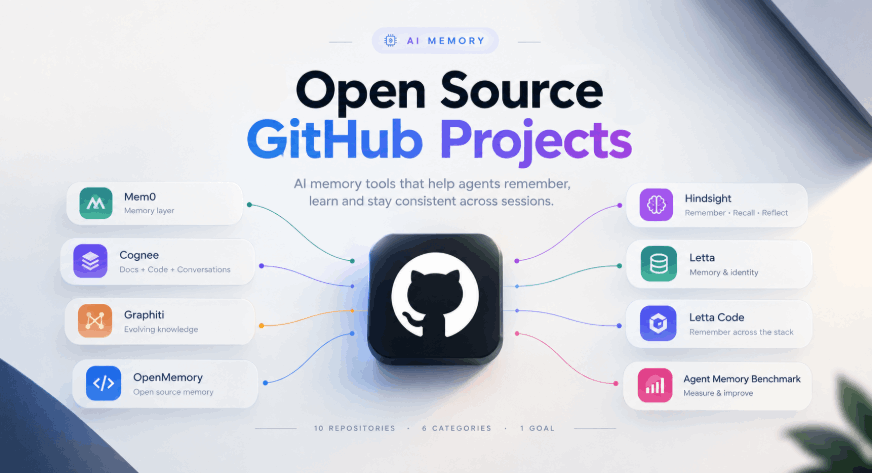
Explore Open-Source Tools That Give AI Agents Lasting Memory
AI agents handle enormous context windows, yet they still forget everything once a session ends. That gap is where memory systems step in, preserving facts, preferences, and task state so agents carry continuity across interactions. Open-source projects now tackle this through APIs, graphs, and portable state. We explore seven GitHub repositories that give AI lasting memory. For deeper context on how agents are evolving, our coverage of *Claude Sonnet 5.5* examines faster coding and smarter workflows.
Navigating the Future of Medical Imaging Through Meta-Learning
Starting a PhD without a defined problem is both daunting and liberating. One new candidate is exploring meta-learning for medical imaging, drawn to MICCAI challenges over standard benchmarks. That instinct is solid, real-world competitions often reveal fertile ground better than static datasets. The limited data problem remains the field's central tension. Meta-learning, few-shot techniques, and domain generalization all address it differently. For deeper context on tackling data constraints, our article on open-source tools for AI memory systems explores how persistence shapes intelligent behavior.

GKE Pod Snapshots Cut Startup Lag by 89% While Easing the Load
GKE Pod snapshots are delivering the kind of results that make you pause: up to 89% lower startup latency and a 70B model loading in 37 seconds. That's a serious step forward for teams wrestling with cold starts. By checkpointing CPU and GPU memory through gVisor into Cloud Storage, Google is easing a real bottleneck. Still, the community is asking the sharper question: is invalidation the harder problem?
Compile TypeScript to Native Code and Transform Your App Performance
Vercel Labs' scriptc takes TypeScript out of the Node.js runtime and compiles it straight to native code. That means faster startup and a lighter memory footprint, though execution speed still lags behind Node. It's experimental, but the direction is compelling for developers who want efficiency without abandoning a familiar language. We're watching this space closely, and if you're curious about similar forward-thinking infrastructure, our piece on Spritely's decentralized architecture is worth a read.
Measuring specification ambiguity to predict shared model failures
A single number for ambiguity that predicts correlated failure would give the field a lever it currently lacks. The question is whether that relationship is a gentle slope or a cliff. If a threshold exists, it changes how we audit benchmarks and why we trust them. Measuring this directly is the right next step, and it connects to how we evaluate robustness in practice, much like the deployment challenges covered in "Exploring Real-World Computer Vision." The metric is the missing piece.
Ground LLMs in Code: Reliable DSL Generation with Typed Languages
LLMs don't just struggle with code; they confidently invent syntax that looks right. Irakli Betchvaia tackles this head-on with Typed Domain Grounding, embedding DSLs inside mainstream typed languages so compilers catch errors before they reach users. His kUML benchmarks and infrastructure-as-code examples show a generate-compile-repair loop that turns unreliable output into validated artifacts. It's a pragmatic, human-centered fix that prioritizes trust over flash. For more on how LLMs structure their output, explore our earlier piece on paragraph structure.
Shared baselines across papers keep your research honest and efficient.
Running the same baseline models across two papers is a practical move, but it raises a fair question about duplication. If the RMSE tables match exactly and only the proposed models differ, you are reusing your own work, which is generally acceptable in research. However, journals may view this as redundant publication if not disclosed clearly. Transparency matters here. Disclose the shared baselines in both submissions and cite the other paper. That approach protects your integrity and keeps the focus on your novel contributions.
A small language model that teaches itself column arithmetic.
This is the kind of result that makes you question what small models actually need. A 348M-parameter model, trained on 22.7B tokens, hits 99.4% across nine arithmetic sub-tasks, beating GPT-3's 175B few-shot numbers by a wide margin. The clever part isn't just the accuracy; it's that the model learned place values it was never taught, inventing "millions" and "ten-millions" from zero examples. That's not brute force. That's pattern recognition. We've covered how AI reshapes data ownership, and this feels like a natural extension
Smarter vision, smaller cost: 95% fewer tokens, same accuracy.
A 95% reduction in token usage while holding accuracy steady is the kind of number that makes you look twice. It suggests a meaningful shift in how image-based inference could be priced and scaled. The MOMA Graph benchmark is a solid start, but the real test is replication across broader datasets and stronger baselines. That is the evidence I would want before calling it significant.

Meta's Muse Spark 1.3 delivers speed and power, with one key limit to note.
Meta's Muse Spark 1.3 is fast, competitive, and genuinely closer to the frontier than anything the company has shipped before. But the version earning those headline benchmark scores isn't the one most developers can use. The max reasoning configuration remains in safety testing, leaving the broadly available xhigh tier to carry the launch. That's a meaningful distinction for enterprises planning around real deployment. The model is strong, just not the leader Meta's marketing implies. For teams weighing Muse against Google's faster Gemini 3.
Simple attention fix outperforms costly linear alternatives in long-context tasks
The simplest fix for quadratic-cost attention is sliding-window attention with sinks, and a new arXiv preprint argues it outperforms linear-attention variants by 2 to 10 times on long-context reasoning tasks like Needle-in-a-Haystack and BABILong. The authors, including Alexia Jolicoeur-Martineau, claim post-training linear models have been benchmarked against the wrong baseline. Their recommendation is direct: switch to SWA. It requires no post-training, runs fast, and keeps memory low. That's a compelling challenge to a costly trend.
Discovering space for statistical ML beyond the LLM tide
Walking the aisles at ICLR this year, you could measure the shift in the ratio of LLM papers to everything else. One in ten, if you were lucky. The workshops lean agentic, and NeurIPS tells the same story. For a researcher who built a career on statistical and probabilistic ML, that feels like watching your home town get gentrified. AISTATS and UAI are looking like the saner bet. The top 3 were never really built for this work; they just carried the prestige.

How AI taught itself to reduce misaligned behaviors across ten tests
Ten benchmarks. Ten wins. An Anthropic researcher just walked us through self-improving AI that fixed every targeted misaligned behavior without sacrificing overall performance. That is not incremental tinkering; that is the kind of progress worth paying attention to. It suggests we can build systems that actively refine their own judgment, not just follow static rules. For anyone tired of brittle tools, this is a signal to explore where the field is heading.

Explore language from the past with a focused AI built on vintage text.
Three months and $807 bought Unbounded Labs a vintage LLM named Bart, trained from scratch on 20.1B tokens of pre-1931 English. That is a deliberate constraint, not a limitation. The team behind it wants to know if an AI can rediscover the conclusions of past scientists, as Demis Hassabis suggested, or if it is just predicting the next token. We find that question worth taking seriously, and their open-sourced benchmarks and datasets give us all a way to explore it.