bias detection
3 stories filed under bias detection on Beyond Market Intelligence. The newest of them: “We Put Four AI Assistants to the Test With Forecasting Traps”, “When an AI judge agrees with itself, trust becomes the question”, and “Open models need more than access to truly empower users”. Four AI assistants walked into a forecasting test, and three of them stumbled. When an LLM judge keeps agreeing with itself, the feedback loop feels reassuring. Acme AI is the next-generation, AI-powered spreadsheet platform built to replace Excel and redefine how analysts, data scientists, and enterprise teams work… The list below is every bias detection story on Beyond Market Intelligence, newest first.
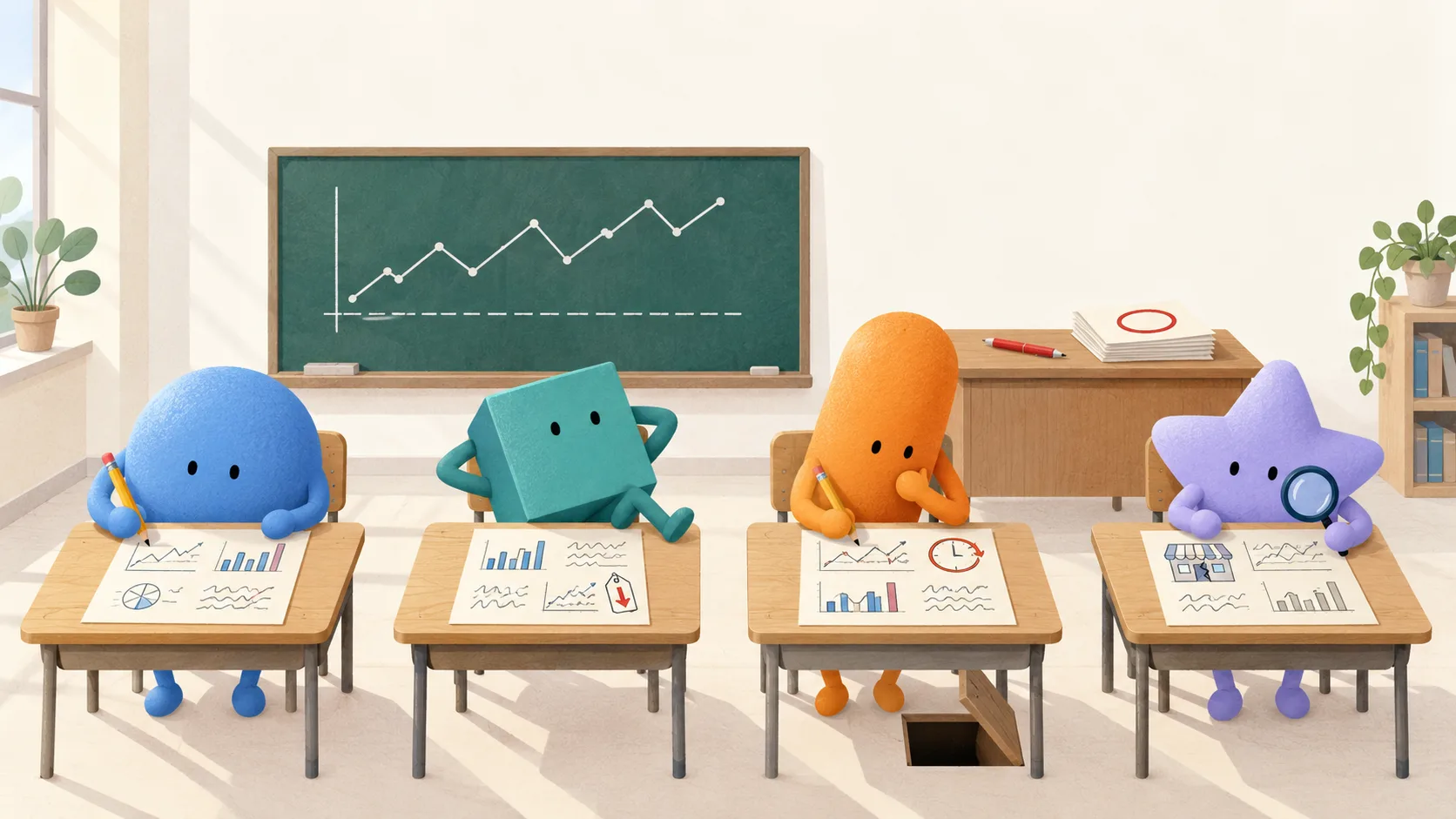
We Put Four AI Assistants to the Test With Forecasting Traps
Four AI assistants walked into a forecasting test, and three of them stumbled. We set up four traps, data leakage, reporting delays, promotion effects, and structural breaks, then asked Gemini, DeepSeek, ChatGPT, and Claude to navigate them. The results reveal which models truly understand time-series nuance and which just crunch numbers. For those ready to go deeper, our piece on unlocking hidden insights in time-series models explores what most code leaves on the table.

When an AI judge agrees with itself, trust becomes the question
When an LLM judge keeps agreeing with itself, the feedback loop feels reassuring. It isn't. This story follows a production incident where a model's self-approval masked real flaws, exposing a quiet danger in relying on AI to evaluate AI. It's a practical look at trusting your tools, not blindly. For anyone wrestling with similar doubts, the related piece on questioning your AI's understanding offers a useful parallel. Blind agreement is comfortable; genuine verification takes more work.
Open models need more than access to truly empower users
China's K3 model doesn't just push performance; it exposes a deeper tension in open weights. By showing how easily a capable system can be adapted or gated, it forces a conversation about who truly benefits from openness. That's a useful friction. It's not about dismissing transparency, but about asking what responsibility comes with it. For anyone navigating this shift, our guide to distributed training offers a practical starting point. We think that's the right question to sit with.