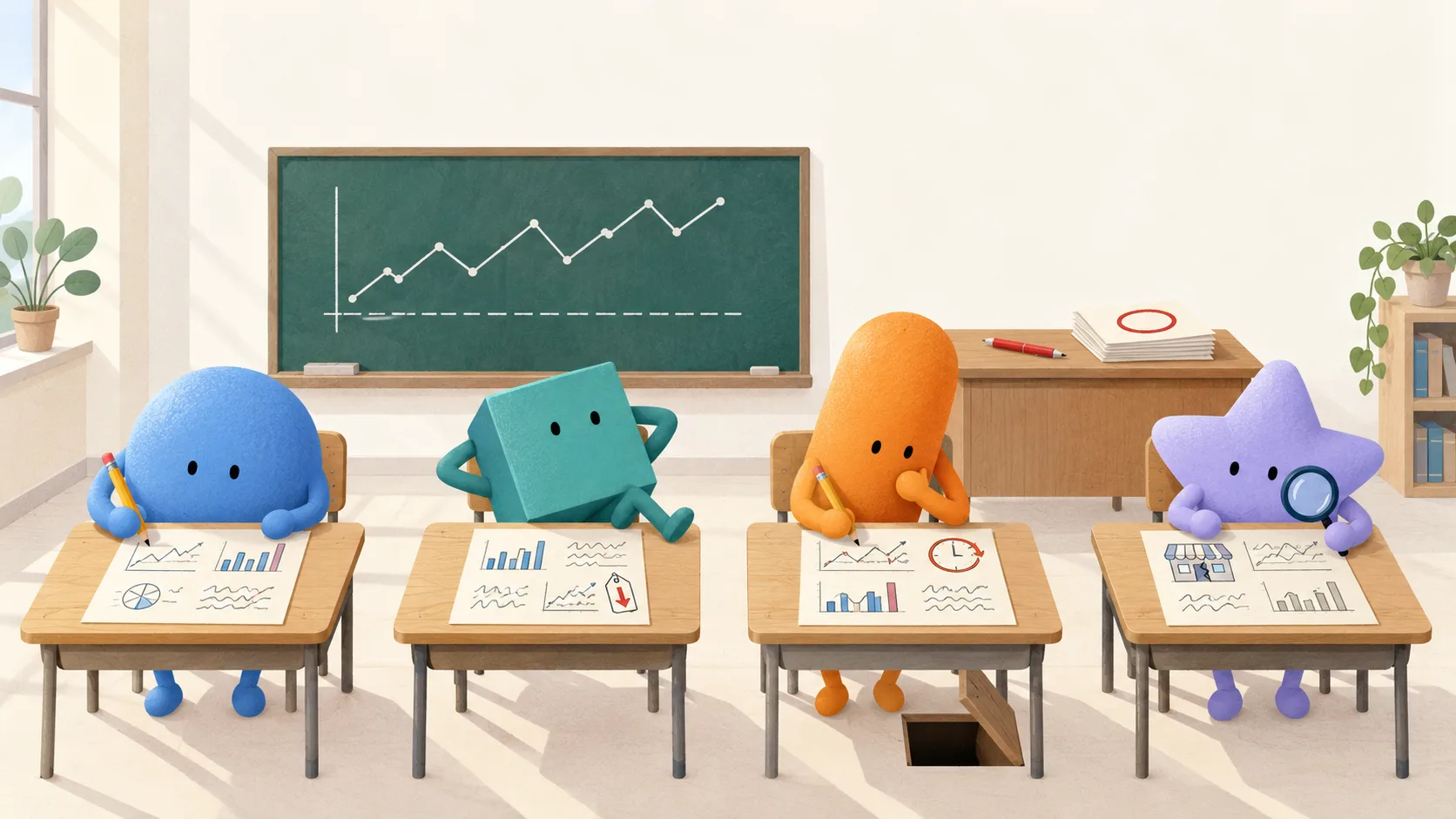
Forecasting traps are the kind of thing that sound obvious in hindsight and devastating in practice. A recent controlled test pitted Gemini, DeepSeek, ChatGPT, and Claude against four common pitfalls: data leakage, reporting delays, promotion effects, and structural breaks. The results were revealing, but not in the way you might expect. None of the assistants sailed through unscathed, and that should matter to anyone who has started to treat AI outputs as finished work rather than a first draft. For readers who want to go deeper on time-series analysis, our piece on Unlock Deeper Insights Hidden in Your Time Series Models offers a solid technical companion, while the discussion of Model Routing Becomes a Design Choice With This Cost-Effective Jev Approach raises the same question of when to trust a model versus when to route the task elsewhere.
Our take is direct: these results confirm that AI assistants are powerful tools, not autonomous analysts. The test designers hid the traps intentionally, but real-world data is full of unintentional versions of the same problems. A model that does not flag a structural break in your sales data is not failing because it is lazy; it is failing because it lacks the contextual awareness a human analyst brings to the table. The practical consequence for our readers is clear: treat any AI-generated forecast as a hypothesis, not a conclusion. The assistant can handle the arithmetic and surface patterns you might miss, but it cannot yet ask the right question about why a pattern exists.
What makes this test useful is that it moves beyond the usual benchmark comparisons. We are not debating which model scores highest on a math test. We are watching them stumble over the same conceptual traps that trip up junior analysts. That is honest feedback for anyone building workflows around these tools. The models that performed better on leakage detection, for instance, did so because they were more aggressive about flagging suspicious correlations, but that same tendency can lead to false positives in clean data. There is no free lunch. The best strategy is to pair the assistant with a human who knows what a reporting delay looks like in their specific industry.
The open question, and the one we will be watching closely, is how these models handle the trap of promotion effects when the promotion calendar is not explicitly provided. That is a real-world scenario every retailer faces, and it is the kind of subtle context that no amount of training data can fully encode. If the next generation of assistants cannot learn to ask for that calendar before building a forecast, then the ceiling on their usefulness remains lower than the marketing suggests. For now, the concrete takeaway is this: verify your model's assumptions before you trust its numbers. The AI can save you hours of calculation, but it cannot yet save you from the trap you did not see coming.