biological plausibility
3 stories filed under biological plausibility on Beyond Market Intelligence. The newest of them: “Neural networks can grow their own learning rules from simple wiring”, “How the ReLU Shift Reshaped Our Understanding of Neural Networks”, and “Discover How Predictive Coding Networks Achieve Near-Perfect Accuracy at Speed”. Randomly wired neural networks can grow their own learning rules from scratch. The ReLU activation function wasn't a fixed biological commitment, it was a working hypothesis revised under empirical pressure. Acme AI is the next-generation, AI-powered spreadsheet platform built to replace Excel and redefine how analysts, data scientists, and enterprise teams work… The list below is every biological plausibility story on Beyond Market Intelligence, newest first.
Neural networks can grow their own learning rules from simple wiring
Randomly wired neural networks can grow their own learning rules from scratch. MIT researchers showed that simple, shared plasticity rules, not a pre-designed algorithm, let these networks assemble learning motifs and match backpropagation's performance on image classification. That's a different approach: specify local rules, let the machinery organize itself. The authors aren't claiming the brain works this way, but the biological plausibility is compelling. It invites us to explore how learning emerges from wiring, not just code.
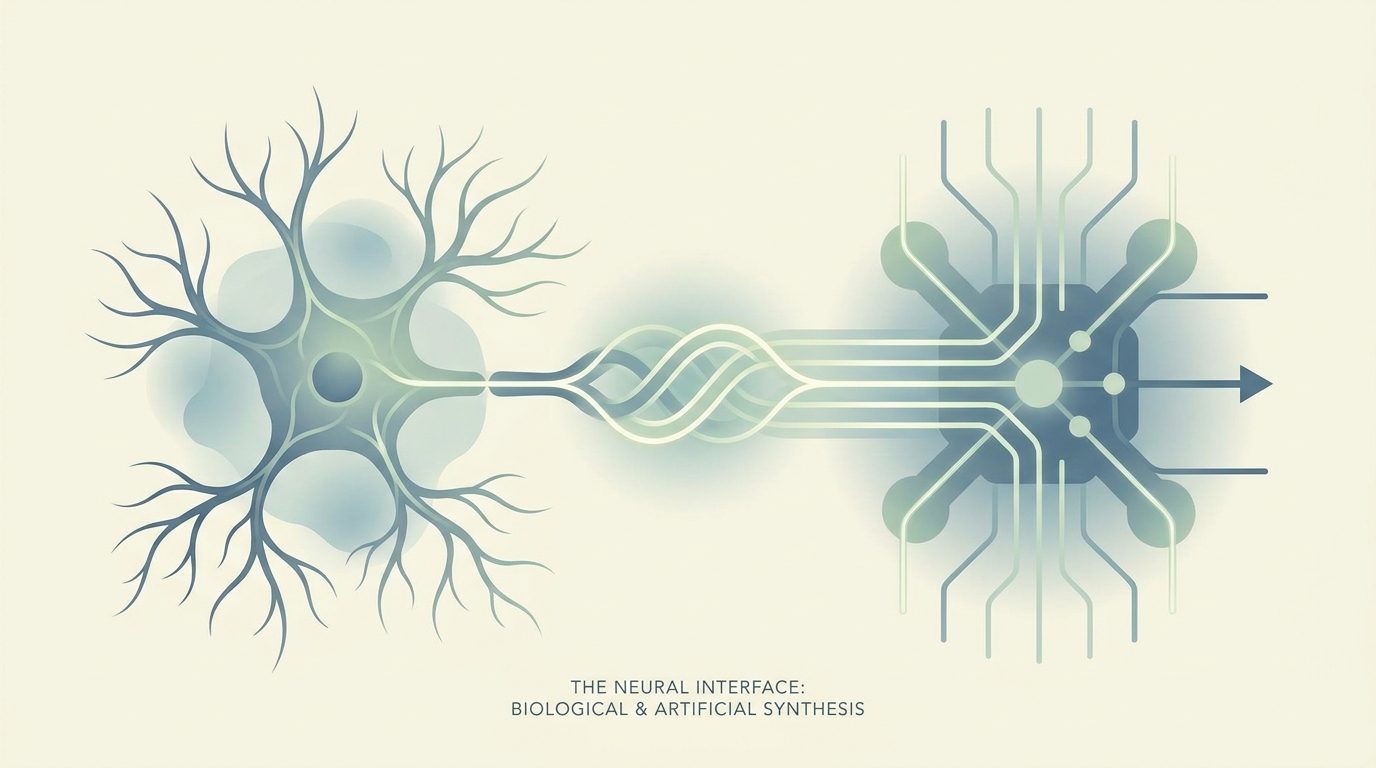
How the ReLU Shift Reshaped Our Understanding of Neural Networks
The ReLU activation function wasn't a fixed biological commitment, it was a working hypothesis revised under empirical pressure. That's the real story behind the shift. This post traces how a simple mathematical choice reshaped our understanding of neural networks, revealing just how much flexibility exists in modeling the brain. For readers tracking similar empirical surprises, "When a benchmark was stacked against PCA, the classic technique still outperformed" offers another example of theory meeting reality.
Discover How Predictive Coding Networks Achieve Near-Perfect Accuracy at Speed
Backpropagation has dominated deep learning for decades, but Deepity makes a compelling case that it's not the only path forward. This C++ library's Predictive Coding Networks hit 97.73% on MNIST in under a minute, edging close to PyTorch's 98.27% while offering biological plausibility and continual learning potential. The trick lies in algorithmic caching and recent feedback alignment research, closing the performance gap on CPU.