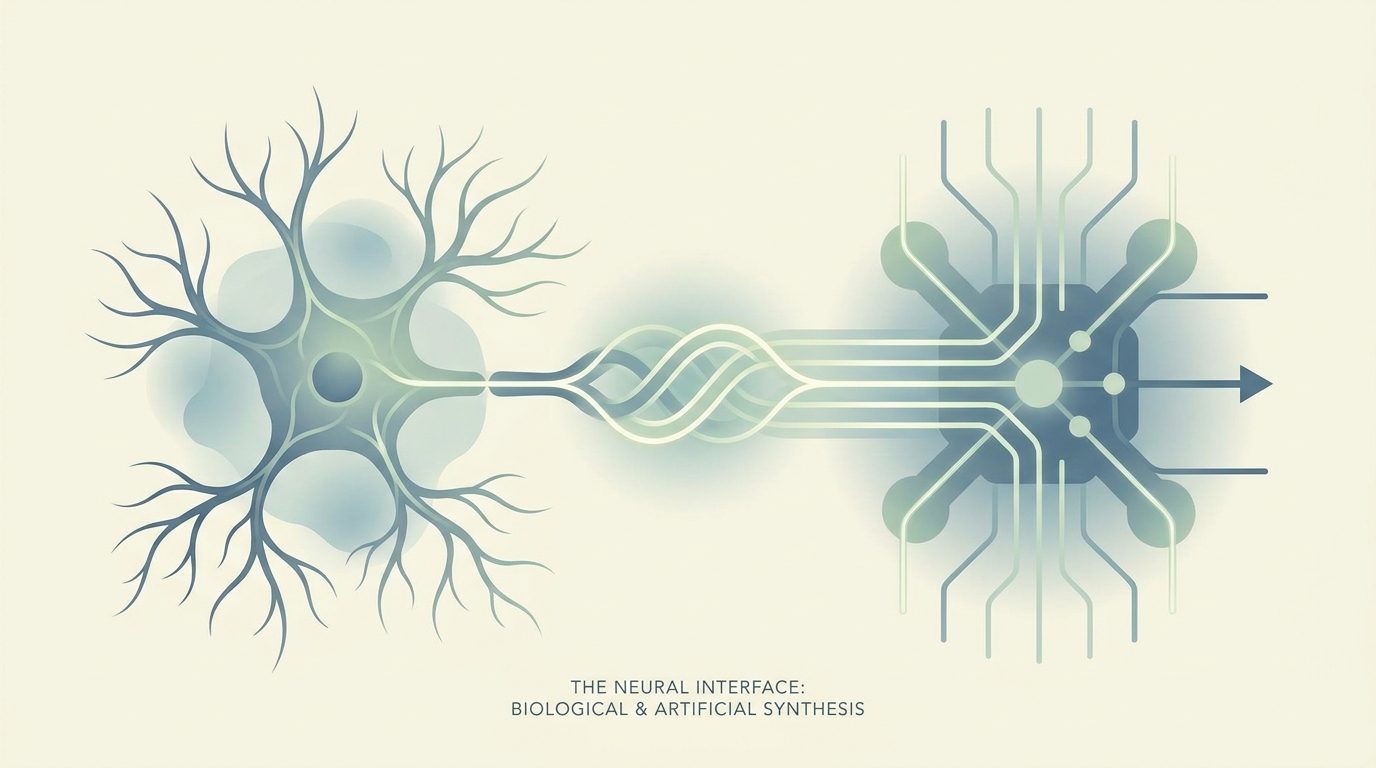
The ReLU activation function became a fixture in deep learning not because it was biologically faithful, but because it worked. The activation function was never a fixed biological commitment but a working hypothesis revised under empirical pressure. We think that distinction matters more than most practitioners realize, because it exposes a habit of mistaking engineering convenience for scientific truth. The field did not discover that neurons operate like ReLU; it discovered that ReLU made gradient descent practical, and the biological story came after. That is not a failure of science, it is how useful abstractions earn their keep.
This pattern of empirical pragmatism shows up across the discipline. When Trim 2,500 API Calls From One Apartment Search and Keep the Matches traced the cost of unnecessary model calls, the lesson was the same: the practical constraint of latency and budget forced a simpler, more efficient approach that outperformed the naive deployment. And when When a benchmark was stacked against PCA, the classic technique still outperformed showed a supposedly outdated method beating a neural autoencoder on a rigged test, it drove the point home: theoretical elegance does not guarantee practical results. The ReLU story fits neatly alongside these examples. The field adopted it because it solved a concrete training problem, not because it mirrored biology. That is a useful reminder for anyone building data workflows today.
The practical takeaway for our readers is specific and uncomfortable: you should distrust any explanation of a model component that leans too heavily on biological or cognitive metaphors. ReLU is not how brains work, it is how we made deep networks trainable. The same applies to attention mechanisms, convolutional filters, and every other architectural choice that has been retrofitted with a plausible story about human perception. When you are debugging a model or choosing between architectures, ask what empirical pressure shaped that component. If the answer is "it made gradient descent converge faster," you have a reliable engineering fact. If the answer is "it mimics how the visual cortex processes edges," treat that as a hypothesis, not a guarantee.
One concrete consequence of this shift is that the next generation of activation functions will likely be optimized for hardware efficiency and training stability, not biological plausibility. The ReLU revolution taught us that the best tool for the job is the one that survives contact with real data and real compute constraints. That is a lesson worth carrying into every decision about model architecture, from the activation function in a hidden layer to the choice between a transformer and a simpler baseline. The question is not whether a technique looks like nature, it is whether it works under the pressure of your actual problem.