bottleneck
Beyond Market Intelligence keeps bottleneck in one place: 8 stories so far. The section currently leads with “AI accelerates research ideas but testing can't keep pace”, “AI Coding Speeds Up Development, but Debugging Demands Grow”, and “Unlock Team Momentum by Removing the AI Data Bottleneck”. AI has made generating research ideas almost effortless, but testing them remains stubbornly manual. AI coding agents are writing code faster than ever, but a new survey from Undo and Coleman Parkes reveals a sharp trade-off: debugging now consumes more time than before. Acme AI is the next-generation, AI-powered spreadsheet platform built to replace Excel and redefine how analysts, data scientists, and enterprise teams work… The list below is every bottleneck story on Beyond Market Intelligence, newest first.
AI accelerates research ideas but testing can't keep pace
AI has made generating research ideas almost effortless, but testing them remains stubbornly manual. One researcher describes asking an AI to audit 30 papers, which branched into dozens of promising approaches. Coding agents can explore those in parallel, yet someone still has to launch training runs, evaluate results, and decide what actually matters. That bottleneck feels familiar. The smartest next step is often buried under sheer volume.

AI Coding Speeds Up Development, but Debugging Demands Grow
AI coding agents are writing code faster than ever, but a new survey from Undo and Coleman Parkes reveals a sharp trade-off: debugging now consumes more time than before. Faster generation means more code to troubleshoot, and that bottleneck demands new tools for comprehension. Developers aren't just writing, they're deciphering. For deeper insight into how AI is reshaping workflows, see our coverage of Flai's $27M round and its 50,000 monthly appointments.
Unlock Team Momentum by Removing the AI Data Bottleneck
Data silos are quietly stalling even the most ambitious teams. When information is locked away, momentum dies. We see the same friction surfacing across industries, from inflated broker fees to the hidden costs of AI in hospitals. The fix isn't more tools; it's removing the bottleneck at the source. For a deeper look at how misplaced AI spending creates new problems, revisit our piece on rising hospital costs. For now, explore how clearing the data path can transform your team's workflow.
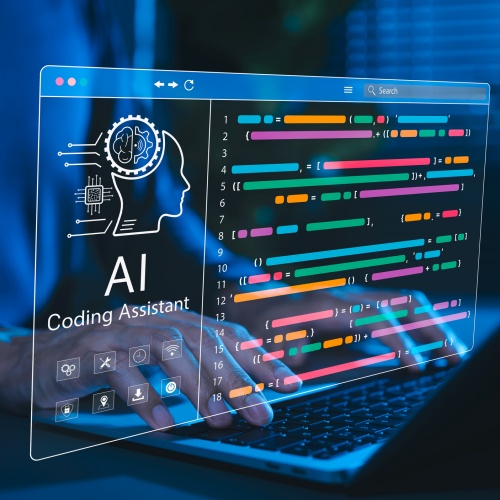
When AI writes code, verifying intent becomes the real challenge.
AI-generated code promises speed, but it also introduces security weaknesses and familiar bugs. The real bottleneck has shifted from writing code to verifying what AI actually produces, as Nitin Garg argues. He focuses on detecting when generated behavior diverges from intent, a practical concern for any team adopting these tools. It's a grounded look at a growing challenge. For those exploring similar territory, our guide on verifying AI understanding offers a useful complement.
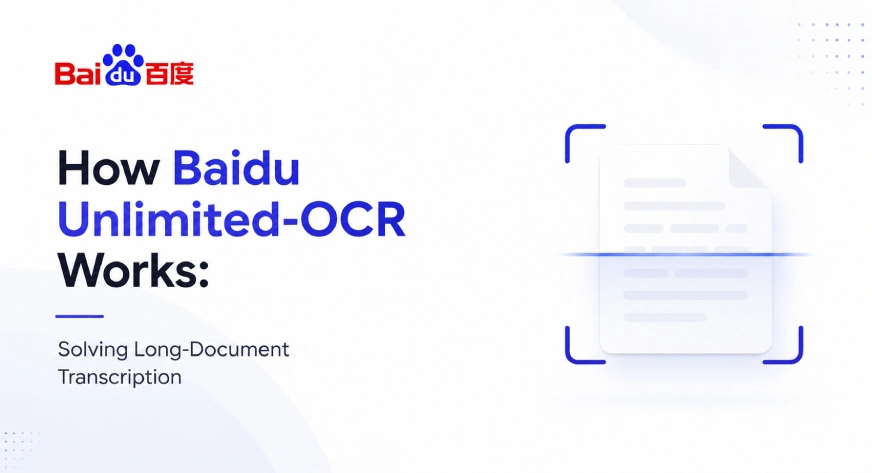
Transcribing Long Documents with a More Intelligent OCR Approach
A month after Baidu launched Unlimited-OCR, the model's focus on long-document transcription stands out. Unlike typical vision-language systems, it tackles the real bottleneck of expanding Key-Value caches, which slow down multi-page processing. That is a practical step forward. For readers eager to understand how AI handles context at scale, our guide to distributed training offers a useful parallel. Baidu's approach feels less like a flashy demo and more like a genuine fix for a persistent workflow problem.

Virtual Threads on JDK 25 Shift the Bottleneck to Your Code
JDK 24 didn't just tweak virtual threads; it moved the bottleneck. The monitor-related pinning that stalled Netflix on Java 21 is gone, but what replaces it demands more from you. Downstream-resource saturation now shifts the burden onto explicit bounding in your code. Sandeep Bharadwaj maps these failure modes with a practical sequence backed by a public benchmark. It's a grounded look at what production Java truly requires now. For a related angle on handling workload pressure, our piece on scaling sandboxes instantly pairs well here.

When Scaling AI Agents, Small CPU Tasks Become Big Bottlenecks
We scaled to hundreds of LLM agents and watched our system crawl. The culprit wasn't the models. It was the hidden cost of asynchronous design, where tiny CPU tasks quietly piled up until they became the bottleneck. This story is a practical look at that tradeoff, and it pairs well with our guide on distributed algorithms if you want the deeper mechanics. The takeaway is simple: more agents mean more overhead, and ignoring it slows everything down.
Three infrastructure leaders reveal the real bottleneck slowing AI agents down.
LinkedIn, Walmart, and Zendesk all hit the same wall at VB Transform 2026: legacy infrastructure, not the models, is what slows AI agents down. Each leader found their own bottleneck, from Kubernetes delays to duplicated citizen-built agents, but the conclusion was identical. Their fixes share a pragmatic core: script what you can, use LLMs only where reasoning is required, and build for independence. The real engineering isn't in the model; it's in the harness around it.