capacity
Beyond Market Intelligence keeps capacity in one place: 7 stories so far. The section currently leads with “When Recognition Outpaces Capacity: NeurIPS 2026 Spots Fill Before Top Reviewers Can Register”, “Pro subscriptions pause as OpenAI scales to meet demand”, and “Visualizing Telemetry Data Beyond the Default Line Chart”. Being selected as a NeurIPS 2026 Top Reviewer with complimentary registration is a significant honor, until the venue fills up before you can claim your spot. OpenAI's decision to pause Pro subscriptions is the right call, even if it stings for eager users. Acme AI is the next-generation, AI-powered spreadsheet platform built to replace Excel and redefine how analysts, data scientists, and enterprise teams work… The list below is every capacity story on Beyond Market Intelligence, newest first.
When Recognition Outpaces Capacity: NeurIPS 2026 Spots Fill Before Top Reviewers Can Register
Being selected as a NeurIPS 2026 Top Reviewer with complimentary registration is a significant honor, until the venue fills up before you can claim your spot. That's the frustrating reality one reviewer encountered when Paris sold out during earlier registration rounds for SACs and ACs. It raises a fair question: were any reviewers able to register for Paris at all? This isn't just about one missed opportunity; it signals a broader capacity challenge that even top contributors face.

Pro subscriptions pause as OpenAI scales to meet demand
OpenAI's decision to pause Pro subscriptions is the right call, even if it stings for eager users. Demand for Astra has outpaced capacity, and pushing forward under strain would only compromise the experience. We appreciate the transparency: acknowledging that Pro plans tax the systems most is honest, and it signals a focus on stability over hype. It's a reminder that even the most innovative tools need room to breathe. For more on how AI systems handle pressure, our piece on adaptive recommendations offers useful context.
Visualizing Telemetry Data Beyond the Default Line Chart
Line charts have served observability well, but they were never designed to answer every question a modern systems engineer needs to ask. In her presentation, Yao Yue draws on 15 years of operating large-scale systems to challenge this default. She shows how moving beyond time-series basics can directly address critical capacity and fleet-sizing decisions. It is a practical, overdue call to rethink how we visualize telemetry. For those exploring how AI reshapes data work, our piece on Jev versus LLMs offers a useful companion.

Anthropic deepens its infrastructure bet with a $45B Nscale partnership.
Anthropic just committed another $45 billion to Nscale, extending a compute-buying spree that shows no signs of cooling. It's a bold bet, and one that makes sense for a company racing to train increasingly capable models. But raw scale alone won't secure the future of AI; how that power translates into practical, human-centered tools matters just as much. If you're curious about the trade-offs behind such massive investments, our piece on questioning AI clones offers a thoughtful counterpoint.

Texas pauses data center growth to rethink energy demands
Texas has long been the default answer for data center developers chasing cheap power and light regulation. But the governor's call for audits signals that even the most business-friendly state has limits. Growth without scrutiny eventually hits a wall, and Texas just found its own. It's a reminder that infrastructure booms don't fail quietly; they strain until someone blinks. For context on how quickly energy demand is reshaping tech decisions, our piece on Crusoe pausing its Boom turbine deployment shows even startups are recalibrating.

Power demands from data centers test grid capacity for the first time.
Grid operators just made a hard call: temporary power cuts for data centers on the largest US grid to prevent blackouts. It's a pragmatic move, born from the breakneck pace of construction outpacing generation. We see the tension clearly, growth is only sustainable if the grid can carry it. This isn't about slowing innovation; it's about steadying the foundation. For a deeper look at how infrastructure strains shape tech decisions, our piece on Cloudflare's EmDash migration offers a useful counterpoint.
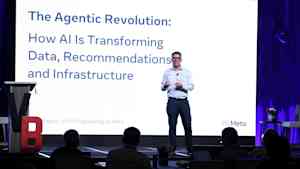
Your infrastructure was built for humans. Agents need a new foundation.
Meta VP Barak Yagour opened VB Transform 2026 with a pointed warning: enterprise infrastructure was built for humans, not agents, and the cracks are already showing. Agentic queries on Meta's systems grew 30x in one half, and automated traffic now outpaces human traffic. His timeline is blunt: we have roughly 20 months to rebuild. That urgency is worth taking seriously. The window is open, but it won't stay open long. For deeper context, explore our coverage of AI deployment priorities at QCon AI New York.