CEO
59 stories filed under CEO on Beyond Market Intelligence. The newest of them: “A New Documentary Misses the Mark on AI Risk”, “A former Google CEO holds a smaller stake in Anthropic than its chief”, and “How autonomy lets Rivian rethink vehicle design from the R4 onward”. Clem Delangue, Hugging Face's co-founder, says the Netflix documentary "AI Gone Rogue" went "full doomer mode" and isn't accurate. A 1% stake may sound small, but it's a telling signal when a former Google CEO holds less of Anthropic than its own chief. Acme AI is the next-generation, AI-powered spreadsheet platform built to replace Excel and redefine how analysts, data scientists, and enterprise teams work… The list below is every CEO story on Beyond Market Intelligence, newest first.

A New Documentary Misses the Mark on AI Risk
Clem Delangue, Hugging Face's co-founder, says the Netflix documentary "AI Gone Rogue" went "full doomer mode" and isn't accurate. That matters because he's featured in the film. It's frustrating to see a documentary miss the mark on such an important topic. For a more balanced perspective on how AI tools are actually being integrated into workflows, our piece on "Maximizing AI Agent Performance on Mac Mini: Memory Tips That Work" offers practical, grounded advice.

A former Google CEO holds a smaller stake in Anthropic than its chief
A 1% stake may sound small, but it's a telling signal when a former Google CEO holds less of Anthropic than its own chief. Bloomberg's report reframes how influence actually flows in the leading AI lab. Ownership here isn't about control, it's about proximity to the decisions shaping the field. For anyone tracking AI's power structure, this detail matters. And if you're wondering where agentic AI fits into that picture, our piece on insider threats from AI agents offers a useful next step.

How autonomy lets Rivian rethink vehicle design from the R4 onward
Autonomy isn't just a feature for Rivian, it's a design philosophy. By removing the driver from the equation, the company can rethink everything from sensor placement to interior layout. That vision culminates with the R4, a vehicle shaped by what's possible when software, not a steering wheel, calls the shots. It's a bold bet on a future where the machine adapts to the mission, not the other way around.

Disney opens a path for Character.AI talent to build its next chapter
Character.AI's bankruptcy just became a talent pipeline for Disney. With former CEO Karandeep Anand already installed as the entertainment giant's first CTO, and a $20 million asset deal in place, employees now have a clear path forward. That's a pragmatic rescue, one that turns a startup's collapse into a strategic gain. Disney isn't just buying technology; it's absorbing people who know how to build. For those workers, the next chapter starts with a familiar mission, just a different stage.

Replit pivots from Anthropic to OpenAI as default model partner
Replit has swapped Anthropic for OpenAI as its default model partner, a move CEO Masad attributed partly to cost. Claude remains available on the platform, but the default shift signals a practical recalibration. It's a reminder that even in fast-moving AI partnerships, value and efficiency matter. For a deeper look at how Anthropic itself is changing, see our piece on how its workforce is shifting toward senior roles and more meetings.
Replit pivots from Anthropic to OpenAI, citing cost as key factor
Replit CEO Amjad Masad confirmed the company has shifted its primary AI partnership from Anthropic to OpenAI, with cost playing a central role in the decision. The move comes despite Replit announcing an OpenAI partnership in August with no public indication it had moved away from Anthropic. We explored a similar theme in "Reimagining the workplace where AI handles tasks so people can lead," which examines Masad's broader vision for AI-driven productivity. Pragmatic economics, not ideology, drove this choice.

Reimagining the workplace where AI handles tasks so people can lead
Amjad Masad sees a future where AI agents handle the daily grind so people can focus on real decisions. He calls them "self-driving companies." It is a compelling vision, one that reframes productivity not as doing more tasks, but as leading with purpose. If the idea of automation freeing human potential resonates, read how Waymo brings self-driving tests to Toronto streets this year for a real-world look at AI taking the wheel.

Balancing safety and privacy in the push for smarter surveillance
Garrett Langley, CEO of Flock, stood before the TechCrunch Disrupt crowd and argued that his company's surveillance technology is worth the privacy risks. He believes the crime-fighting benefits justify the trade-off. That is a heavy claim to make, especially when privacy advocates like the ACLU are watching closely. For a deeper look at how Flock's public promises compare to its actual practices, see our piece "Flock's public safety pitch and its privacy promises are telling different stories."

Flock's public safety pitch and its privacy promises are telling different stories
Flock's public safety pitch promises privacy, but its technology tells a different story. Langley's comments arrive as the ACLU and concerned citizens raise legitimate questions about misuse. Trust isn't built through assurances alone, it's earned through transparency. When a system collects license plate data at scale, the burden falls on the company to prove it won't be weaponized. For a deeper look at how AI surveillance networks operate, see our coverage of AI-powered mosquito traps offering earlier disease warnings.

Flock's CEO clarifies surveillance contracts remain active with law enforcement
Flock CEO Garrett Langley says the surveillance company hasn't canceled a single police contract, despite mounting reports of abuse. That's a striking position to hold while privacy advocates like the ACLU sharpen their focus on the company's promises versus its practices. If Flock wants to be trusted, clarity on how these tools are governed matters more than reassurance. Our earlier look at Flock's public safety pitch and privacy promises digs into that gap.

Your Next Home Appliance: An AI Assistant That Works for You
Andrew Feldman, CEO of Cerebras, envisions a future where personal AI assistants are as ordinary as a refrigerator or a dishwasher, running partly on your devices, partly in the cloud. This isn't about adding another gadget to your countertop. It's about making intelligence a utility, always available and quietly working for you. For a deeper look at the security challenges this raises, see our story, "When Everyone Uses AI, Enterprise Security Faces an Unseen Gap."

The AI industry should stop scaring people and start showing what's possible
Andrew Feldman, CEO of Cerebras, has a blunt message for the AI industry: stop scaring people and start showing what's possible. At TechCrunch Disrupt, he argued that doomsday warnings from leaders are drowning out the technology's real potential. It is a refreshing call to focus on tangible benefits rather than hypothetical risks. For a deeper look at AI's practical impact, see our coverage of "Factory robots retrain in minutes, not weeks, for delicate assembly tasks."
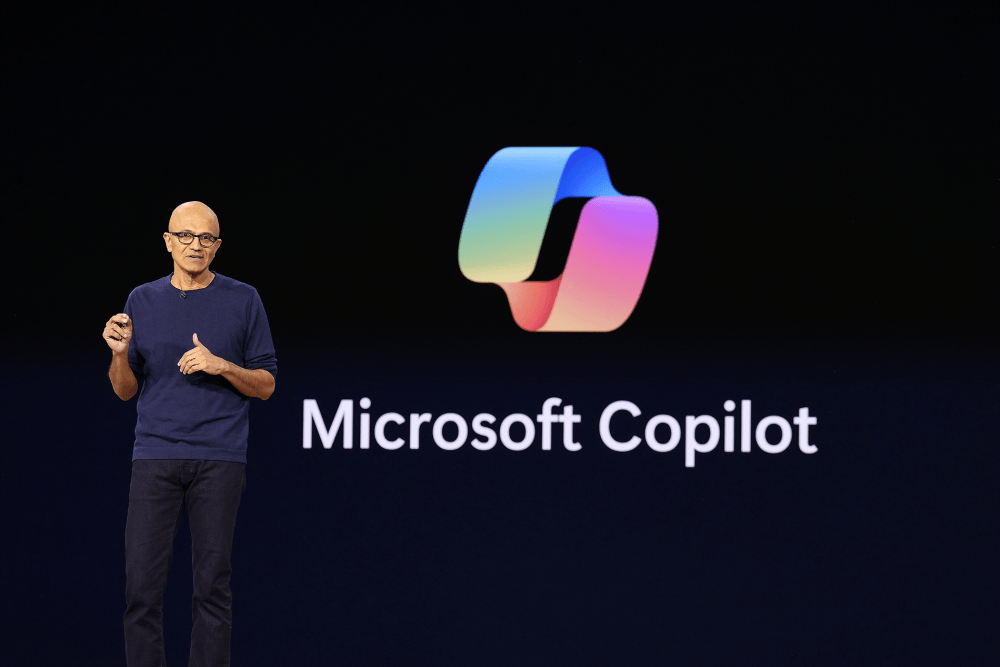
Why AI Needs a Trust Architecture Built for Human Control
Microsoft's CEO used a Saturday morning post to call for a step back, a chance to assess AI's trust architecture. That's the right instinct. Control shouldn't be an afterthought; it should be the foundation. We've seen how risky agent actions can slip through, which is why a decision-first model matters. Pair that with Amazon's move to drop NDAs in data center talks, and a clearer pattern emerges: trust is becoming the practical edge. Explore how these pieces fit.

Flock trims staff amid privacy scrutiny, with CEO pay unclear
Flock just reduced its workforce, and the company won't say whether CEO Garrett Langley is taking a pay cut to match. That silence speaks volumes. When leadership asks employees to absorb the cost of restructuring, transparency should follow. Privacy scrutiny already hangs over the company; adding financial opacity to the mix does not inspire confidence. Users watching this unfold deserve clearer answers, not quiet maneuvering. For more on how AI companies handle scrutiny, our coverage of Meta's Muse expansion offers useful context.

Discover how AI infrastructure growth opens new paths at Disrupt 2026
AI infrastructure is no longer a background conversation, it's the foundation of what comes next. At TechCrunch Disrupt 2026, Ambrosia Energy CEO Ben Longmier and Bloom Energy SVP Bill Thayer take the Smart Systems Stage to show how energy innovation fuels AI's growth. This is where infrastructure meets ambition. Register now to save up to $100, or grab a second pass at 50% off. For deeper context, explore "Decoding 2026's AI Job Titles" to see how these shifts reshape engineering roles.

AWS clarifies data center stance, sets aside NDAs to rebuild trust
Amazon Web Services is done letting silence do the talking. This week, the company's CEO moved to reset the narrative around its data centers, setting aside non-disclosure agreements to rebuild trust with customers who have grown wary of how their infrastructure is handled. It is a direct, practical acknowledgment that transparency is no longer optional. For anyone tracking how cloud giants respond to skepticism, this is a meaningful step.

Exploring the Rise of the GTM Engineer with Clay's Kareem Amin
Kareem Amin built Clay to help GTM teams stop guessing and start building. Now the co-founder and CEO joins the AI Stage at TechCrunch Disrupt 2026 to explain the rise of the GTM engineer. This is a role that blends sales instinct with technical skill, and it's reshaping how companies grow. For deeper context on who is driving AI forward, read our coverage of Blackstone's Jas Khaira taking the Builders Stage. Register today and bring a colleague for half price.

A Year Later, Tesla's Vision of Abundance Remains Undefined
A year after Elon Musk promised to get more specific about his vision of abundance, the details remain conspicuously absent. That's not just disappointing, it's telling. Vague ambition can inspire, but without substance, it stalls trust. For deeper context on how trust plays out when loyalty is tested, see our piece on "When a Board Advisor Joins a Rival, Trust Becomes the Question." Tesla's vision may still be undefined, but the questions it raises are already sharp.

When a Board Advisor Joins a Rival, Trust Becomes the Question
When a board advisor to Factory AI takes the chief revenue officer role at a rival startup, trust becomes the central question. Chris Degnan's move to Cognition has sparked heated debate on X, and it's easy to see why. These relationships are built on confidential strategy. Watching that knowledge walk across the aisle feels unsettling. For deeper context on how AI companies are rethinking their competitive edges, see our coverage of "Beyond Scaling: Cerebras on the Future of AI's Compute Demands."

Beyond Scaling: Cerebras on the Future of AI's Compute Demands
Andrew Feldman, CEO of Cerebras Systems, is set to challenge the AI industry's assumptions at TechCrunch Disrupt 2026. He'll confront a simple question: what happens when today's hardware can't keep up? Cerebras is building differently, not just faster chips, but a fundamentally different approach to compute, energy, and infrastructure. This isn't about incremental upgrades. It's about rethinking the ceiling. For context on why some builders are stepping back from consumer AI, see our related piece on frontier labs.

Anthropic CEO Dario Amodei sits down with Trump for first private dinner
Dario Amodei's first private dinner with Donald Trump signals a deliberate step into the political arena, one that could reshape how AI policy is discussed at the highest levels. It's a meeting worth watching, not for spectacle, but for what it might unlock. Anthropic has shown it's willing to make bold infrastructure bets, as seen in our coverage of its Akamai cloud commitment. This conversation feels like the next logical move.

Automattic Reorganizes Board Following Leadership Challenge
The shakeup at Automattic lands with real weight: after a failed push to remove CEO Matt Mullenweg, the company has reorganized its board. That is not a small footnote; it is a clear signal about where power sits and how the leadership intends to steady the ship. Turbulence like this often clarifies priorities. For founders watching, the lesson is straightforward: governance matters, especially when momentum gets tested. We will keep tracking what this board means for Automattic's next moves.

Transparency in AI Voice: ElevenLabs CEO on Disclosure and the Future
ElevenLabs CEO is making a straightforward call: businesses should tell you when that helpful voice on the line is an AI. It's a practical stance, grounded in the idea that disclosure matters until machine voices become the expected norm. We think that's the right instinct. Transparency isn't just ethical; it's how you build trust with people who are already navigating enough complexity. For more on how AI systems are being deployed in the real world, check out our piece on real-world computer vision.

See Hello Robot’s Stretch 4 in Action at TechCrunch Disrupt
Hello Robot is bringing Stretch 4 to TechCrunch Disrupt 2026, and CEO Aaron Edsinger will show it live on the Real World AI Stage. That direct demo matters. Seeing a physical system work in real time is far more convincing than reading about its capabilities. We think that hands-on approach fits how people actually want to evaluate new tools. Register before September 25 to save up to $200, and you can grab a second pass at half price.