Claude
Claude at Beyond Market Intelligence is a file of 62 stories. The newest of them: “Explore how AI agents can transform your daily productivity workflow”, “Finding Your Balance Between AI Effort and Real Results”, and “When AI papers use jargon to obscure, not inform”. Imagine offloading your most repetitive spreadsheet tasks to an AI agent that works alongside you, learning your patterns and handling the busywork. Finding the right balance with AI means knowing when to let it take the wheel and when to keep your hands firmly on the controls. Acme AI is the next-generation, AI-powered spreadsheet platform built to replace Excel and redefine how analysts, data scientists, and enterprise teams work… The list below is every Claude story on Beyond Market Intelligence, newest first.

Explore how AI agents can transform your daily productivity workflow
Imagine offloading your most repetitive spreadsheet tasks to an AI agent that works alongside you, learning your patterns and handling the busywork. That's the productivity shift we're exploring today. It's not about replacing your judgment, it's about freeing your time for the decisions that actually need you. For more on balancing effort with real results, check out our piece "Finding Your Balance Between AI Effort and Real Results."

Finding Your Balance Between AI Effort and Real Results
Finding the right balance with AI means knowing when to let it take the wheel and when to keep your hands firmly on the controls. Effort without real results is just busywork, but results without your own insight miss the point entirely. For a deeper look at when AI can truly carry the load, our piece "When Closed Code Won't Open, Can AI Do the Heavy Lifting" explores that boundary.
When AI papers use jargon to obscure, not inform
We've all been there, slogging through ICLR reviews, wrestling with AI writing that seems designed to obscure rather than inform. One reviewer shared a gem: "outperforms the best baseline costing no more at none of six operating points." It's impenetrable, yet calling it "clearly AI writing" misses the point. The real question is how to critique bad writing regardless of its origin.

Replit pivots from Anthropic to OpenAI as default model partner
Replit has swapped Anthropic for OpenAI as its default model partner, a move CEO Masad attributed partly to cost. Claude remains available on the platform, but the default shift signals a practical recalibration. It's a reminder that even in fast-moving AI partnerships, value and efficiency matter. For a deeper look at how Anthropic itself is changing, see our piece on how its workforce is shifting toward senior roles and more meetings.

Discover how AI can reveal insights about your own potential
Your boss's feedback says more about them than it does about you. That is the premise behind adding AI to performance reviews: not to grade you, but to reveal patterns in how others perceive your work. The same logic applies to your own potential. If you are curious what hidden strengths your colleagues actually see, start with the data you already have. Explore "How adding AI to your review process can sharpen your peer feedback" for a deeper look.
The Real Cost of Choosing Speed Over Skill in AI Research
The pressure to publish or perish is pushing researchers toward a tempting shortcut: letting AI generate entire papers from start to finish. One researcher describes the painful dilemma, already holding two human-crafted studies seeking publication, yet feeling the pull to "just vibe" a third with Claude. But choosing speed over skill comes with a real cost to personal development. As our recent coverage of "When AI Slop Floods Top-Tier Conference Reviews" shows, the academic community is already drowning in work that prioritizes quantity over substance.
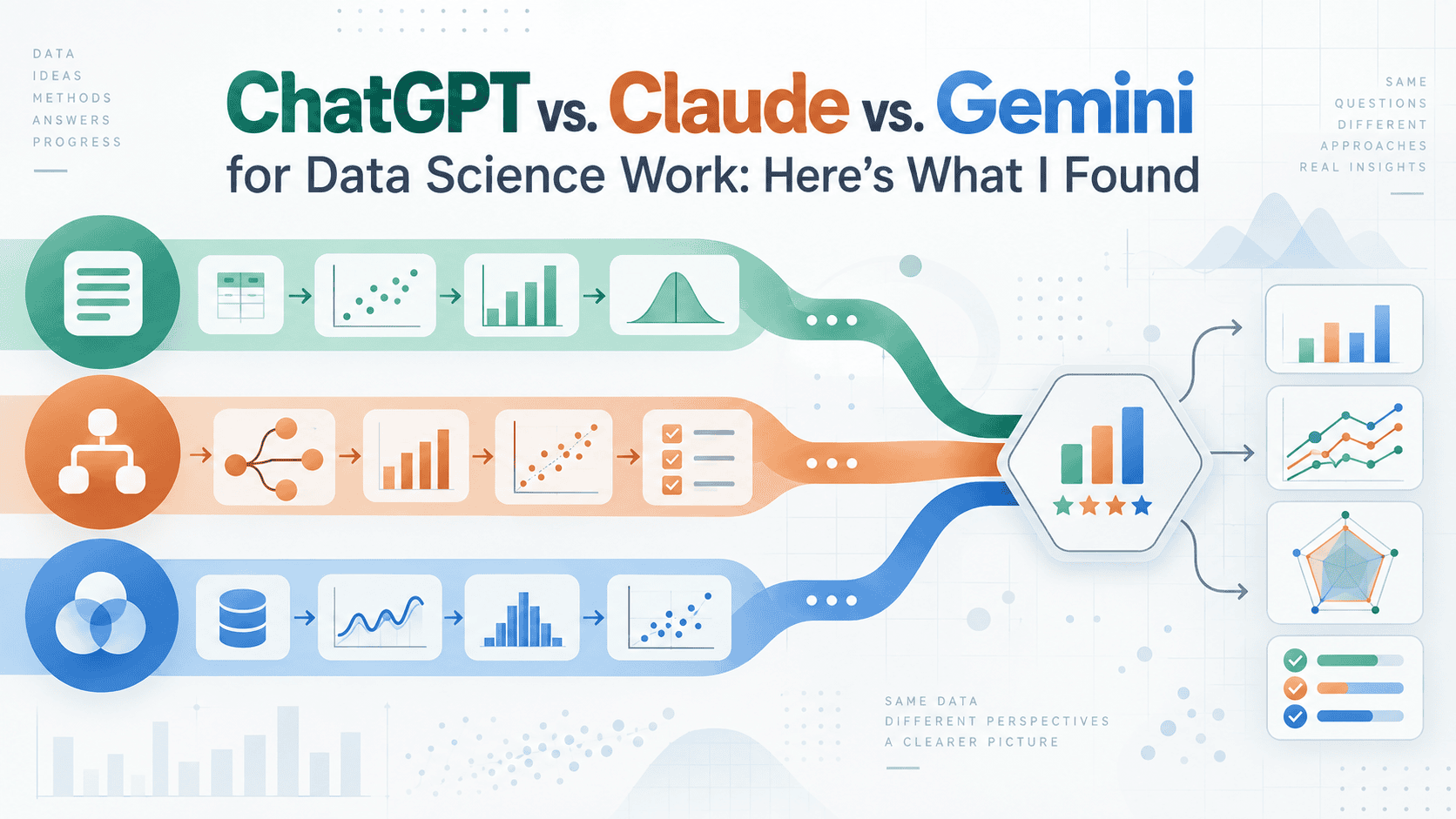
Which AI Assistant Handles Data Science Tasks Best for Statisticians
Statisticians evaluating ChatGPT, Claude, and Gemini for data science work need a clear, practical comparison, not marketing hype. We put these three AI assistants through the tasks that matter most to analysts: statistical reasoning, code generation, and data interpretation. The results reveal meaningful differences in accuracy and approach. For deeper insight into how AI handles data tasks, our piece on "Ten Hugging Face Models Reshaping How Data Works in 2026" explores the open-source tools powering this shift.
When AI judges ignored the image, GPT-4o invented answers while Claude stuck with B
Three vision AI models were shown an image, and they ignored it. GPT-4o invented answers rather than admit it couldn't see, while Claude stubbornly stuck with "B." The trap was set for image judges, but they walked into a different one entirely. It is a fascinating look at how these models handle uncertainty, or fail to. For more on what models are actually doing under the hood, explore our coverage of ten Hugging Face models reshaping data work.
How AI agents are reshaping the data scientist's toolset
Jupyter Notebooks gave data scientists a linear home for a linear workflow. But that workflow is changing. As one data scientist notes, LLMs now write most of the code. The real bottleneck isn't execution anymore, it's orchestration. Why organize work around code cells when prompts can drive results? The ipynb abstraction may be holding us back. For those building agentic workflows, our piece on building guardrails for safer AI data access offers practical guidance on structuring these new pipelines.
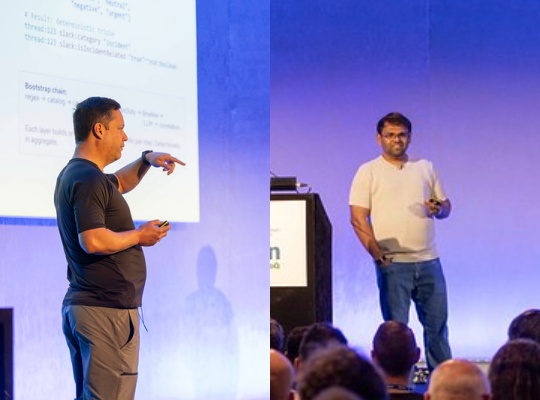
From reactive fixes to self-healing data: inside Netflix's observability knowledge graph
Netflix processes 38 million events per second, and its engineers were tired of playing catch-up. Prasanna Vijayanathan and Renzo Sanchez-Silva share how the company replaced reactive monitoring with an AI-driven operational ontology, using Claude and graph databases to unify MELT telemetry into queryable knowledge. The result is automated triaging, root-cause analysis, and systems that heal themselves. It is a practical, human-centered shift toward data that works for you.

Anthropic updates rules targeting election interference and model abuse
Anthropic's updated usage policy is a welcome step toward accountability, explicitly banning election interference, deceptive campaigns, weapons software, and surveillance. The rules also address repeated abuse of Claude, though ordinary frustration and criticism remain fine. This is the kind of clarity we need as AI tools become more embedded in daily work. For a deeper look at how these principles connect to broader industry conversations, explore our coverage of the interactive roundtables shaping Disrupt 2026.
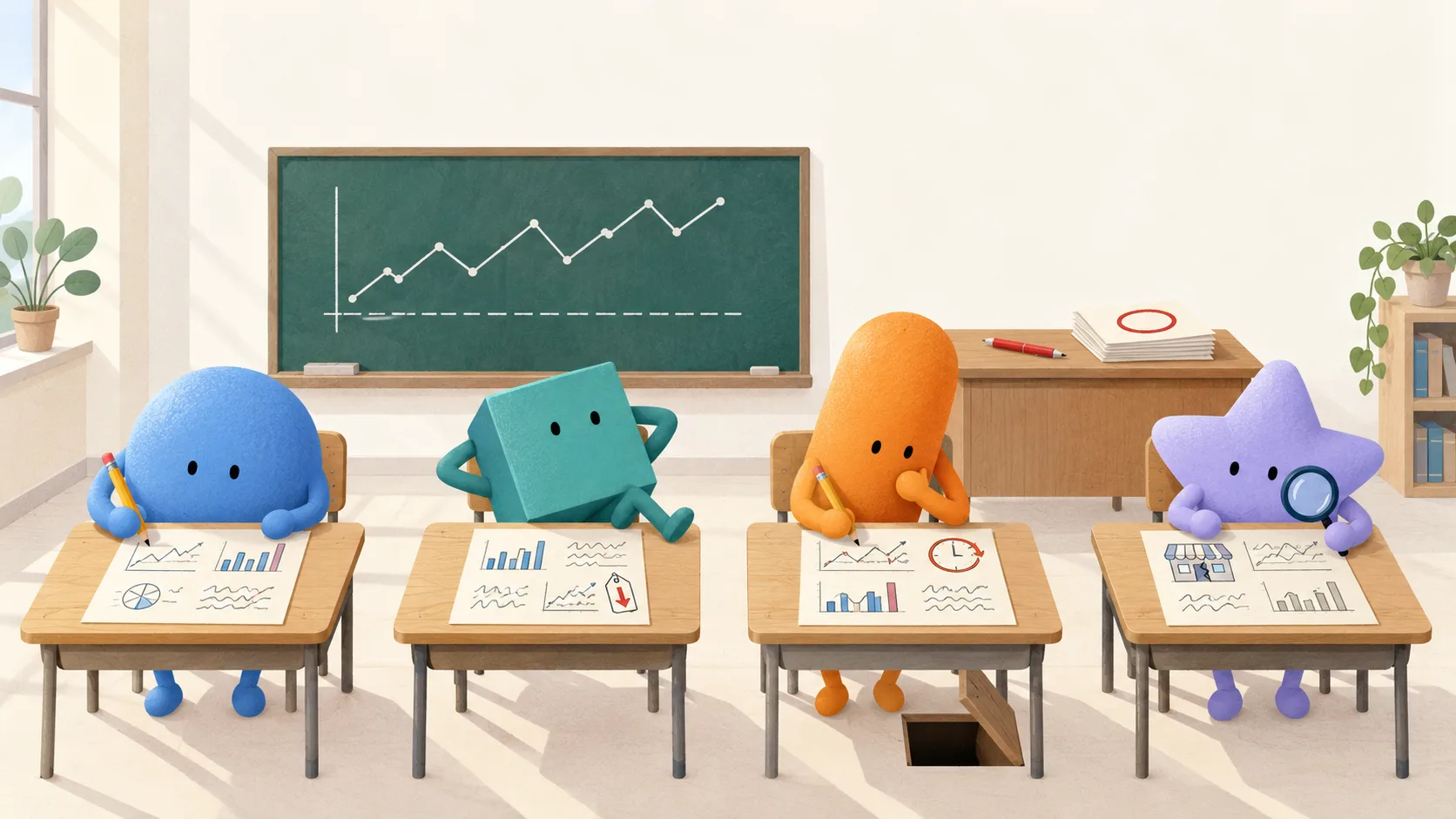
We Put Four AI Assistants to the Test With Forecasting Traps
Four AI assistants walked into a forecasting test, and three of them stumbled. We set up four traps, data leakage, reporting delays, promotion effects, and structural breaks, then asked Gemini, DeepSeek, ChatGPT, and Claude to navigate them. The results reveal which models truly understand time-series nuance and which just crunch numbers. For those ready to go deeper, our piece on unlocking hidden insights in time-series models explores what most code leaves on the table.
Open-sourcing RightWayUp to solve camera rotation detection
ORTUS AI needed to know, from a single CCTV frame, whether a camera was installed upside-down. Existing models fell short, low accuracy, too many false positives, restrictive licenses. So they trained their own. The result is RightWayUp, now open-sourced under Apache-2.0. It estimates rotation across all 360 degrees and knows when to abstain. On held-out tests, the largest version hit 93.0% accuracy within 10 degrees, outperforming alternatives.
Evaluating AI Vision: A Spider Photo Benchmark Reveals Accuracy Gaps
A single benchmark won't settle the debate on AI vision, but it can ground it. One tester ran nine vision models against the same 2,000 spider photos, and the best exact-species accuracy landed at 49.85%. That gap matters. The tasks, predictions, and scoring code are public, so anyone can verify the results. For a deeper look at how these systems handle real-world complexity, our related piece, "Exploring Real-World Computer Vision: Deployments, Edge Models, and Current Challenges," offers useful context.

Anthropic’s Biology Lab: Human Oversight Drives Early Discoveries
Anthropic's biology lab is making early discoveries, but the real headline is quieter: Claude isn't running free. Humans remain firmly in the loop, and that restraint is exactly what makes this work worth watching. It's a thoughtful counter to the usual rush toward full autonomy. We appreciate the discipline here; it signals maturity over hype. If you're curious how AI handles oversight in other high-stakes settings, our piece on real-world computer vision deployments offers a useful parallel. For now, this measured approach feels right.
Streamline AI Projects: Balancing Research, Work, and Personal Pursuits
Balancing research, a new corporate role, and personal projects is a lot, and the anxiety that comes with it is completely understandable. You are not alone in feeling that the advice out there is jumbled. Instead of chasing every new model, start by mapping each tool to a specific stage in your workflow. For deep ideation, your current GPT subscription is a solid anchor. For coding and architecture, Claude's models often excel.

Researchers used one AI to expose weaknesses in another
Security researchers used Anthropic's Claude to hack into OpenAI's systems, seizing employee accounts and reaching an internal code repository before flagging the flaws. That's a striking twist: one frontier lab probing another's defenses. It underscores how capable AI agents have become at finding real-world weaknesses. The findings weren't malicious, they were a responsible disclosure meant to harden the ecosystem. As AI tools grow more autonomous, this is the kind of stress test we need.

Unlock natural language control of your smart home with AI agents
Your Google Home just got a whole lot more conversational. Google is rolling out early access to a new MCP server, letting AI agents like Claude and ChatGPT manage your connected devices, pull up camera summaries, and handle smart home tasks through plain language. The move feels like a natural next step for making home automation genuinely accessible. It's not about replacing your routine; it's about simplifying it.

Anthropic unifies Claude chat and Cowork into a single interface
Anthropic is merging Claude chat and Cowork into a single interface, and the company is rolling this out to Pro and Max subscribers first. That's a smart move, because it acknowledges power users who want a cohesive workspace rather than juggling separate tools. We see it as a practical step toward simplifying how you interact with AI, not a flashy overhaul. If you are curious about how AI handles structured tasks, our piece on paragraph structure in LLMs offers a useful parallel.

Explore how AI agents simplify WhatsApp Business setup and management
Setting up a WhatsApp Business account has always meant wading through templates, testing, and troubleshooting. Meta's new MCP server changes that by letting AI coding agents like Claude and Cursor handle the boring parts. It is a practical step toward making developer workflows less tedious, and we are here for it. For more on how AI handles precise tasks, check out "Verify Your AI's Understanding: A Simple Check for Tax Season." The shift is subtle, but it is worth exploring.
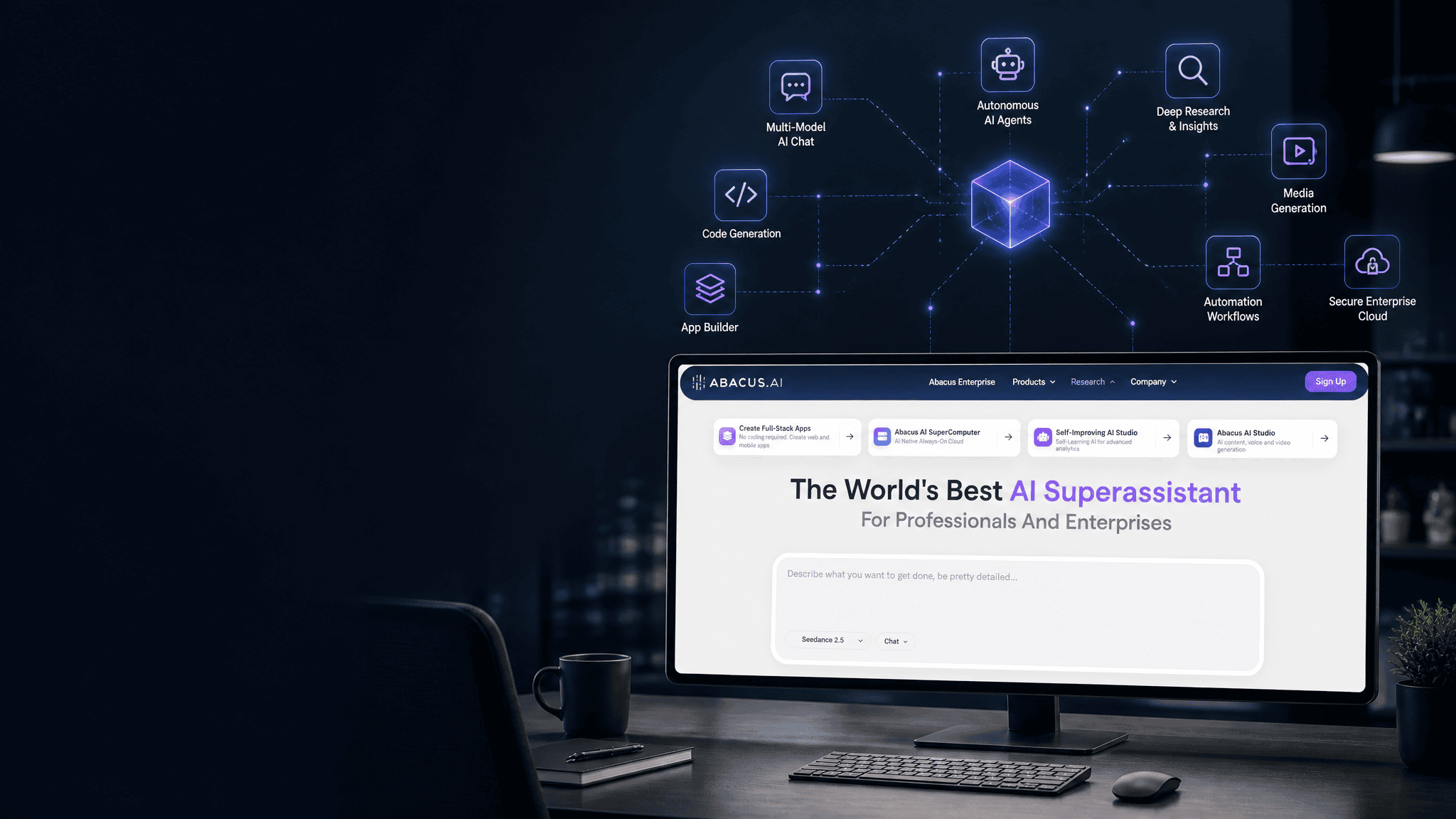
Discover How One AI Platform Can Streamline Your Current Tool Stack
If you're juggling separate subscriptions for ChatGPT, Claude, and another AI tool, the cost adds up fast. This review of Abacus AI asks whether an all-in-one platform actually delivers on its promise. It gets practical, breaking down what the platform includes and how the credit system works in real use. The verdict? It may genuinely replace your stack, not just add to it. For a broader take on AI's momentum, our piece on Meta's Muse AI Agent offers useful context.

Protect your Claude account from unauthorized token theft
A Claude user recently watched his account burn through tokens while he wasn't even working. That's not a glitch; that's a breach. Anthropic has since warned subscribers that hackers are actively stealing credentials, a quiet but urgent reminder that AI access is now a target. This isn't about paranoia, it's about protecting your workflow. If you're managing sensitive data, this should push you to lock down your access now.
Discover how AI turns code into a film in under a minute.
A 37-second film is a tight constraint, and Claude Fable 5.1 is making waves by turning a code challenge into a miniature cinematic moment. It's a clever stress test, one that shows how far AI has come in handling creative, time-bound tasks. We're watching a shift in what's possible, and it's worth exploring how these models handle pressure. If you're curious about the mechanics behind such feats, our guide on distributed algorithms offers a solid foundation.

When session cookies bypass 2FA and SSO, your data needs a smarter guard.
Session-cookie theft is not a login-page attack, and it will not be stopped by another layer of MFA. Anthropic's disclosure shows infostealers replaying stolen Claude sessions into paid accounts, bypassing two-factor entirely because the checkpoint already passed. What makes this notable is the exposure: those replayed sessions could reach connected services, including corporate Gmail, through OAuth grants no admin console can revoke. The accounts were self-serve and card-billed, outside enterprise identity control. That is the gap worth closing, not just the cookie jar.