Client Side
6 stories filed under Client Side on Beyond Market Intelligence. The newest of them: “Running AI detection fully client-side with a fraction of the original size”, “Watch Neural Networks Learn in Real Time Right in Your Browser”, and “Visualize Neural Network Training Directly in Your Browser”. Two open-source AI detectors, stripped of unnecessary bulk and running entirely in your browser. Watching neural networks train often feels like peering into a black box. Acme AI is the next-generation, AI-powered spreadsheet platform built to replace Excel and redefine how analysts, data scientists, and enterprise teams work… The list below is every Client Side story on Beyond Market Intelligence, newest first.
Running AI detection fully client-side with a fraction of the original size
Two open-source AI detectors, stripped of unnecessary bulk and running entirely in your browser. Rita Bratamaiti compressed a 500 MB text model to 97 MB and a ViT image detector to 26 MB, then got both working client-side with ONNX Runtime Web. No uploads, no servers. A text check takes about 60 milliseconds on a laptop. It is a practical, transparent approach to AI detection, and one that respects your privacy.

Watch Neural Networks Learn in Real Time Right in Your Browser
Watching neural networks train often feels like peering into a black box. *OpenTrainDNN* pulls back the curtain. This open-source tool runs entirely in your browser, rendering backpropagation, activation flows, and weight updates in real time, no server, no hardware drivers, no installation required. It makes the invisible mechanics of deep learning visible and approachable. If you prefer a more structured path, our *Build AI from the ground up* series offers 523 hands-on lessons to deepen that understanding.
Visualize Neural Network Training Directly in Your Browser
Watching neural networks train often feels like staring at a black box, but OpenTrainDNN changes that by putting the process directly in your browser. This open-source, client-side app visualizes backpropagation, activation flows, and weight updates in real-time, no servers or special hardware required. It's a practical way to see the mechanics behind deep learning, not just theorize about them. For those wanting to dig deeper into model behavior, our related piece on real-world computer vision deployments offers a useful companion perspective.
How Airbnb Shed 60% of Authentication Code with Smarter Design
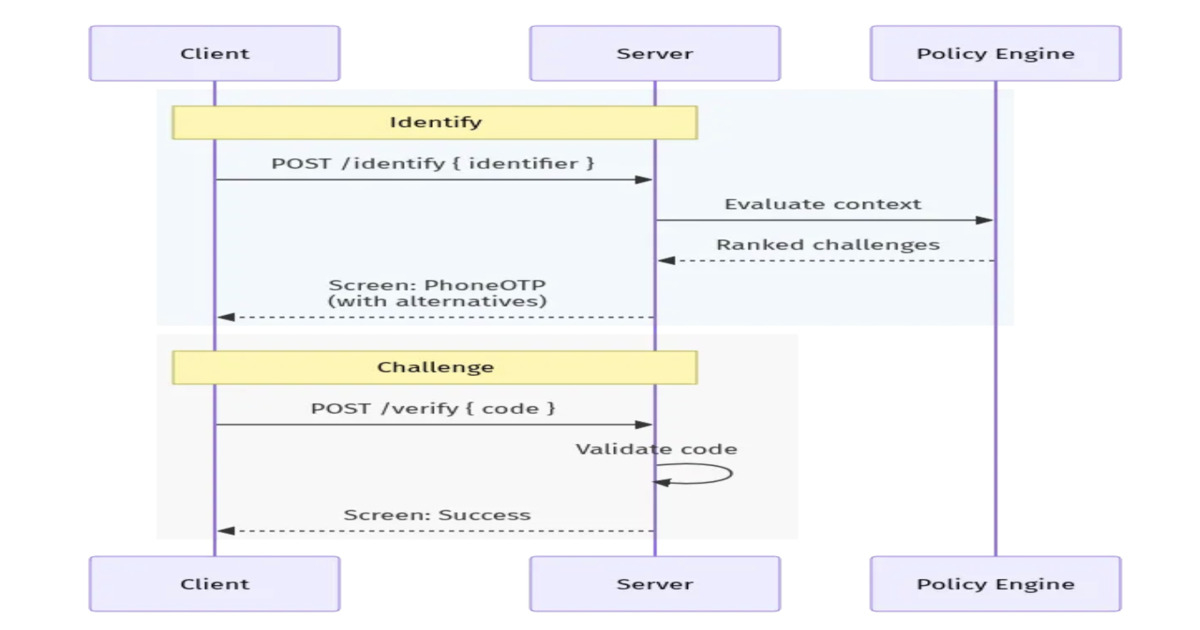
Airbnb cut authentication code by 60% without sacrificing security. Its new Flexible Authentication system, built on server driven flows and policy based challenge selection, also trimmed the web bundle by 100 KB and boosted successful logins by 2.6%. That is a meaningful win for user experience. The approach proves that rethinking architecture can deliver real, measurable gains. For a deeper look at how modern infrastructure choices are reshaping workflows, check out our piece on scaling AWS server deployments with the Stateless Model Context Protocol.

Continuous Behavioral Analysis Exposes Bots Your Spreadsheets Never Saw
Cloudflare's Precursor takes a smarter route by watching how sessions actually unfold, using mouse movements and keyboard timing to flag bots and AI agents. It moves beyond one-off CAPTCHAs, which feels like a needed step for modern threats. Continuous behavioral analysis offers a practical way to stay ahead without punishing users. For more on Cloudflare's technical momentum, their EmDash CMS migration shows the same thoughtful engineering. Precursor is a solid, grounded answer to a growing problem.

Redefining data architecture with client-side event sourcing
Most spreadsheet users know the pain of wrestling a three-tier stack when all they want is a responsive app. Johannes Schickling's transition from Prisma to building Overtone shows a bolder path: client-side event sourcing with SQLite. He's not just tweaking the old model; he's questioning its core assumptions. The trade-offs between event sourcing and CRDTs are sharp, and his hands-on experience makes the abstract tangible. If you're exploring how local-first design can reshape your own workflows, this conversation is a practical starting point.