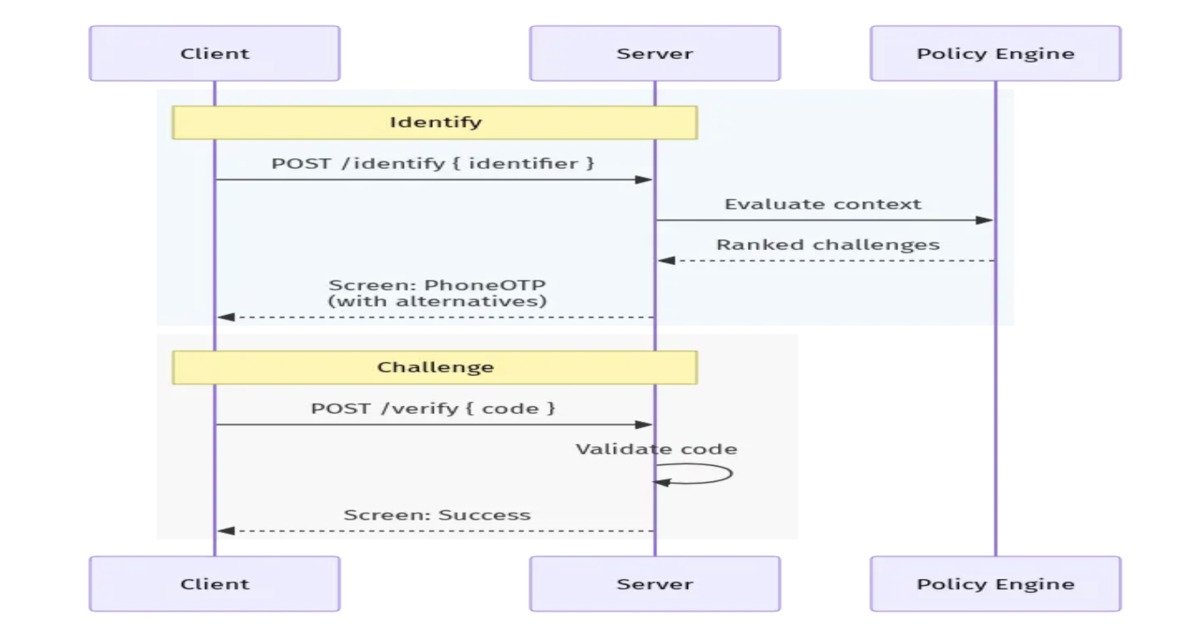
Airbnb's engineering team just did something most of us only talk about: they made their authentication system simpler, not more complex. By moving to a server driven architecture with policy based challenge selection, they cut authentication related code by 60%, trimmed 100 KB off the web client bundle, and improved successful authentication by 2.6%. Duplicate account creation dropped 27%, and OTP costs fell 11%. Those are the kind of numbers that make you want to re-read the headline.
What stands out here is not the technology itself, but the philosophy underneath it. For years, we have treated authentication as a front-end problem. Each client, whether web or mobile, carried its own logic for when to show a password, a magic link, or a one time code. That approach multiplies code, invites drift, and makes every security update a coordinated deployment. Airbnb's Flexible Authentication system flips that model. The server now decides which challenge to present, based on risk and context, and the client simply renders it. The result is less code, smaller bundles, and a better success rate. This is a lesson that extends well beyond login screens. It echoes what we see in the broader push toward Scale AWS Server Deployments Effortlessly with Stateless Model Context Protocol, where removing state from the protocol layer simplifies operations at scale. The same instinct, push decision making to the server and keep clients thin, is reshaping how we build resilient systems.
For our readers, the practical takeaway is direct. You do not need to be Airbnb to benefit from this pattern. If you are maintaining a login flow that has grown tangled with conditional logic, consider how much of that logic truly belongs on the client. Moving it server side can shrink your codebase and your attack surface at the same time. The 100 KB reduction in the web bundle is a reminder that performance wins often come from architectural choices, not micro-optimizations. And the 27% drop in duplicate accounts suggests that a well designed challenge flow does more than authenticate; it guides users toward the right outcome, reducing accidental re-registrations. That is the kind of outcome that shows up in your retention metrics, not just your latency charts.
There is a deeper point here about how we evaluate technology. Too often, we chase features or raw speed, but the real win is in simplification. Airbnb did not add a new authentication method; they made the existing ones work together more intelligently. That is why we connect this to Bridging Retrieval and Action: A New Approach to AI Tasks and Jev vs LLMs: Evaluating AI for Practical Decision-Making. Those stories, like this one, are about making deliberate choices about where complexity lives. The question worth asking is not "what can we add?" but "what can we remove without losing capability?" Airbnb's authentication redesign is a concrete example of that mindset paying off. The specific numbers, 60% less code, 2.6% better success, 11% lower cost, are the evidence. The open question for you is where else this logic applies in your own stack. Look at your most complex client side process and ask yourself: what would happen if the server decided?