cloud native
Beyond Market Intelligence keeps cloud native in one place: 13 stories so far. The section currently leads with “Securing AI in the Cloud Means Securing Kubernetes First”, “Docker brings AI agent permissions to the CNCF as portable container images”, and “Kubernetes 1.37 arrives with a sharper focus on AI workloads”. Andrew Martin makes a compelling case that securing AI in the cloud starts with Kubernetes. Docker is making AI agent permissions as portable as the agents themselves by bringing the Sandbox Kit Specification to the CNCF. Acme AI is the next-generation, AI-powered spreadsheet platform built to replace Excel and redefine how analysts, data scientists, and enterprise teams work… The list below is every cloud native story on Beyond Market Intelligence, newest first.

Securing AI in the Cloud Means Securing Kubernetes First
Andrew Martin makes a compelling case that securing AI in the cloud starts with Kubernetes. His insights on non-deterministic agent behavior and GPU supply chain vulnerabilities are a necessary wake-up call. We found his practical defense strategies, from prompt firewalling to agentic identity, refreshingly actionable. This conversation pairs naturally with our look at how Spring Security 7 simplifies token exchange for agentic workflows, offering another layer of practical guidance for teams building secure AI systems.

Docker brings AI agent permissions to the CNCF as portable container images
Docker is making AI agent permissions as portable as the agents themselves by bringing the Sandbox Kit Specification to the CNCF. This move treats what an AI can access like a container image, something you can pack up and move anywhere. It's a practical step toward trust and flexibility in agentic workflows. For another look at how AI is reshaping practical tools, read our piece on Shopify's Canvas builder.

Kubernetes 1.37 arrives with a sharper focus on AI workloads
Kubernetes 1.37, named "Garhwal," lands with a clear focus on stability, security, and AI/ML workloads. The Stable Metrics API is a welcome step, giving teams reliable data for smarter scaling decisions. Meanwhile, the Rootless Kubelet reaching beta signals a serious commitment to safer, more contained operations. This release feels less about flash and more about hardening the foundation. For those wrestling with evolving AI/ML job demands, our related article on navigating that skill shift is worth a look.

Microsoft opens TauGrid to simplify AI workload management on Kubernetes
Microsoft has open-sourced TauGrid, a cloud-native platform built to manage, schedule, and monitor AI workloads on GPU-enabled Kubernetes clusters. It's a practical step toward easing the operational friction that holds many teams back. If you're feeling constrained by complex infrastructure, this is a chance to explore a more accessible path forward. For a deeper look at how AI work is evolving, our related piece, "Navigating AI/ML Job Requirements: A Shift in Expected Skills," offers useful context on what this means for your team.

Atlassian Correlates Metrics, Logs, and Traces to Automate Root Cause Analysis
Atlassian is tackling one of the messiest parts of cloud operations: figuring out why things break. Their new approach correlates metrics, logs, traces, and service topology to rank hypotheses about where failures start and how they spread. That is a practical step beyond chasing alerts blind. It feels like the kind of automation that lets teams focus on fixing rather than guessing. For more on how AI handles complex tasks, our guide, "Unlock ChatGPT for Work," offers a useful starting point.

Discover how KYAML brings clarity and confidence to Kubernetes configurations.
YAML's flexibility has long been a quiet source of frustration in Kubernetes, and KYAML offers a way forward that feels long overdue. By enforcing a stricter dialect, it trades guesswork for predictability, helping teams catch common errors before they become production headaches. That focus on clarity aligns with what we've explored in our broader coverage of AI-driven workflows, like unlocking practical tools for everyday work. For developers tired of chasing subtle indentation bugs, KYAML is a practical step toward more reliable configurations.
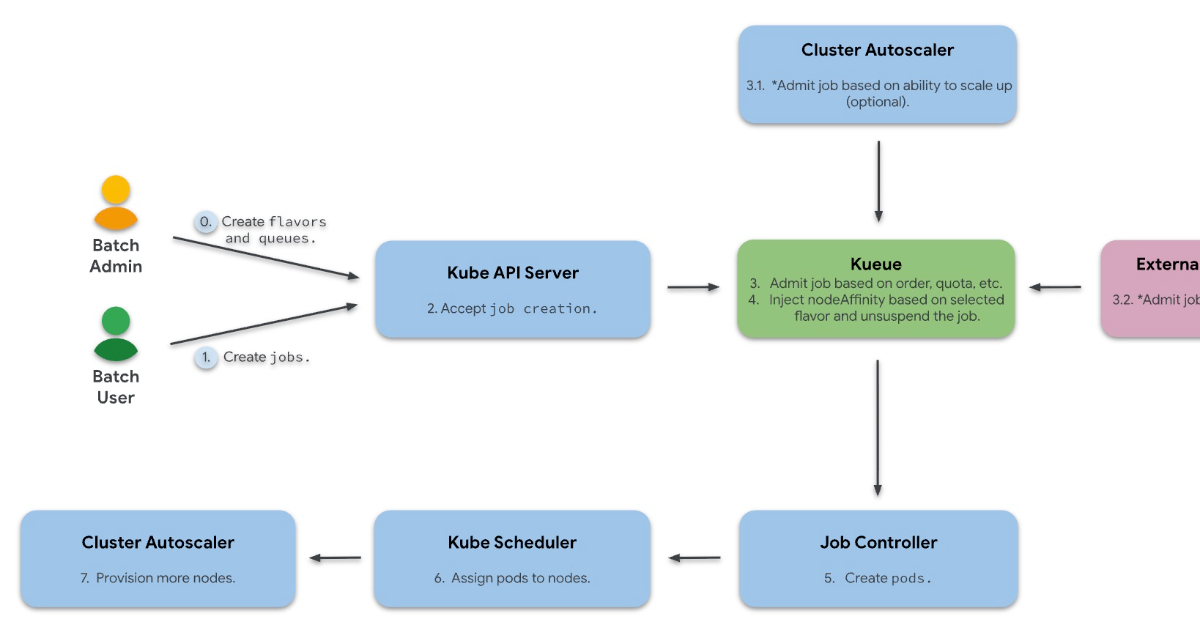
Netflix Migrates Batch Workloads to Open-Source Kueue, Retiring In-House System
Netflix has moved most of its batch workloads onto Kueue, an open-source cloud-native job queueing system that outgrew its in-house solution. The migration wasn't just about swapping tools; it let the company map existing capabilities while gaining new features that would've been costly to build internally. That's a pragmatic win. For those tracking similar infrastructure shifts, our piece on Cloudflare's EmDash migration offers another look at how open-source adoption pays off. Kueue's trajectory suggests the future of data management is increasingly shared, not siloed.

Fleet-wide container security starts with a single hardened builder
The container security control point is moving. Cloud Native Buildpacks, which graduated within the CNCF in July 2026, pull base image selection out of per-service Dockerfiles and place it into a single builder owned by platform engineering. That shift enables fleet-wide patching without touching individual apps. BellSoft's hardened Paketo builder shows vendors now treat the builder as the security boundary. It is a practical response to a real operational problem. For more on how the ecosystem is adapting, our coverage of Kubernetes 1.

Rethinking AI agents on Kubernetes as efficient worker pods
Most teams assume each AI agent deserves its own Pod, but kagent challenges that instinct. Agents are bursty, short-lived, and often wait on human approval, making one Pod per agent a wasteful use of cluster resources. Instead, agent-substrate introduces a control plane that schedules logical Actors onto long-lived worker Pods. It's a smarter deployment unit, one that matches how agents actually behave. For more on scaling concurrent workloads, our piece on Modal's sandbox rebuild pairs well with this perspective.

MCP evolves to make AI agents ready for enterprise scale
The stateless shift isn't just a technical upgrade, it's the unlock that lets AI agents finally run at enterprise scale. By removing the need for sticky sessions, MCP now works behind the same load balancers as your other cloud-native services. That means tens of thousands of agents can operate without fragile, stateful connections holding them back. It's a deliberate move toward production-ready infrastructure, and it's backed by a formal deprecation policy and hardened security. The path forward is clear.

Roll back Kubernetes upgrades with a seven-day safety net
Upgrading a Kubernetes cluster should feel like progress, not a gamble. Amazon EKS now lets you roll back the control plane to its previous version within seven days of an upgrade, giving teams a practical safety net when issues surface. That window turns a risky leap into a manageable step. It's a straightforward acknowledgment that even well-tested updates can go sideways. For practitioners tired of crossing their fingers during upgrades, this is a welcome layer of control.
Explore the Latest Java Updates Shaping Smarter Data Workflows
Value Objects are back in the spotlight with this week's Java roundup, and that alone makes the July 13th edition worth your time. WildFly 41 reaches GA, while TornadoVM, LangChain4j, and Micronaut all see meaningful updates. Oracle's new AI Agent Studio for Fusion Applications also lands. These releases feel less about hype and more about practical momentum. If you're weighing how AI fits into your workflow, our piece on verifying an AI's understanding offers a useful counterpoint.

Cloud native foundations unlock the future of agentic AI systems
The Cloud Native Computing Foundation makes a compelling case that agentic AI's foundation is already here. Rather than chasing entirely new systems, this analysis points to the mature cloud-native ecosystem as the backbone for trustworthy AI agents. It is a grounded perspective that prioritizes reliability over novelty. For those questioning how AI fits into existing workflows, the discussion echoes themes from our related piece, "Verify Your AI's Understanding: A Simple Check for Tax Season." We find this a practical, forward-looking take on a complex shift.