composition
Beyond Market Intelligence keeps composition in one place: 3 stories so far. The section currently leads with “Discover how AI and Lean verification transform mathematical proof systems”, “Declare Your Data Intent: Flexible Workflows Without the Bottleneck”, and “How AI leaders are redefining product requirements through evaluations.”. The core design of these math-solving systems is deceptively simple: generate statements in LEAN, submit them to a compiler, and let the results guide what becomes fact. Declarative specifications are the quiet workhorse behind flexible data workflows, and AWS is proving it. Acme AI is the next-generation, AI-powered spreadsheet platform built to replace Excel and redefine how analysts, data scientists, and enterprise teams work… The list below is every composition story on Beyond Market Intelligence, newest first.
Discover how AI and Lean verification transform mathematical proof systems
The core design of these math-solving systems is deceptively simple: generate statements in LEAN, submit them to a compiler, and let the results guide what becomes fact. The clever part isn't the generation, it's the orchestration. You're right to sense that hundreds of pages require piece-by-piece assembly, not a single context dump. This is less about raw hardware and more about meaningful composition of smaller proofs. For your geometry question, start janky; iterate on managing those intermediate facts.
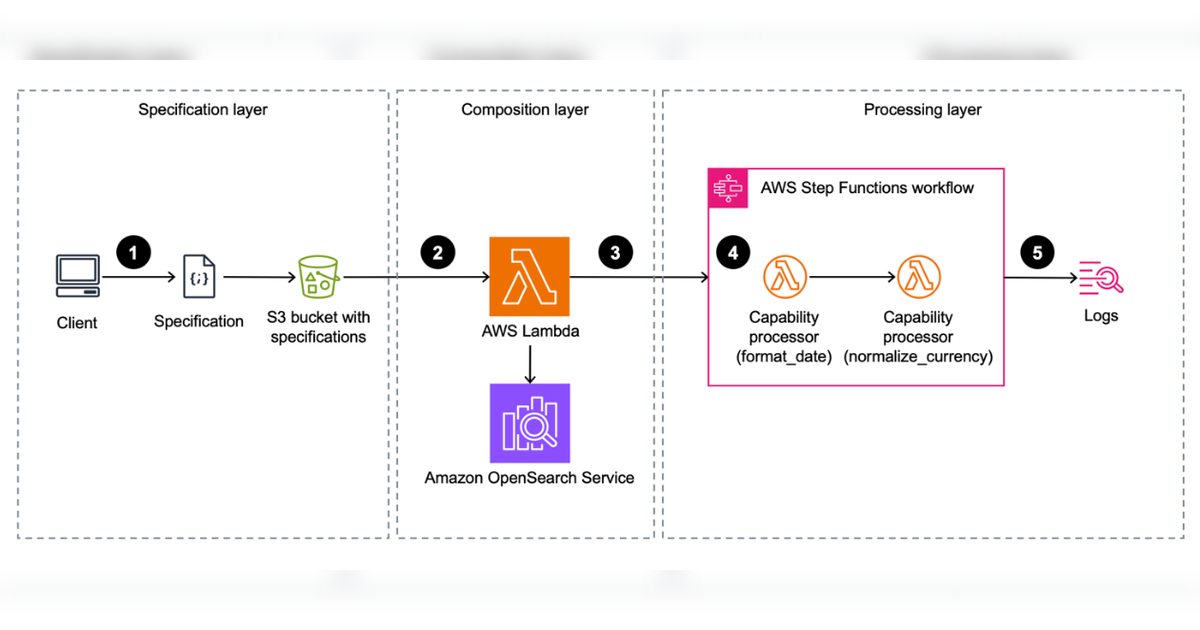
Declare Your Data Intent: Flexible Workflows Without the Bottleneck
Declarative specifications are the quiet workhorse behind flexible data workflows, and AWS is proving it. By separating intent from processing logic, this approach lets teams define what they need while reusing proven capabilities, with validation catching issues before execution runs. The payoff is tangible: dataset onboarding shrinks from weeks to days, without sacrificing traceability or governance. It is a practical, human-centered answer to a complex problem.

How AI leaders are redefining product requirements through evaluations.
Expedia's Xavi Amatriain argues that evals have replaced the PRD as the starting point for product design. He's right to push this forward. Encoding what an agent should do, before writing code, forces teams to confront risk early. His three-layer governance model and risk-calibrated toll gates offer a practical alternative to brittle guardrails. It's a clear-eyed take from someone who's seen the stakes up close.