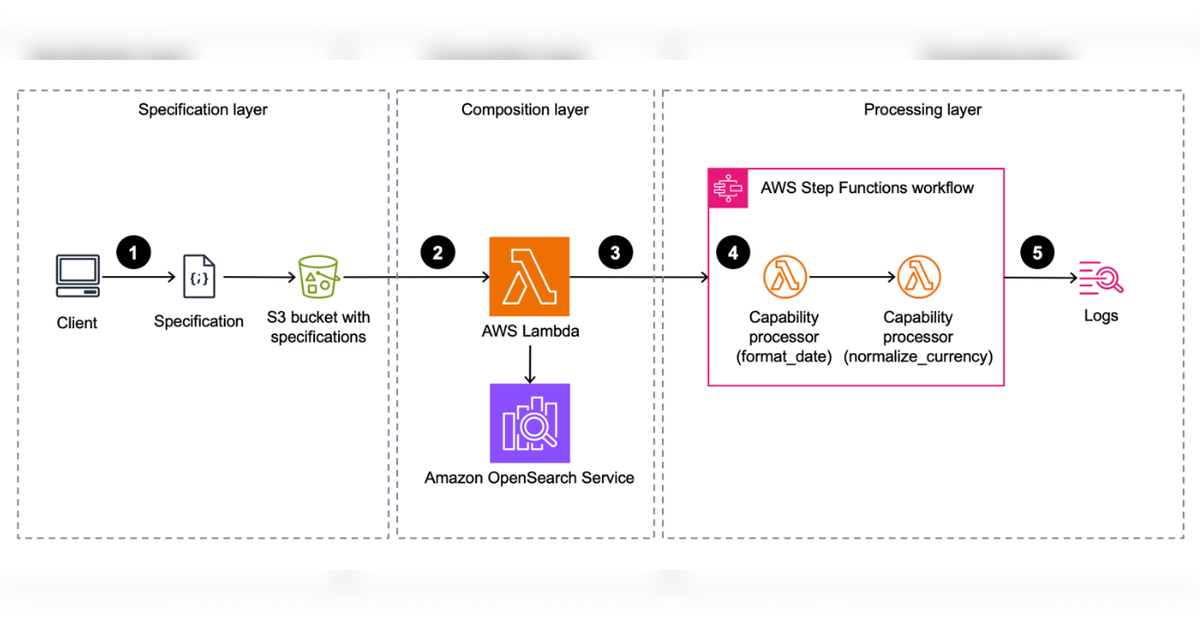
The most interesting thing about AWS's specification-driven approach to data workflows isn't the automation, the reusable components, or even the promise of cutting onboarding from weeks to days. It's the quiet philosophical shift embedded in the architecture: separating intent from processing logic. That single idea is worth pausing on, because it suggests AWS is finally treating data work less like a series of brittle scripts and more like a declarative conversation. You say what you want the outcome to be, and the system figures out the how. That is a genuinely different way to think about flexibility, and it aligns with a broader trend we've been tracking, like how Unlock ChatGPT for Work: A Practical Guide to Getting Started frames AI as a tool you direct rather than a pipeline you babysit.
For our readers who live in the messy middle of enterprise data, this matters more than the headline numbers. Yes, reducing onboarding from weeks to days is impressive. But the real value is in what the architecture does to governance and traceability. When your workflow is defined by a declarative specification, validation before execution becomes a natural checkpoint rather than an afterthought. Versioning and data classification stop being manual chores and start being properties of the system itself. That is the kind of quiet, structural improvement that doesn't make for a flashy demo but does make your Tuesday afternoon less painful. And it's worth comparing this to the work we saw in Bridging Retrieval and Action: A New Approach to AI Tasks, where connecting separate components explicitly was the key to making them work together. AWS is doing something similar here, but at the infrastructure level, which means the pattern might be more durable than any single tool.
That said, we'd push back on the idea that this is a magic bullet. Separating intent from logic is elegant in theory, but it only works if the reusable processing capabilities are actually well-designed and the declarative specifications are expressive enough to handle edge cases. The validation step helps, but it can't catch every semantic mismatch between what you meant and what you wrote. So the practical takeaway for you isn't "go rewrite everything with this pattern." It's "start looking at your own workflows and ask where you're conflating intent with implementation." That's a question you can act on today, with or without AWS's specific tooling. It also echoes the statelessness discussion in Scale AWS Server Deployments Effortlessly with Stateless Model Context Protocol, where removing session overhead forced teams to think more carefully about what state actually matters.
Here's the specific detail we'll be watching: whether this approach genuinely holds up when the specification changes mid-project. AWS mentions versioning, but the real test is how gracefully you can evolve a workflow when the business logic shifts. If the declarative spec can be updated without touching the processing logic, that's the moment this stops being an interesting architecture and starts being a competitive advantage. That's the detail worth quoting, because it turns a good idea into a lasting one.